Liorhyssus hyalinus
Hyaline Grass Bug
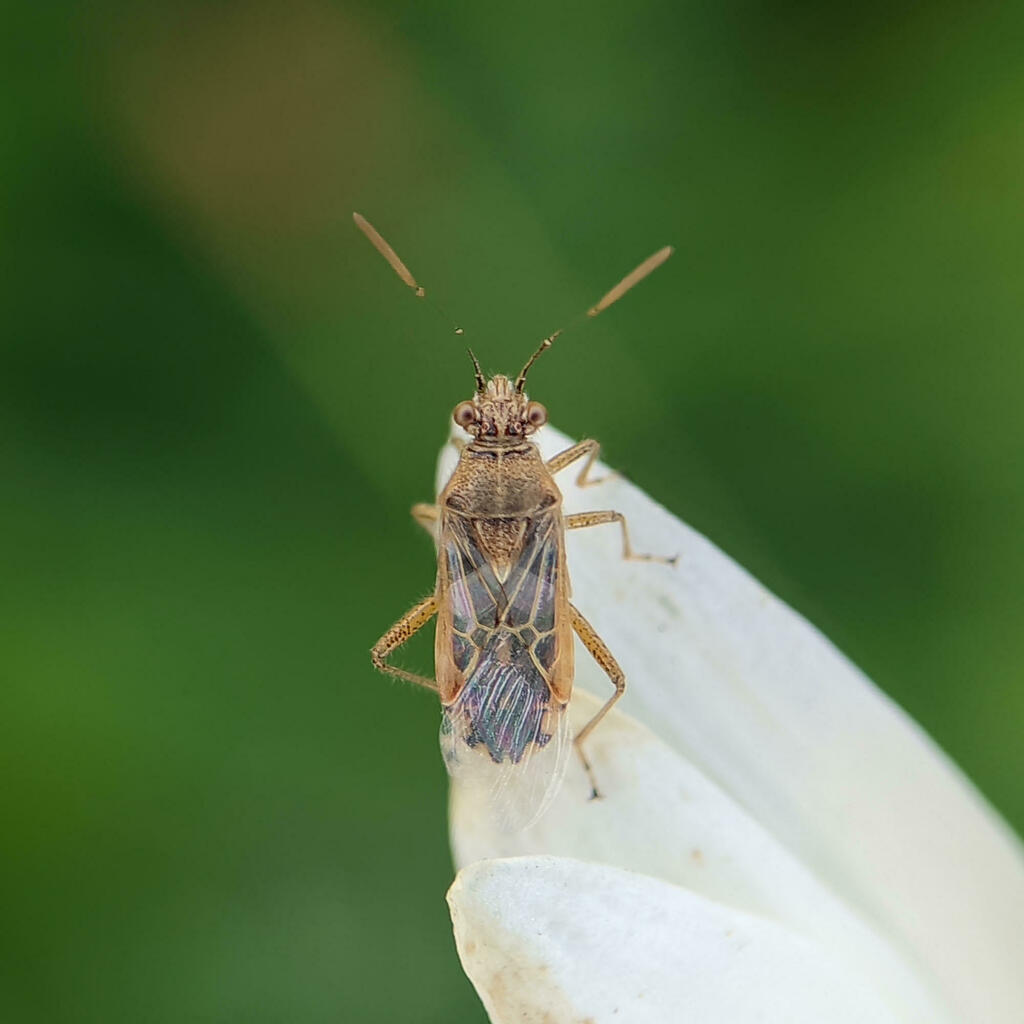
(c) Stephan Mende, some rights reserved (CC BY) · licence
Family: Rhopalidae · Class: Insecta · Order: Hemiptera
Liorhyssus hyalinus (Hyaline Grass Bug) is a California animal in the Rhopalidae family.
Liorhyssus hyalinus, commonly known as the Hyaline Grass Bug, is a member of the family Rhopalidae within the order Hemiptera. This true bug species belongs to the subfamily Rhopalinae and tribe Rhopalini. The common name "hyaline" refers to the transparent or glass-like appearance characteristic of certain anatomical features, a trait shared with other members of this taxonomic group. As a member of the Rhopalidae family, L. hyalinus possesses the typical scentless plant bug morphology, distinguished from related families by specific wing venation patterns and antennal structure. The species exhibits the characteristic four-segmented antennae and piercing-sucking mouthparts adapted for feeding on plant fluids. Like other rhopalids, this species likely displays sexual dimorphism in size and coloration, though specific morphological details for L. hyalinus remain poorly documented in available literature. The distribution of L. hyalinus appears to be primarily within North America, as indicated by its presence in United States Fish and Wildlife Service taxonomic databases. However, specific range information, including occurrence within California, has not been well documented in accessible scientific literature. The species' habitat requirements and preferred vegetation types remain largely unstudied, representing a significant knowledge gap for this hemipteran. Ecological information for L. hyalinus is extremely limited. As a member of Rhopalidae, the species likely feeds on grasses and herbaceous plants, consistent with the family's common name of "scentless plant bugs." These insects typically insert their stylet into plant tissues to extract fluids, potentially causing localized damage to host plants. Seasonal activity patterns, reproductive behavior, and specific host plant associations for L. hyalinus have not been scientifically documented. The conservation status of L. hyalinus is unclear, with no federal or state listing designations currently assigned. The species lacks comprehensive population assessments, distribution surveys, or threat analyses. This absence of basic biological and ecological data represents a common challenge for many small arthropod species, particularly those in taxonomic groups that have received limited research attention. The Rhopalidae family contains approximately 200 described species worldwide, with many exhibiting specialized relationships with particular plant families. Some rhopalids are considered agricultural pests when they feed on economically important crops, while others play beneficial roles in natural ecosystem processes. Without targeted research, the ecological role and conservation needs of L. hyalinus remain unknown. Scientific documentation for this species remains extremely limited despite thorough review of available databases and literature. The information presented here synthesizes taxonomic placement from USFWS records and general family characteristics from established hemipteran literature. Detailed studies of L. hyalinus morphology, distribution, ecology, and conservation status are needed to develop a comprehensive understanding of this species. We welcome contributions of verified scientific data, photographs, or field observations to enhance this species account.
Classification
Class: Insecta · Order: Hemiptera · Family: Rhopalidae
Frequently asked questions
How is Liorhyssus hyalinus classified?
Liorhyssus hyalinus belongs to class Insecta, order Hemiptera, family Rhopalidae.
What family does Liorhyssus hyalinus belong to?
Liorhyssus hyalinus is in the Rhopalidae family.
What is Liorhyssus hyalinus?
Liorhyssus hyalinus, commonly known as the Hyaline Grass Bug, is a member of the family Rhopalidae within the order Hemiptera.
Is Liorhyssus hyalinus found in California?
Yes. Liorhyssus hyalinus is recorded in California in The California Species Project's catalogue.
Related species
Other California species in the same genus, family, or bioregion.
Data from The California Species Project — 14,000+ California species with verified data from CNPS, CDFW, USFWS, and more.