Liriomyza brassicae
Cabbage leafminer
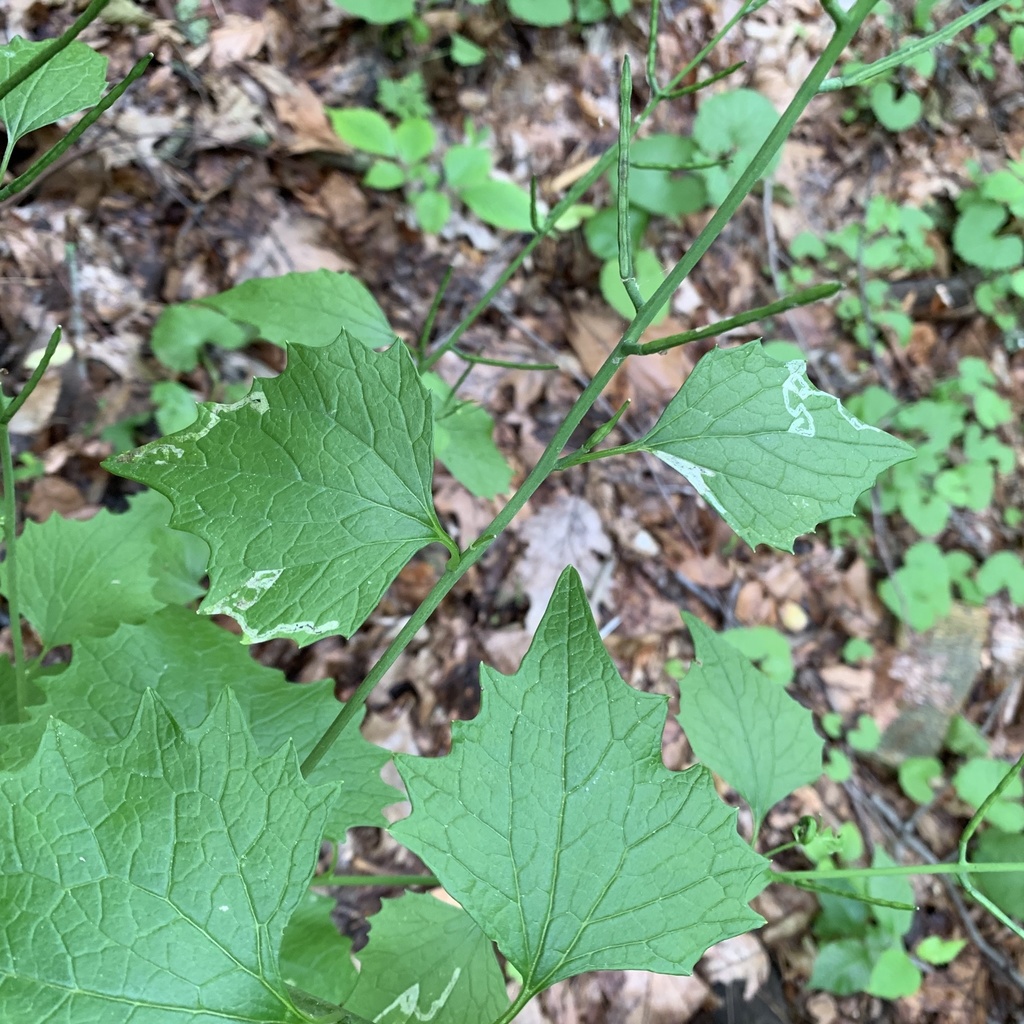
(c) Neal Kelso, some rights reserved (CC BY) · licence
Family: Agromyzidae · Class: Insecta · Order: Diptera
Liriomyza brassicae (Cabbage leafminer) is a California animal in the Agromyzidae family.
The cabbage leafminer (Liriomyza brassicae) is a small dipteran fly in the family Agromyzidae. Adults are typically dark-colored flies measuring 1.5 to 3 millimeters in length, with the characteristic appearance of agromyzid flies including relatively large eyes and short antennae. The species exhibits sexual dimorphism, with males generally smaller than females and possessing modified genitalia for species identification. Liriomyza brassicae is a non-native species introduced to North America from Europe (BugGuide). The species has established populations across much of the United States and southern Canada, though its current distribution in California specifically requires further documentation. As an introduced agricultural pest, it has likely spread throughout California's agricultural regions where suitable host plants are cultivated. This species primarily inhabits agricultural areas, gardens, and disturbed habitats where cruciferous plants are present. The larvae develop as leaf miners within the mesophyll tissue of host plant leaves, creating characteristic serpentine mining patterns that give the species its alternate common name "serpentine leaf miner." Adults are found on or near host plants, particularly during the growing season when oviposition and larval development occur. The cabbage leafminer exhibits a typical agromyzid life cycle with complete metamorphosis. Adult females use their ovipositor to puncture leaf surfaces and deposit eggs within the leaf tissue. The larvae develop as internal leaf miners, feeding on the mesophyll while creating distinctive winding tunnels visible from the leaf surface. These serpentine mines gradually increase in width as the larvae grow through typically three instars. Pupation occurs either within the leaf mine or in the soil beneath host plants, depending on environmental conditions. Multiple generations can occur annually in favorable climates, with development time influenced by temperature and host plant quality. As a specialist herbivore, L. brassicae feeds exclusively on plants in the family Brassicaceae (crucifers). Host plants include cultivated species such as cabbage, broccoli, cauliflower, kale, radish, and mustard, as well as wild cruciferous species. The larval feeding damage appears as meandering white or pale green trails through the leaf tissue, which can reduce plant photosynthetic capacity and aesthetic value in commercial crops. Liriomyza brassicae does not have conservation status listings, as it is considered an introduced agricultural pest species rather than a conservation concern. NatureServe lists the global status as GNR (Global Not Ranked), and no state or provincial conservation ranks have been assigned (NatureServe Explorer). Management efforts focus on pest control rather than conservation, using integrated pest management approaches including biological control agents, crop rotation, and targeted insecticide applications when necessary. The species' establishment and spread in North America represents a typical pattern of agricultural pest introduction, though it generally causes less severe damage compared to other invasive leafminer species in the genus.
Classification
Class: Insecta · Order: Diptera · Family: Agromyzidae
Frequently asked questions
How is Liriomyza brassicae classified?
Liriomyza brassicae belongs to class Insecta, order Diptera, family Agromyzidae.
What family does Liriomyza brassicae belong to?
Liriomyza brassicae is in the Agromyzidae family.
What is Liriomyza brassicae?
The cabbage leafminer (Liriomyza brassicae) is a small dipteran fly in the family Agromyzidae.
Is Liriomyza brassicae found in California?
Yes. Liriomyza brassicae is recorded in California in The California Species Project's catalogue.
Related species
Other California species in the same genus, family, or bioregion.
Data from The California Species Project — 14,000+ California species with verified data from CNPS, CDFW, USFWS, and more.