Lissodelphis borealis
Northern Right-whale Dolphin
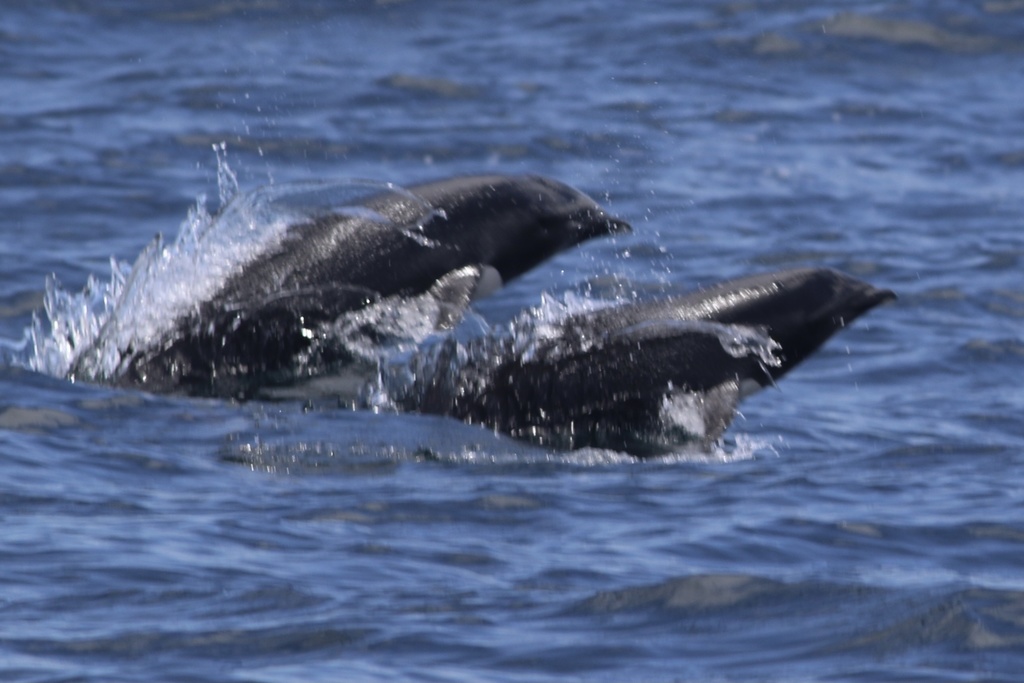
(c) Cricket Raspet, some rights reserved (CC BY) · licence
Family: Delphinidae · Class: Mammalia · Order: Artiodactyla
Lissodelphis borealis (Northern Right-whale Dolphin) is a California animal in the Delphinidae family.
The Northern Right-whale Dolphin (Lissodelphis borealis) is a distinctive cetacean characterized by its lack of a dorsal fin, a unique feature among dolphins. Adults measure 2 to 3 meters (6.6 to 9.8 feet) in length and weigh 60 to 113 kilograms (132 to 249 pounds). The body is sleek and slender with a distinct black dorsal surface and white ventral coloration that extends from the lower jaw to the tail flukes. This counter-shading pattern creates sharp contrast along the body's lateral line. The species has a small, pointed head with a barely discernible beak and a relatively large fluke relative to body size. Northern Right-whale Dolphins inhabit the temperate and subarctic waters of the North Pacific Ocean. Their range extends from the Bering Sea south to Baja California, Mexico, and from Japan eastward across the Pacific. Along the California coast, they are found in offshore waters from the Oregon border to southern California, typically in depths exceeding 200 meters (656 feet). Seasonal movements bring them closer to shore during certain months, with increased sightings off central and northern California during summer and fall. This species occupies pelagic waters of the continental shelf and slope, preferring areas with steep underwater topography and upwelling zones. They frequent waters with temperatures ranging from 8 to 23 degrees Celsius (46 to 73 degrees Fahrenheit). Northern Right-whale Dolphins show a strong association with the California Current system and areas of high productivity where cold, nutrient-rich waters support abundant prey populations. Northern Right-whale Dolphins are highly social marine mammals that form pods ranging from 5 to 200 individuals, though aggregations of over 1,000 animals have been documented. They feed primarily on small schooling fish including anchovies, sardines, and sauries, as well as squid and krill. Feeding often occurs at night when prey species migrate toward the surface. The species exhibits cooperative hunting behaviors and frequently associates with Pacific White-sided Dolphins and other cetaceans. Reproduction occurs year-round with a gestation period of approximately 10 to 12 months. Calves measure about 1 meter (3.3 feet) at birth and nurse for several months. Currently, the Northern Right-whale Dolphin does not hold federal or state listing status under endangered species legislation. However, like many marine mammals, the species faces threats from fishing gear entanglement, vessel strikes, pollution, and climate change effects on prey distribution. Ocean warming and changing oceanographic conditions in the North Pacific may alter the distribution and abundance of their primary food sources. The species is protected under the Marine Mammal Protection Act, which prohibits harassment, hunting, capture, or killing. Population estimates for the North Pacific range from 60,000 to 70,000 individuals, though California-specific abundance data are limited. Regular monitoring through marine mammal surveys helps track population trends and distribution patterns.
Classification
Class: Mammalia · Order: Artiodactyla · Family: Delphinidae
Frequently asked questions
How is Lissodelphis borealis classified?
Lissodelphis borealis belongs to class Mammalia, order Artiodactyla, family Delphinidae.
What family does Lissodelphis borealis belong to?
Lissodelphis borealis is in the Delphinidae family.
What is Lissodelphis borealis?
The Northern Right-whale Dolphin (Lissodelphis borealis) is a distinctive cetacean characterized by its lack of a dorsal fin, a unique feature among dolphins.
Is Lissodelphis borealis found in California?
Yes. Lissodelphis borealis is recorded in California in The California Species Project's catalogue.
Related species
Other California species in the same genus, family, or bioregion.
Data from The California Species Project — 14,000+ California species with verified data from CNPS, CDFW, USFWS, and more.