Lithobates pipiens
Northern Leopard Frog
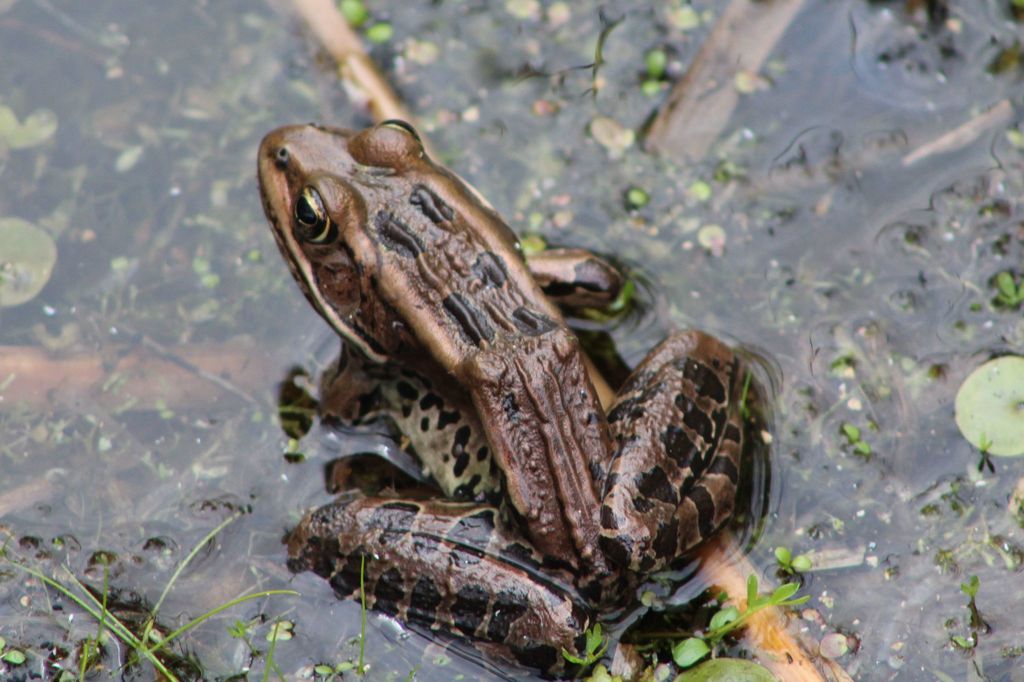
(c) Liz Smith, some rights reserved (CC BY) · licence
Family: Ranidae · Class: Amphibia · Order: Anura
Conservation status: G5 S2
Lithobates pipiens (Northern Leopard Frog) is a California animal in the Ranidae family.
The Northern Leopard Frog is a medium-sized ranid amphibian measuring 51 to 127 mm (2.0 to 5.0 inches) in snout-vent length. Adults display distinctive dark green to brown rounded spots with pale borders scattered across the dorsal surface and sides, creating the leopard-like pattern for which the species is named. The background coloration ranges from bright green to brown or bronze. A prominent dorsolateral fold extends from behind each eye to the groin. The ventral surface is white or cream-colored, often with dark mottling on the throat and chest. Males develop enlarged thumbs and vocal sacs during breeding season. Historically, Northern Leopard Frogs ranged across much of North America from southern Canada to northern Mexico. In California, the species was documented from the Central Valley, Sierra Nevada foothills, and scattered locations in southern California. Current distribution in the state is severely fragmented and reduced. According to NatureServe, the species maintains a global rank of G5 (secure) but holds a state rank of S2 (imperiled) in California, reflecting substantial population decline and range contraction within the state. Northern Leopard Frogs inhabit permanent and semi-permanent freshwater environments including ponds, lakes, marshes, slow-moving streams, and irrigation ditches. They require aquatic vegetation for cover and egg attachment sites. Adults move considerable distances between breeding and foraging habitats, utilizing grasslands, agricultural areas, and riparian corridors. Elevation range extends from sea level to approximately 3,350 meters (11,000 feet), though most California populations historically occurred below 1,500 meters (4,920 feet). Breeding occurs from March through July, depending on elevation and local conditions. Females deposit 2,000 to 6,500 eggs in globular masses attached to submerged vegetation in shallow water. Tadpoles require 60 to 90 days to metamorphose, depending on water temperature. Adults are opportunistic predators, consuming insects, spiders, worms, small crustaceans, and occasionally small vertebrates. The species is primarily nocturnal and semi-aquatic, though individuals may travel substantial distances overland between water bodies. The Northern Leopard Frog has experienced severe population decline in California and throughout much of the western United States. Primary threats include habitat loss due to agricultural conversion and urban development, water diversions and drought, disease including chytrid fungus and ranavirus, introduced predators such as bullfrogs and fish, and pesticide contamination. Climate change compounds these threats through altered precipitation patterns and increased frequency of extreme weather events. The species has been extirpated from much of its historical California range, with remaining populations highly fragmented and vulnerable to local extinction. Conservation efforts focus on habitat restoration, captive breeding programs, and disease management protocols.
Classification
Class: Amphibia · Order: Anura · Family: Ranidae
Conservation status
G5 S2
Frequently asked questions
How is Lithobates pipiens classified?
Lithobates pipiens belongs to class Amphibia, order Anura, family Ranidae.
What family does Lithobates pipiens belong to?
Lithobates pipiens is in the Ranidae family.
Is Lithobates pipiens protected or of conservation concern?
Lithobates pipiens carries the following status: G5 S2.
What is Lithobates pipiens?
The Northern Leopard Frog is a medium-sized ranid amphibian measuring 51 to 127 mm (2.0 to 5.0 inches) in snout-vent length.
Is Lithobates pipiens found in California?
Yes. Lithobates pipiens is recorded in California in The California Species Project's catalogue.
Related species
Other California species in the same genus, family, or bioregion.
Data from The California Species Project — 14,000+ California species with verified data from CNPS, CDFW, USFWS, and more.