Lithobates sphenocephalus
Southern Leopard Frog
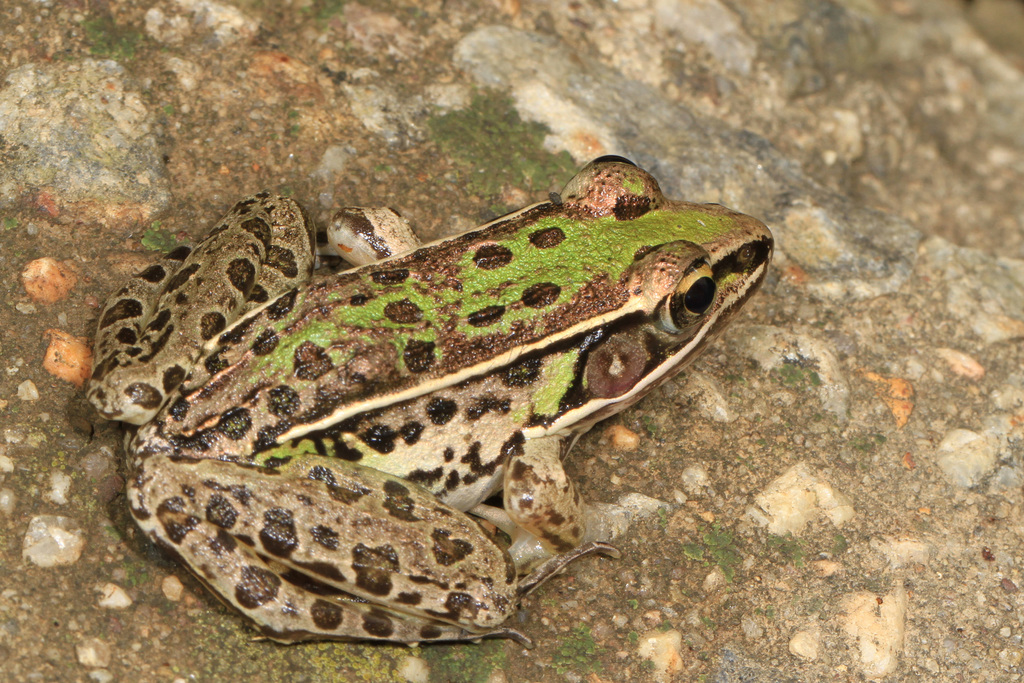
(c) Judy Gallagher, some rights reserved (CC BY-SA) · licence
Family: Ranidae · Class: Amphibia · Order: Anura
Lithobates sphenocephalus (Southern Leopard Frog) is a California animal in the Ranidae family.
The Southern Leopard Frog is a medium-sized ranid amphibian measuring 51 to 127 mm (2.0 to 5.0 inches) in snout-vent length. Adults display variable coloration, typically green to brown dorsally with distinct dark leopard-like spots bordered by light rings. The dorsolateral folds are prominent and continuous, extending from behind the eyes to the groin. The ventral surface is white or cream-colored, and males develop enlarged thumbs and vocal sacs during breeding season. The species can be distinguished from other leopard frogs by its pointed snout and the presence of a light spot in the center of the tympanum. Historically, Southern Leopard Frogs ranged throughout the southeastern United States from southern New York to Florida and west to eastern Texas and Oklahoma. The species is native to lowland areas of this region but has been introduced to several western states. In California, established populations occur as a non-native species in scattered locations, primarily in the Central Valley and southern regions. These introduced populations likely resulted from releases of captive animals or transport with agricultural products. Southern Leopard Frogs inhabit a variety of aquatic and semi-aquatic environments. They prefer shallow, permanent or semi-permanent water bodies including ponds, lakes, marshes, swamps, and slow-moving streams. The species shows tolerance for both fresh and slightly brackish water. Adults commonly utilize vegetated shorelines and adjacent terrestrial habitats. During summer months, individuals move into terrestrial environments including pastures, fields, and agricultural lands where vegetation provides shade and hunting opportunities. They are typically found at elevations below 1,500 feet but can occur at higher elevations in suitable habitat. Southern Leopard Frogs are primarily nocturnal and semi-aquatic. Their diet consists mainly of insects, spiders, small crustaceans, and other invertebrates, with larger individuals occasionally consuming small vertebrates including other frogs. Breeding occurs from February through October, with peak activity during warmer months. Males call from shallow water to attract females, producing a series of short, guttural croaks. Females deposit 1,000 to 5,000 eggs in globular masses attached to submerged vegetation. Tadpoles develop over 60 to 90 days, depending on water temperature. Adults hibernate during colder months, either underwater in mud or in terrestrial burrows. The Southern Leopard Frog maintains stable populations throughout most of its native range and is classified as globally secure (G5) by NatureServe. However, some peripheral populations have experienced declines due to habitat loss, pollution, and disease. In California, as a non-native species, the Southern Leopard Frog may compete with native amphibians and potentially impacts local ecosystems. The species faces ongoing threats from urban development, agricultural intensification, and climate change throughout its range. Chytrid fungus has caused population declines in some areas, though the species appears more resistant to this disease than many other amphibians.
Classification
Class: Amphibia · Order: Anura · Family: Ranidae
Frequently asked questions
How is Lithobates sphenocephalus classified?
Lithobates sphenocephalus belongs to class Amphibia, order Anura, family Ranidae.
What family does Lithobates sphenocephalus belong to?
Lithobates sphenocephalus is in the Ranidae family.
What is Lithobates sphenocephalus?
The Southern Leopard Frog is a medium-sized ranid amphibian measuring 51 to 127 mm (2.0 to 5.0 inches) in snout-vent length.
Is Lithobates sphenocephalus found in California?
Yes. Lithobates sphenocephalus is recorded in California in The California Species Project's catalogue.
Related species
Other California species in the same genus, family, or bioregion.
Data from The California Species Project — 14,000+ California species with verified data from CNPS, CDFW, USFWS, and more.