Lithobates yavapaiensis
Lowland Leopard Frog
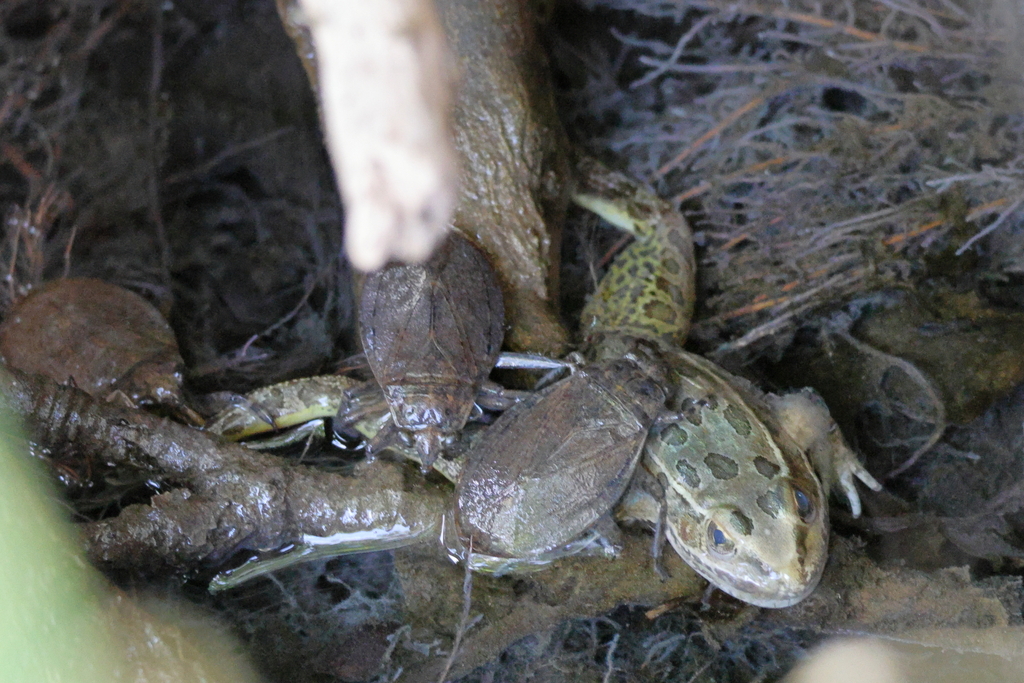
(c) Isaac Ethington, some rights reserved (CC BY) · licence
Family: Ranidae · Class: Amphibia · Order: Anura
Conservation status: G4 SX
Lithobates yavapaiensis (Lowland Leopard Frog) is a California animal in the Ranidae family.
The Lowland Leopard Frog (Lithobates yavapaiensis) is a medium-sized ranid amphibian native to the southwestern United States and northwestern Mexico. Adults typically measure 51 to 114 mm (2.0 to 4.5 inches) in snout-to-vent length, with females generally larger than males. The dorsal coloration ranges from brown to olive-green with dark, rounded spots that may have light-colored borders, giving the species its leopard-like appearance. The ventral surface is cream to white, often with yellow coloration on the posterior legs and groin area. A prominent dorsolateral fold extends from behind the eye to the hip region. Historically, the Lowland Leopard Frog occurred in suitable aquatic habitats throughout much of southern California, including the Los Angeles Basin, Riverside County, Imperial Valley, and portions of San Bernardino County. The species was documented at elevations from sea level to approximately 1,220 meters (4,000 feet). However, the California rank of SX (state extirpated) indicates that no viable populations currently exist within the state. The last confirmed California record was reported in the 1960s, though some unconfirmed sightings occurred into the 1970s. Lowland Leopard Frogs inhabit permanent and semi-permanent aquatic environments including springs, streams, ponds, and stock tanks in desert and semi-desert regions. The species typically occurs in areas with emergent or shoreline vegetation such as cattails, sedges, and willows. Water temperatures suitable for the species range from 15 to 30 degrees Celsius (59 to 86 degrees Fahrenheit). Rocky substrate and overhanging vegetation provide essential cover and basking sites. This species is primarily nocturnal, though individuals may be active during daylight hours in cooler months. Diet consists of arthropods, including beetles, flies, ants, and spiders, captured both in water and on land. Breeding occurs from February through September, with peak activity during spring months when water temperatures are optimal. Females deposit 500 to 6,500 eggs in globular masses attached to submerged vegetation. Tadpoles require 11 to 13 months to complete metamorphosis, overwintering in aquatic habitats. The extirpation of Lowland Leopard Frogs from California resulted from multiple factors including habitat destruction, water diversions, introduction of non-native predators such as bullfrogs and fish, and disease. Urbanization eliminated numerous breeding sites in the Los Angeles Basin and coastal areas. The species remains relatively stable in Arizona and Mexico, maintaining its global rank of G4 (apparently secure). Recovery efforts in California would require habitat restoration, water source protection, and management of invasive species. The loss of this species represents a significant reduction in California's native amphibian diversity and highlights the vulnerability of desert aquatic habitats to human modification.
Classification
Class: Amphibia · Order: Anura · Family: Ranidae
Conservation status
G4 SX
Frequently asked questions
How is Lithobates yavapaiensis classified?
Lithobates yavapaiensis belongs to class Amphibia, order Anura, family Ranidae.
What family does Lithobates yavapaiensis belong to?
Lithobates yavapaiensis is in the Ranidae family.
Is Lithobates yavapaiensis protected or of conservation concern?
Lithobates yavapaiensis carries the following status: G4 SX.
What is Lithobates yavapaiensis?
The Lowland Leopard Frog (Lithobates yavapaiensis) is a medium-sized ranid amphibian native to the southwestern United States and northwestern Mexico.
Is Lithobates yavapaiensis found in California?
Yes. Lithobates yavapaiensis is recorded in California in The California Species Project's catalogue.
Related species
Other California species in the same genus, family, or bioregion.
Data from The California Species Project — 14,000+ California species with verified data from CNPS, CDFW, USFWS, and more.