Lithophane dilatocula
Dilatocula Pinion
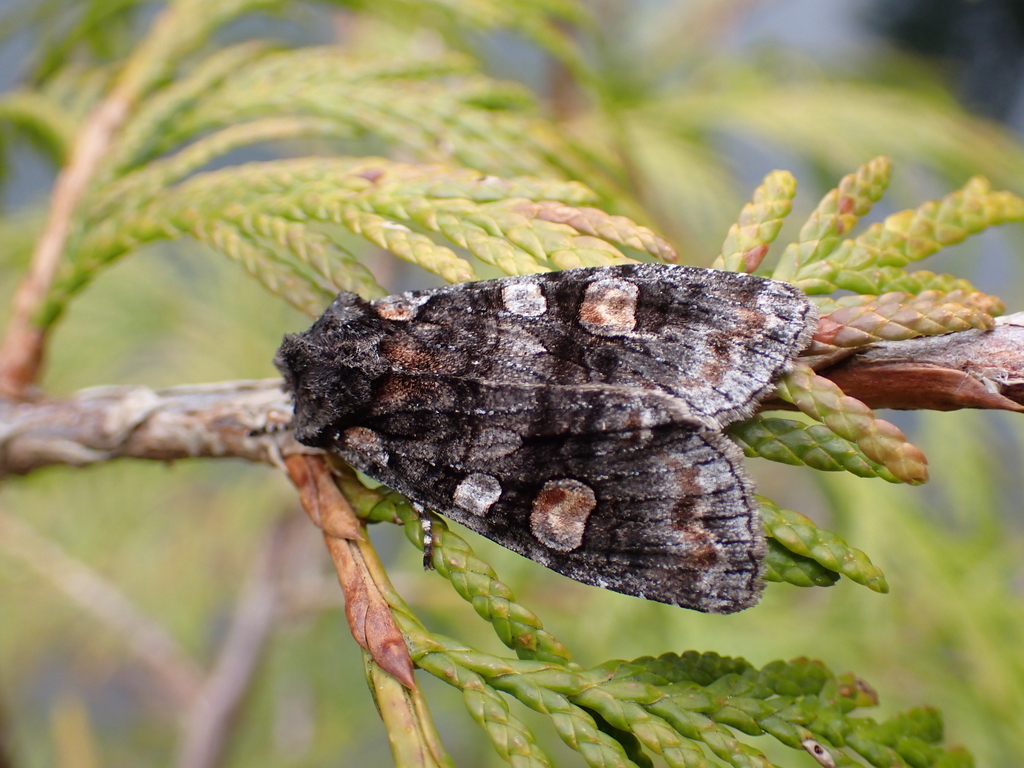
no rights reserved · CC0
Family: Noctuidae · Class: Insecta · Order: Lepidoptera
Lithophane dilatocula (Dilatocula Pinion) is a California animal in the Noctuidae family.
Lithophane dilatocula, commonly known as the Dilatocula Pinion, is a nocturnal moth belonging to the family Noctuidae. This species represents one of the pinion moths within the genus Lithophane, characterized by cryptic coloration patterns that provide effective camouflage against tree bark and similar substrates during daylight hours when the moths remain inactive. The Dilatocula Pinion occurs in California, with documented records from the eastern Sierra Nevada region. According to lepidopterist surveys, the species has been recorded in Inyo County, specifically along Westgard Pass Road northeast of Big Pine at elevations around 10,000 feet. Additional records exist from Kern County at Mount Pinos Highway at 7,500 feet elevation, indicating the species inhabits montane environments across multiple mountain ranges in California. The species appears to have a broader western North American distribution, as suggested by taxonomic references that do not limit its range exclusively to California. The habitat preferences of L. dilatocula are closely tied to areas supporting its host plants within the family Betulaceae, specifically alder species (Alnus). The moth demonstrates specialist feeding behavior, with larvae exclusively utilizing Alnus species for development (Crabo et al. 2014). This host plant association restricts the species to riparian corridors, mountain canyons, and other moist habitats where alders naturally occur at mid to high elevations in California's mountain systems. As a member of the Noctuidae, the Dilatocula Pinion exhibits typical owlet moth behavior patterns. Adults are nocturnal and attracted to artificial light sources during their flight period. Based on collection records from California, adult flight activity occurs during spring months, with specimens documented in May. The species likely follows a univoltine life cycle common among montane Lithophane species, with larvae feeding on alder foliage during summer months and pupating to overwinter as adults. The cryptic wing patterns enable effective concealment during daytime roosting periods on tree bark. The conservation status of Lithophane dilatocula has not been formally assessed by state or federal agencies. The species does not appear on California's Special Animals List maintained by the Department of Fish and Wildlife, nor is it listed under the federal Endangered Species Act. However, its apparent specialization on Alnus host plants and restriction to specific montane habitats may make populations vulnerable to habitat modifications, climate change effects on riparian systems, and alterations to natural fire regimes that maintain alder communities. The limited number of documented California records suggests either genuine rarity or insufficient survey effort in appropriate habitats. Additional field surveys in suitable alder-dominated habitats throughout California's mountain ranges would help clarify the species' true distribution and abundance patterns, providing essential data for future conservation assessments.
Classification
Class: Insecta · Order: Lepidoptera · Family: Noctuidae
Frequently asked questions
How is Lithophane dilatocula classified?
Lithophane dilatocula belongs to class Insecta, order Lepidoptera, family Noctuidae.
What family does Lithophane dilatocula belong to?
Lithophane dilatocula is in the Noctuidae family.
What is Lithophane dilatocula?
Lithophane dilatocula, commonly known as the Dilatocula Pinion, is a nocturnal moth belonging to the family Noctuidae.
Is Lithophane dilatocula found in California?
Yes. Lithophane dilatocula is recorded in California in The California Species Project's catalogue.
Related species
Other California species in the same genus, family, or bioregion.
Data from The California Species Project — 14,000+ California species with verified data from CNPS, CDFW, USFWS, and more.