Litocala sexsignata
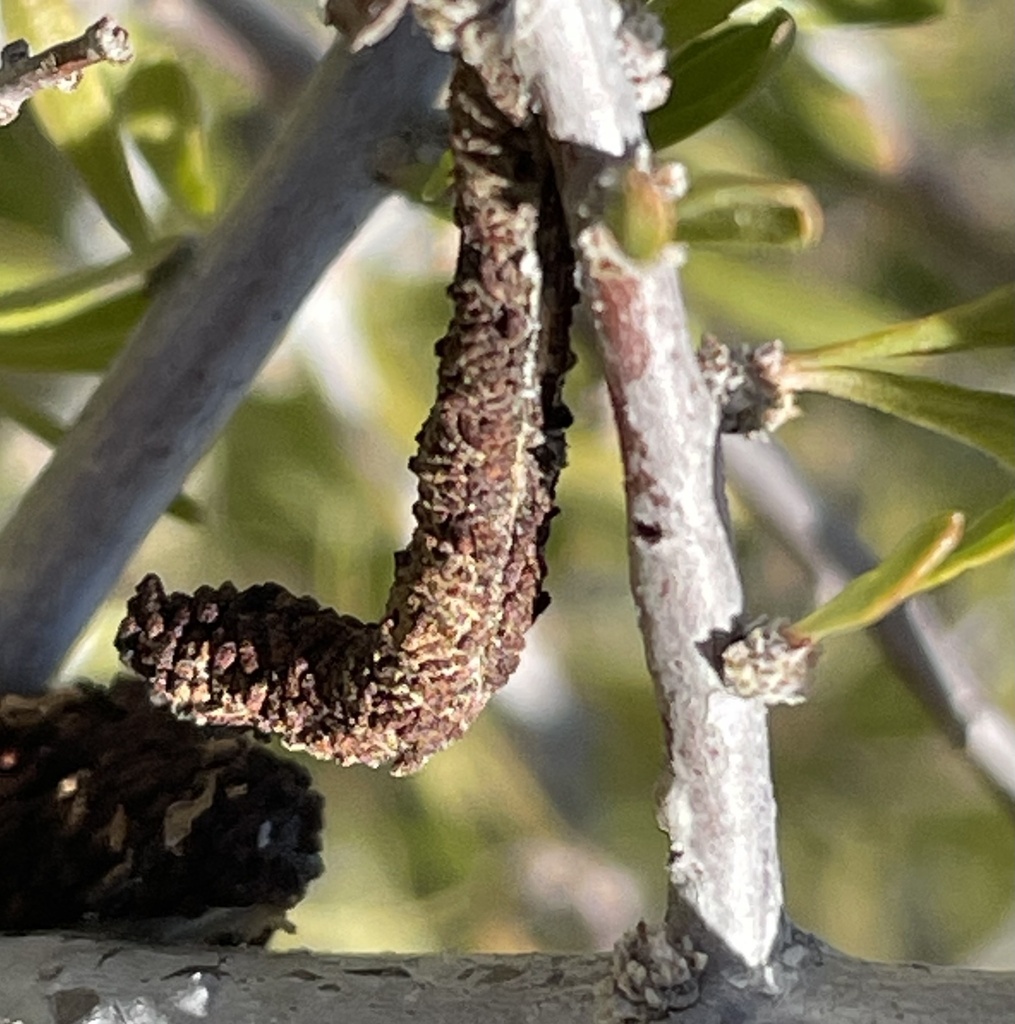
no rights reserved · CC0
Family: Erebidae · Class: Insecta · Order: Lepidoptera
Litocala sexsignata is a California animal in the Erebidae family.
Litocala sexsignata is a moth species in the family Erebidae, characterized by its distinctive wing patterns and oak-feeding larval habits. Adults typically display forewings with a complex pattern of light and dark markings, though detailed morphological descriptions vary in the literature. The forewings generally exhibit a mottled brown and gray coloration with characteristic markings that distinguish it from related Litocala species. The hindwings are typically lighter in coloration with reduced patterning. This species has a broad western North American distribution, ranging from Washington, Montana, Utah, and Colorado south to southern California, extending into Mexico through Baja California Norte, Sonora, and Chihuahua. The extensive range suggests adaptation to diverse climatic conditions across multiple biogeographic regions, from temperate northern latitudes to subtropical Mexican habitats. Litocala sexsignata inhabits oak woodlands and mixed forest environments where its host plants occur. The species is associated with areas supporting various oak species (Quercus) and chinquapin (Chrysolepis), with possible utilization of manzanita (Arctostaphylos) as well. These habitats typically occur at elevations ranging from sea level to montane zones, depending on the geographic location and local distribution of suitable host vegetation. The moth's presence is closely tied to the availability of healthy oak ecosystems and mixed hardwood forests. The larvae feed on new foliage of oaks, chinquapin, and possibly manzanita, indicating a preference for fresh, tender leaf tissue. This feeding behavior suggests that larval development coincides with periods of active host plant growth, typically during spring and early summer months. Adult flight periods likely correspond with optimal conditions for mating and egg-laying, though specific phenology varies across the species' extensive range. Like other Erebidae moths, adults are presumably nocturnal and attracted to artificial light sources. Reproductive behavior follows typical lepidopteran patterns, with females depositing eggs on or near host plants. Larval development occurs through multiple instars, with caterpillars feeding on oak foliage before pupating. The species likely produces one or two generations per year, depending on local climate conditions and host plant phenology. No specific conservation status has been assigned to Litocala sexsignata at federal, state, or international levels. The species' wide geographic distribution across multiple states and countries suggests relatively stable populations, though local abundance may vary with oak forest health and habitat availability. Climate change impacts on oak ecosystems, including altered precipitation patterns and increased wildfire frequency, could affect population dynamics across portions of the range. Urban development and oak woodland conversion represent potential localized threats, particularly in rapidly developing areas of California and the southwestern United States. The species' dependence on oak ecosystems links its conservation status to broader oak woodland preservation efforts throughout its range.
Classification
Class: Insecta · Order: Lepidoptera · Family: Erebidae
Frequently asked questions
How is Litocala sexsignata classified?
Litocala sexsignata belongs to class Insecta, order Lepidoptera, family Erebidae.
What family does Litocala sexsignata belong to?
Litocala sexsignata is in the Erebidae family.
What is Litocala sexsignata?
Litocala sexsignata is a moth species in the family Erebidae, characterized by its distinctive wing patterns and oak-feeding larval habits.
Is Litocala sexsignata found in California?
Yes. Litocala sexsignata is recorded in California in The California Species Project's catalogue.
Related species
Other California species in the same genus, family, or bioregion.
Data from The California Species Project — 14,000+ California species with verified data from CNPS, CDFW, USFWS, and more.