Litodonta wymola
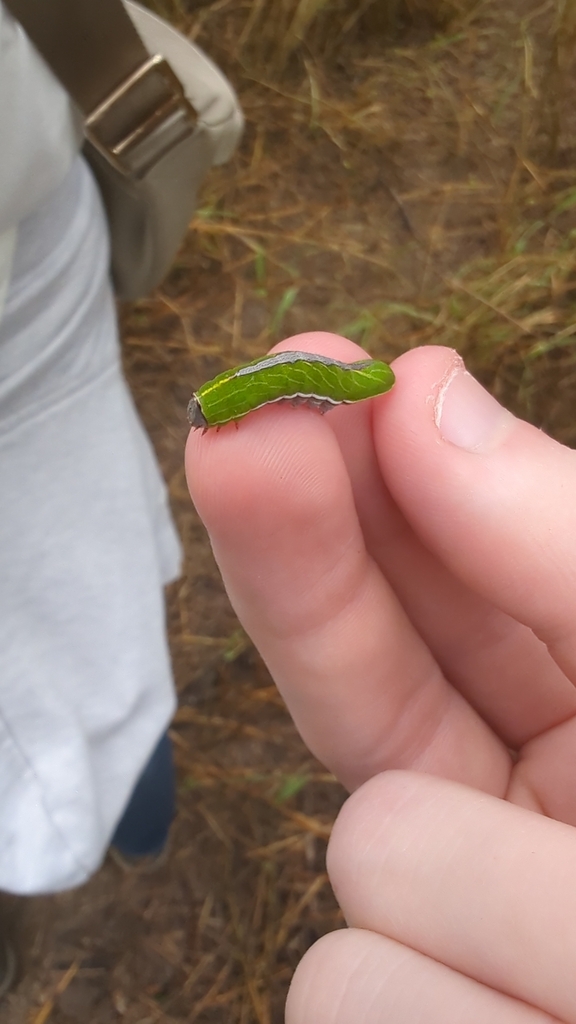
no rights reserved · CC0
Family: Notodontidae · Class: Insecta · Order: Lepidoptera
Litodonta wymola is a California animal in the Notodontidae family.
Litodonta wymola is a moth species in the family Notodontidae, commonly known as the prominent moths. This species belongs to the order Lepidoptera and represents one of the lesser-documented members of North American Notodontidae. The family Notodontidae comprises approximately 3,800 species worldwide, with moths typically characterized by their robust bodies and distinctive wing patterns. The physical characteristics of Litodonta wymola align with typical Notodontidae features, including a stout thorax and relatively broad forewings. Adult prominent moths generally measure 25 to 40 mm (1.0 to 1.6 inches) in wingspan, though specific measurements for L. wymola have not been extensively documented in available literature. Like other members of the genus Litodonta, this species likely displays cryptic coloration patterns that provide camouflage against tree bark and woody substrates during daytime resting periods. The distribution and range of Litodonta wymola remain poorly documented in current taxonomic and ecological databases. Many Notodontidae species exhibit localized distributions tied to specific host plant communities, suggesting that L. wymola may have similarly restricted habitat requirements. The genus Litodonta is represented in North America, but comprehensive range maps and occurrence records for individual species within this genus are often incomplete. Habitat preferences for Litodonta wymola are not well-established in available scientific literature. However, based on ecological patterns observed in related Notodontidae species, this moth likely inhabits forested environments where suitable host plants occur. Many prominent moths are associated with deciduous or mixed forests, utilizing various tree species during their larval development. The species may show preferences for specific elevation ranges or forest types, though these associations require further documentation through systematic surveys. The life cycle and ecological behavior of Litodonta wymola follow the typical lepidopteran pattern of complete metamorphosis, progressing through egg, larval, pupal, and adult stages. Prominent moth larvae are often leaf feeders, with many species showing host plant specificity. The timing of adult emergence, mating behaviors, and seasonal activity patterns for L. wymola have not been comprehensively studied. Most Notodontidae species are nocturnal, with adults attracted to artificial light sources during nighttime hours. The conservation status of Litodonta wymola is not currently assessed by major conservation organizations. The species lacks federal or state listing status, and its global conservation rank has not been evaluated by NatureServe as of December 2025. This absence of formal conservation assessment likely reflects limited knowledge about the species' distribution, population trends, and ecological requirements rather than confirmed population stability. Many lesser-known moth species face potential threats from habitat modification, light pollution, and climate change, though specific impacts on L. wymola populations remain undocumented. Further research is needed to establish baseline population data, habitat associations, and potential conservation concerns for this species.
Classification
Class: Insecta · Order: Lepidoptera · Family: Notodontidae
Frequently asked questions
How is Litodonta wymola classified?
Litodonta wymola belongs to class Insecta, order Lepidoptera, family Notodontidae.
What family does Litodonta wymola belong to?
Litodonta wymola is in the Notodontidae family.
What is Litodonta wymola?
Litodonta wymola is a moth species in the family Notodontidae, commonly known as the prominent moths.
Is Litodonta wymola found in California?
Yes. Litodonta wymola is recorded in California in The California Species Project's catalogue.
Related species
Other California species in the same genus, family, or bioregion.
Data from The California Species Project — 14,000+ California species with verified data from CNPS, CDFW, USFWS, and more.