Littorina keenae
Eroded Periwinkle
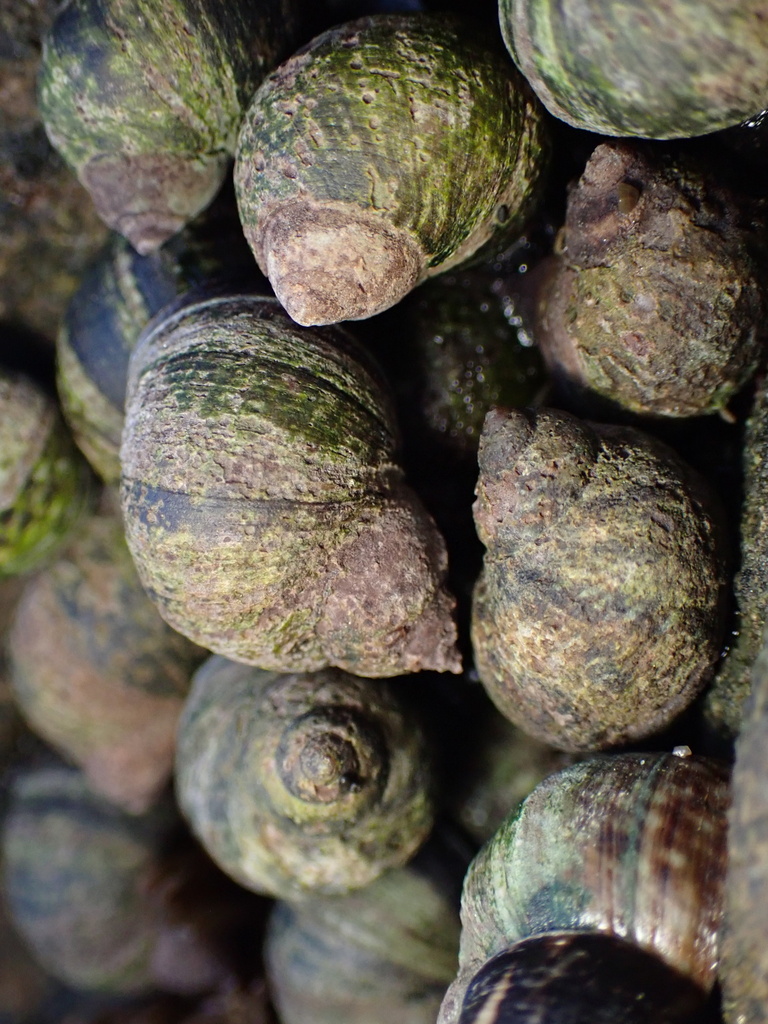
(c) Cricket Raspet, some rights reserved (CC BY) · licence
Family: Littorinidae · Class: Gastropoda · Order: Littorinimorpha
Littorina keenae (Eroded Periwinkle) is a California animal in the Littorinidae family.
The eroded periwinkle (Littorina keenae) is a small marine gastropod in the family Littorinidae, commonly known as winkles or periwinkles. This sea snail represents one of several Littorina species found along the Pacific coast, distinguished by its characteristic shell morphology and ecological adaptations to rocky intertidal environments. The species exhibits the typical periwinkle shell structure, with a conical to globular form adapted for life in wave-exposed habitats. Like other littorinids, the shell provides protection against desiccation during low tide periods and mechanical damage from wave action. The operculum, a horny plate that seals the shell opening, allows the animal to remain closed during adverse conditions. Littorina keenae occurs along the Pacific coast, where it inhabits rocky intertidal zones characteristic of temperate marine ecosystems. The species' distribution appears to be associated with specific substrate types and tidal exposure patterns that support periwinkle communities. California's rocky coastline provides suitable habitat for this species within the broader context of Pacific littoral ecosystems. The eroded periwinkle occupies rocky intertidal habitats where it can withstand regular exposure to air during low tide cycles. These environments are characterized by hard substrates, wave action, and periodic submersion that support diverse assemblages of marine invertebrates. The species likely inhabits the mid to upper intertidal zones where many littorinids are typically found, utilizing rock crevices and surfaces for attachment and feeding. According to SeaLifeBase, the life cycle includes embryonic development into planktonic trocophore larvae, which later develop into juvenile veligers before reaching adult form (SeaLifeBase). This developmental pattern is typical of marine gastropods, with the planktonic larval stage facilitating dispersal and colonization of suitable habitats. Adult periwinkles are generally herbivorous, grazing on algal films and small algae growing on rock surfaces using their radula, a rasping feeding structure characteristic of gastropods. Like many littorinids, this species likely exhibits behavioral adaptations to intertidal life, including the ability to seal the shell during low tide to prevent desiccation, and specific positioning within the tidal zone to optimize feeding opportunities while minimizing exposure to predators and environmental stress. Conservation status information for Littorina keenae is limited in available databases, with no federal or state listing designations currently assigned. The species' conservation needs and population status have not been comprehensively assessed, reflecting the general lack of detailed studies on many marine invertebrate species along the Pacific coast. Marine ecosystems face ongoing pressures from coastal development, pollution, climate change, and ocean acidification, which may affect intertidal communities including periwinkle populations. Additional research into this species' ecology, distribution, and population trends would aid in understanding its conservation status and management needs within California's marine ecosystems.
Classification
Class: Gastropoda · Order: Littorinimorpha · Family: Littorinidae
Frequently asked questions
How is Littorina keenae classified?
Littorina keenae belongs to class Gastropoda, order Littorinimorpha, family Littorinidae.
What family does Littorina keenae belong to?
Littorina keenae is in the Littorinidae family.
What is Littorina keenae?
The eroded periwinkle (Littorina keenae) is a small marine gastropod in the family Littorinidae, commonly known as winkles or periwinkles.
Is Littorina keenae found in California?
Yes. Littorina keenae is recorded in California in The California Species Project's catalogue.
Related species
Other California species in the same genus, family, or bioregion.
Data from The California Species Project — 14,000+ California species with verified data from CNPS, CDFW, USFWS, and more.