Lobocleta ossularia
Drab Brown Wave
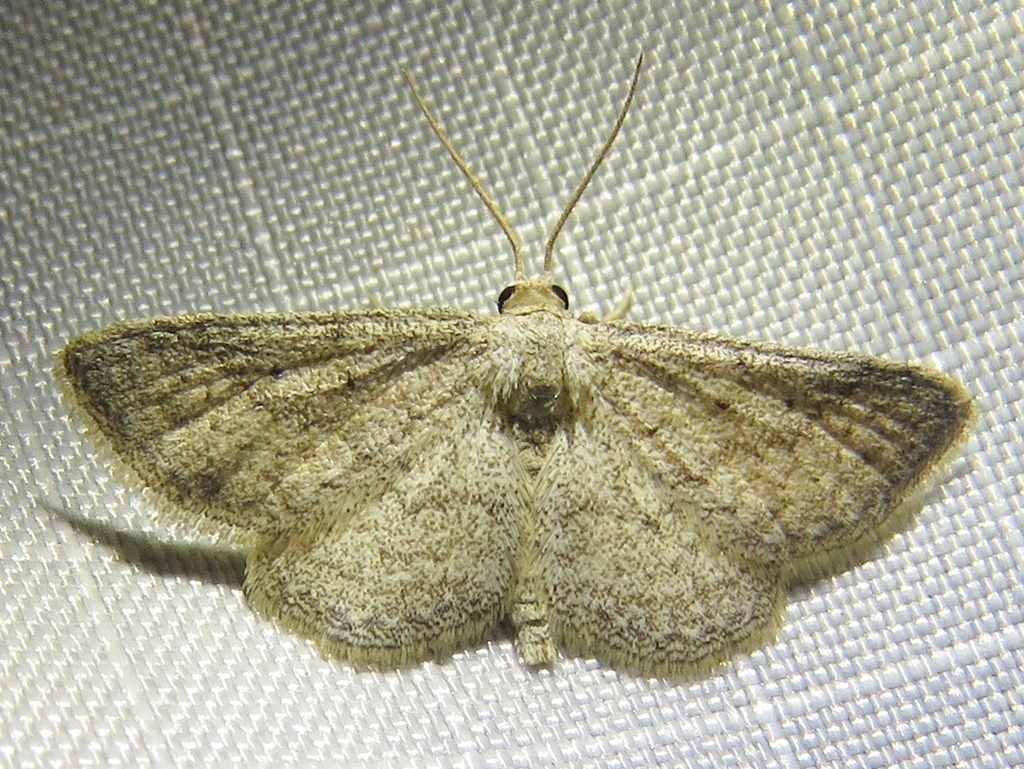
(c) Annika Lindqvist, some rights reserved (CC BY) · licence
Family: Geometridae · Class: Insecta · Order: Lepidoptera
Lobocleta ossularia (Drab Brown Wave) is a California animal in the Geometridae family.
The Drab Brown Wave (Lobocleta ossularia) is a small to medium-sized moth in the family Geometridae, commonly known as geometrid moths or inchworms. Adult moths typically measure 20-25 mm (0.8-1.0 inches) in wingspan. The forewings display muted brown coloration with subtle darker brown cross-lines and wavy patterns that give the species its common name. The hindwings are generally paler brown with less distinct markings. Males can be distinguished from females by their more feathered antennae and slightly smaller size. The wings at rest are held horizontally, characteristic of many geometrid species. Lobocleta ossularia occurs across much of North America, with populations documented from southern Canada through the United States. In California, the species has been recorded from various counties, though detailed distribution records are limited. The moth appears to have a relatively widespread distribution across temperate regions of the continent, suggesting adaptation to diverse climatic conditions. This species inhabits mixed deciduous and coniferous forests, woodland edges, and areas with abundant shrubland vegetation. Adults are typically found in areas with diverse plant communities that support the larval host plants. The moths show preference for habitats with moderate canopy cover that provide shelter during daytime hours while maintaining access to flowering plants for nectar feeding. Elevation ranges appear to extend from sea level to moderate mountain elevations, though specific altitudinal limits for California populations require further documentation. Adult Drab Brown Waves are nocturnal, becoming active after dusk to seek mates and nectar sources. Males are attracted to artificial lights, a behavior common among geometrid moths. Females release pheromones to attract males for mating. The species likely produces one to two generations per year, depending on local climate conditions. Larvae are typical geometrid caterpillars, moving with the characteristic looping motion that gives inchworms their name. The caterpillars feed on various deciduous trees and shrubs, though specific host plant preferences for this species require further study. Pupation occurs in soil or leaf litter, with adults emerging during warm months. Lobocleta ossularia does not appear on federal or state endangered species lists and currently lacks formal conservation status designation. The species' apparently widespread distribution suggests stable populations across its range. However, like many forest-associated moths, populations may face pressure from habitat fragmentation, pesticide use, and light pollution that disrupts nocturnal behavior patterns. Climate change could affect the species through alterations to forest composition and the phenology of host plants. The lack of detailed ecological studies limits understanding of population trends and specific conservation needs. Maintaining diverse forest habitats and reducing artificial light pollution in natural areas would benefit this species and other nocturnal Lepidoptera. Additional research into host plant relationships, population dynamics, and specific habitat requirements would improve conservation planning for Drab Brown Wave populations in California.
Classification
Class: Insecta · Order: Lepidoptera · Family: Geometridae
Frequently asked questions
How is Lobocleta ossularia classified?
Lobocleta ossularia belongs to class Insecta, order Lepidoptera, family Geometridae.
What family does Lobocleta ossularia belong to?
Lobocleta ossularia is in the Geometridae family.
What is Lobocleta ossularia?
The Drab Brown Wave (Lobocleta ossularia) is a small to medium-sized moth in the family Geometridae, commonly known as geometrid moths or inchworms.
Is Lobocleta ossularia found in California?
Yes. Lobocleta ossularia is recorded in California in The California Species Project's catalogue.
Related species
Other California species in the same genus, family, or bioregion.
Data from The California Species Project — 14,000+ California species with verified data from CNPS, CDFW, USFWS, and more.