Locustella lanceolata
Lanceolated Warbler
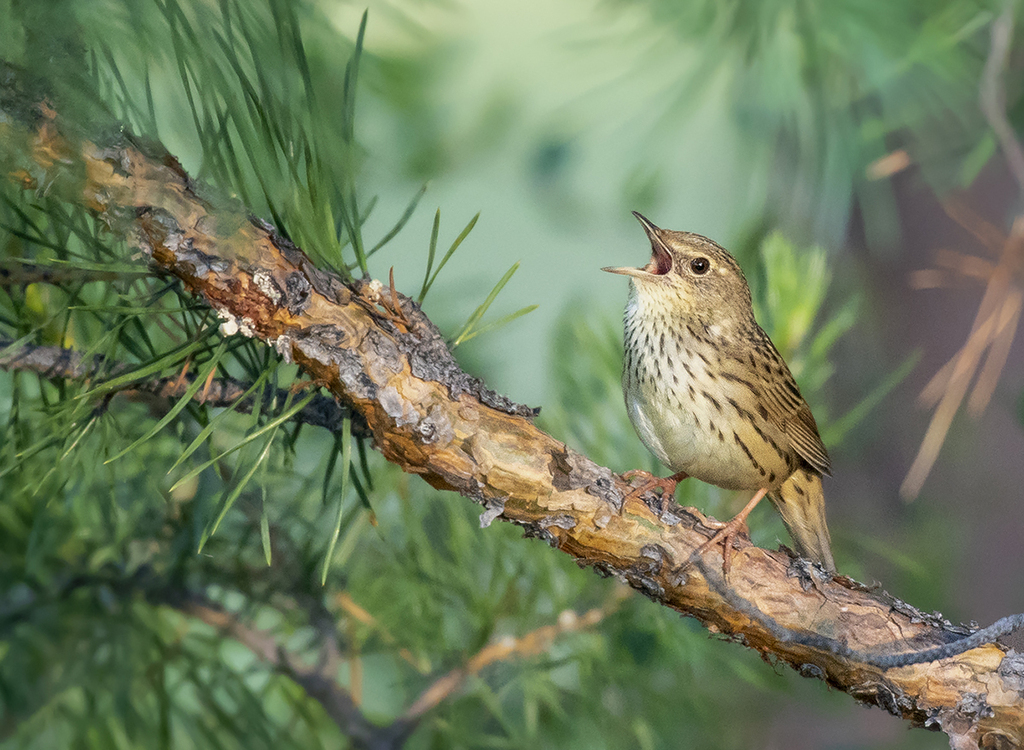
(c) Griha Hasanov, some rights reserved (CC BY) · licence
Family: Locustellidae · Class: Aves · Order: Passeriformes
Locustella lanceolata (Lanceolated Warbler) is a California animal in the Locustellidae family.
The Lanceolated Warbler is a small passerine bird in the family Locustellidae, measuring 11-12 cm (4.3-4.7 inches) in length with a wingspan of 15-19 cm (5.9-7.5 inches). This secretive warbler displays heavily streaked plumage with dark brown streaks extending from the crown down through the back and wings. The upperparts are olive-brown with prominent black streaking, while the underparts are pale buff to whitish with fine dark streaking extending onto the breast and flanks. The species shows a distinctive pale supercilium and dark eyeline. The bill is thin and pointed, typical of insectivorous warblers, and the legs are pale brown to pinkish. The Lanceolated Warbler breeds across the boreal forests of northern Eurasia, from Scandinavia east through Siberia to Sakhalin and the Kamchatka Peninsula. In North America, this species is considered an extremely rare vagrant, with most records occurring along the Pacific Coast and western Alaska. California records are exceptionally rare, with fewer than five documented occurrences in the state as of December 2025. Most North American sightings occur during fall migration between August and October. During the breeding season, Lanceolated Warblers inhabit dense undergrowth in taiga forests, particularly areas with willow and birch thickets near wetlands, bogs, and forest clearings. They prefer areas with thick ground cover including sedges, grasses, and low shrubs. On migration and in winter quarters in Southeast Asia, they occupy similar dense vegetation including reed beds, grasslands, and scrubland from sea level to 1,500 meters elevation. Lanceolated Warblers are highly secretive and elusive, typically remaining hidden in dense vegetation near ground level. They feed primarily on small insects and spiders, gleaning prey from leaves and stems while moving through thick cover. The species exhibits characteristic tail-cocking behavior and often runs mouse-like through vegetation rather than flying. Breeding occurs from May to July, with females constructing cup-shaped nests on or near the ground in dense grass or low shrubs. Clutches typically contain 4-6 eggs, which are incubated for 13-15 days. The species is known for its distinctive reeling song, similar to a fishing reel, delivered from concealed perches. The Lanceolated Warbler is not federally listed in the United States and receives no special protection status in California due to its vagrant status. Globally, the species is classified as Least Concern by the IUCN, with stable populations across its extensive Eurasian breeding range. However, like many long-distance migrants, the species may face threats from habitat loss in both breeding and wintering areas, as well as from climate change impacts on migration timing and habitat availability. In California, the species remains of primary interest to birders and researchers studying vagrant patterns rather than conservation concern.
Classification
Class: Aves · Order: Passeriformes · Family: Locustellidae
Frequently asked questions
How is Locustella lanceolata classified?
Locustella lanceolata belongs to class Aves, order Passeriformes, family Locustellidae.
What family does Locustella lanceolata belong to?
Locustella lanceolata is in the Locustellidae family.
What is Locustella lanceolata?
The Lanceolated Warbler is a small passerine bird in the family Locustellidae, measuring 11-12 cm (4.3-4.7 inches) in length with a wingspan of 15-19 cm (5.9-7.5 inches).
Is Locustella lanceolata found in California?
Yes. Locustella lanceolata is recorded in California in The California Species Project's catalogue.
More California species
This species has no close relatives in our California data — here are other species to explore.
Data from The California Species Project — 14,000+ California species with verified data from CNPS, CDFW, USFWS, and more.