Lon melane
Umber Skipper
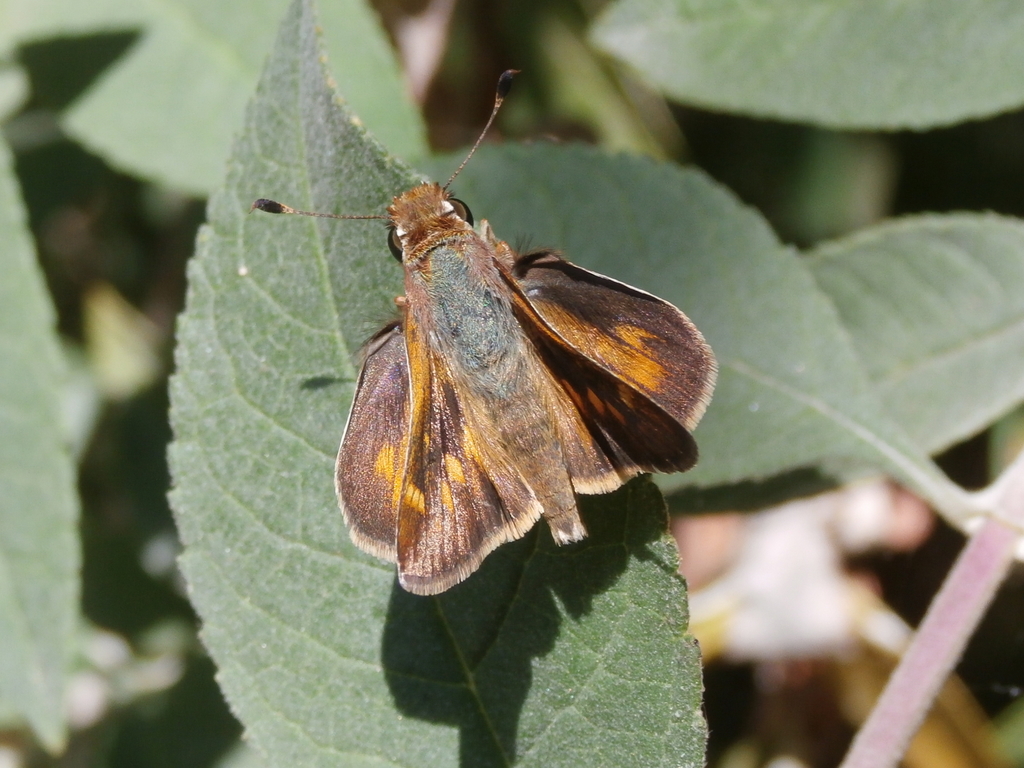
(c) emilyd47, some rights reserved (CC BY-SA) · licence
Family: Hesperiidae · Class: Insecta · Order: Lepidoptera
Lon melane (Umber Skipper) is a California animal in the Hesperiidae family.
The Umber Skipper (Lon melane) is a small butterfly in the family Hesperiidae. Adults have a wingspan typically ranging from 25 to 35 mm (1.0 to 1.4 inches). The dorsal surfaces are brown to dark brown with a distinctive umber coloration that gives the species its common name. Males and females show similar coloration patterns, with the ventral surfaces typically lighter brown or tan with subtle markings. The Umber Skipper occurs in California west of the Sierra Nevada Divide, extending into southern Arizona and Baja California. The species' range continues south through the highlands of Mexico and Central America. In California, populations are found from sea level to moderate elevations, primarily in areas with suitable grassland habitats and host plant availability. This species inhabits diverse habitat types including desert foothills, grassy areas, streamsides, roadsides, yards, parks, and open oak woodland (BugGuide). The species demonstrates considerable habitat flexibility, utilizing both natural and human-modified environments. Umber Skippers are commonly found in areas with mixed vegetation that includes their grass and sedge host plants, particularly in locations with adequate moisture or seasonal water availability. Umber Skippers utilize various grasses and sedges as larval host plants. Primary hosts include tufted hairgrass (Deschampsia caespitosa), Bermuda grass (Cynodon dactylon), California brome (Bromus carinatus), and San Diego sedge (Carex spissa). Males exhibit typical skipper behavior, perching in grassy areas to locate and court receptive females (Butterflies and Moths of North America). Caterpillars feed on leaves and construct shelters by rolling or tying leaves together for protection during development. The species produces multiple generations per year in favorable climates, with adults active during warm months when host plants are growing. Reproductive behavior follows the standard hesperiid pattern, with males establishing territories in suitable habitat patches and engaging in aerial courtship displays. Females deposit eggs singly on host plant leaves, and larvae develop through five instars before pupating. Development time varies with temperature and season, with faster development during warmer periods. The Umber Skipper is considered widespread and common throughout its range, with no apparent population declines (NatureServe Explorer). The species is known from many localities and maintains stable populations across diverse habitat types. Its ability to utilize common grass species, including introduced varieties like Bermuda grass, and adapt to human-modified environments contributes to its conservation security. The species' broad host plant range and habitat flexibility provide resilience against localized habitat changes. Currently, the Umber Skipper faces no significant conservation threats and is not listed under federal or state endangered species legislation.
Classification
Class: Insecta · Order: Lepidoptera · Family: Hesperiidae
Frequently asked questions
How is Lon melane classified?
Lon melane belongs to class Insecta, order Lepidoptera, family Hesperiidae.
What family does Lon melane belong to?
Lon melane is in the Hesperiidae family.
What is Lon melane?
The Umber Skipper (Lon melane) is a small butterfly in the family Hesperiidae.
Is Lon melane found in California?
Yes. Lon melane is recorded in California in The California Species Project's catalogue.
Related species
Other California species in the same genus, family, or bioregion.
Data from The California Species Project — 14,000+ California species with verified data from CNPS, CDFW, USFWS, and more.