Lontra canadensis
North American River Otter
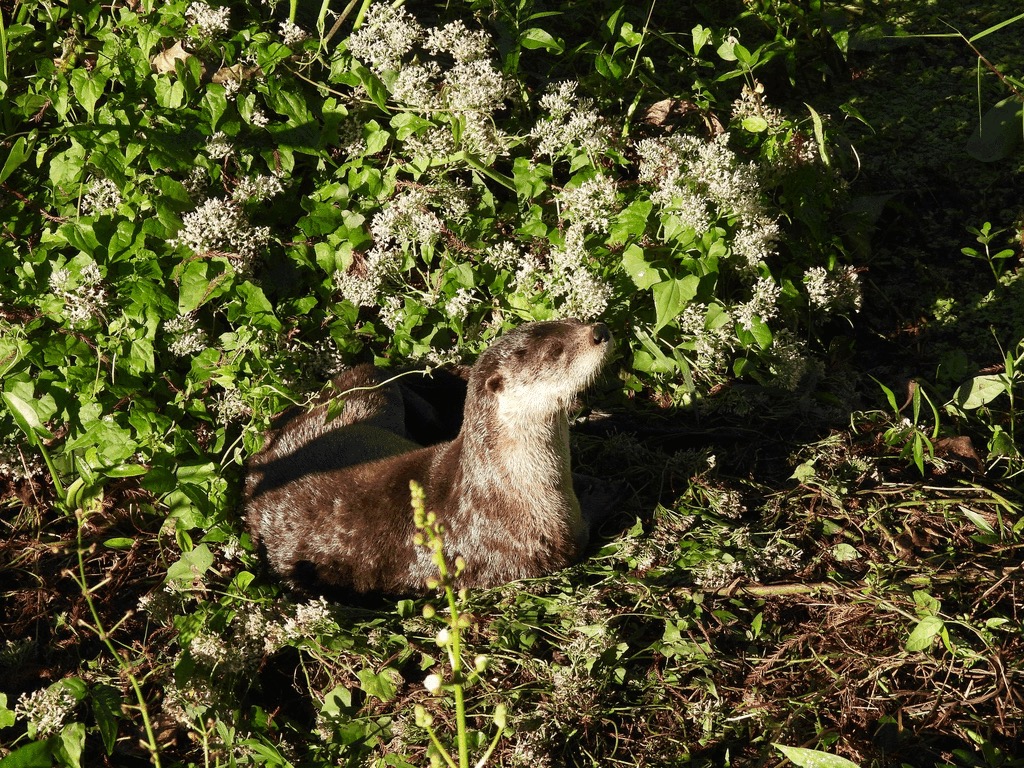
(c) ncb1221, some rights reserved (CC BY) · licence
Family: Mustelidae · Class: Mammalia · Order: Carnivora
Lontra canadensis (North American River Otter) is a California animal in the Mustelidae family.
The North American river otter is a semi-aquatic carnivore with a streamlined body adapted for aquatic life. Adults measure 66 to 107 cm (26 to 42 inches) in total length, including a thick, tapered tail of 30 to 42 cm (12 to 17 inches). Body weight ranges from 5 to 14 kg (11 to 31 pounds), with males typically larger than females. The dense, water-repellent fur consists of guard hairs overlying a thick undercoat, appearing dark brown to almost black when wet and lighter brown when dry. Distinguished features include webbed feet, small ears and eyes positioned high on the head, prominent whiskers, and nostrils that can close underwater. Historically, North American river otters ranged throughout most of North America, including all of California except the southwestern deserts. By the early 1900s, populations were eliminated from much of their original range due to habitat loss, water pollution, and unregulated trapping. In California, otters were extirpated from the Central Valley and southern regions by the 1950s. Current California populations are primarily restricted to the northern coastal watersheds, including the Smith, Klamath, Eel, and Russian river systems. Small populations persist in the Sierra Nevada, particularly in watersheds of Lake Tahoe and some tributaries of the Tuolumne River. River otters inhabit freshwater environments including rivers, streams, lakes, ponds, and associated wetlands. They prefer areas with abundant riparian vegetation that provides cover and denning sites. Elevation range extends from sea level to approximately 2,400 meters (8,000 feet) in montane areas. Den sites are typically located in natural cavities along riverbanks, hollow logs, abandoned beaver lodges, or root systems of large trees. Access to clean water with adequate fish populations is essential. River otters are opportunistic predators with fish comprising 70 to 90 percent of their diet. Primary prey includes trout, suckers, sculpins, and other slow-moving fish species. They also consume crayfish, frogs, small mammals, birds, and aquatic insects. Otters are capable divers, remaining underwater for up to four minutes while hunting. Breeding occurs from late winter through early spring, with delayed implantation resulting in births the following spring. Litters typically contain two to four kits, which remain with the female for approximately one year. The species is not federally listed, reflecting successful recovery efforts in many regions. However, California populations remain at a fraction of historical levels. Primary threats include habitat fragmentation, water diversions, pollution from agricultural runoff and urban development, and climate change effects on stream flows. The California Department of Fish and Wildlife considers river otters a species of special concern in some watersheds due to limited distribution and ongoing habitat pressures. Reintroduction programs have shown success in some western states, though none are currently planned for California.
Classification
Class: Mammalia · Order: Carnivora · Family: Mustelidae
Frequently asked questions
How is Lontra canadensis classified?
Lontra canadensis belongs to class Mammalia, order Carnivora, family Mustelidae.
What family does Lontra canadensis belong to?
Lontra canadensis is in the Mustelidae family.
What is Lontra canadensis?
The North American river otter is a semi-aquatic carnivore with a streamlined body adapted for aquatic life.
Is Lontra canadensis found in California?
Yes. Lontra canadensis is recorded in California in The California Species Project's catalogue.
Related species
Other California species in the same genus, family, or bioregion.
Data from The California Species Project — 14,000+ California species with verified data from CNPS, CDFW, USFWS, and more.