Lontra canadensis sonora
Southwestern River Otter
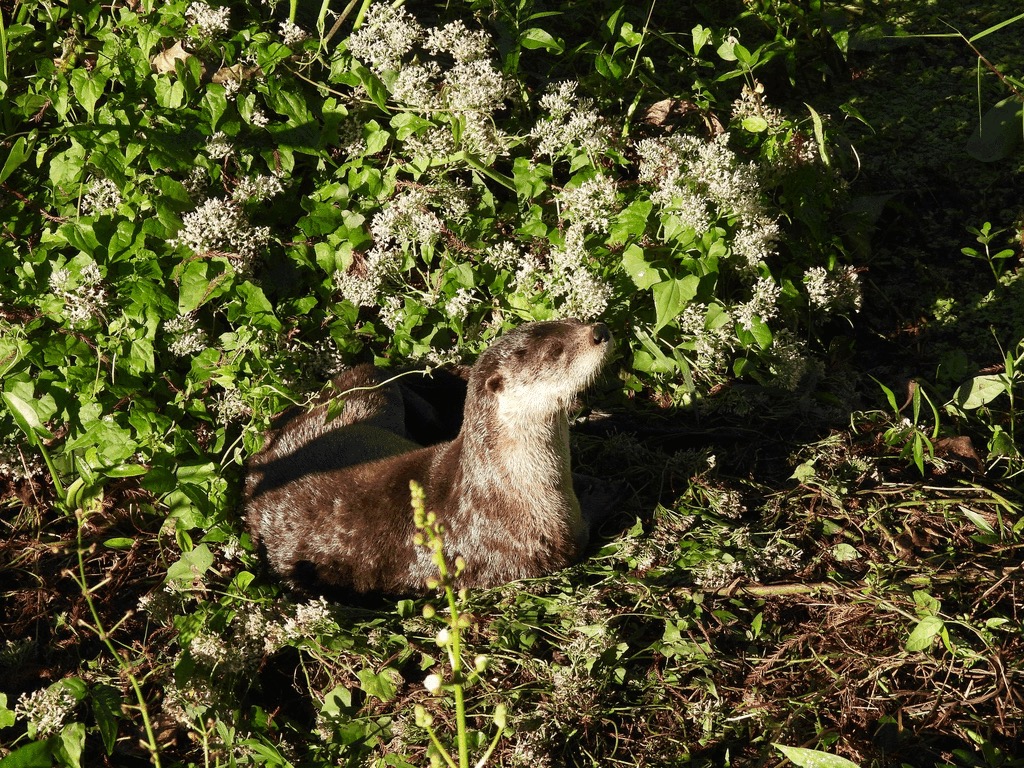
(c) ncb1221, some rights reserved (CC BY) · licence
Family: Mustelidae · Class: Mammalia · Order: Carnivora
Conservation status: G5T1 SH
Lontra canadensis sonora (Southwestern River Otter) is a California animal in the Mustelidae family.
The Southwestern River Otter (Lontra canadensis sonora) is a subspecies of the North American river otter, distinguished by adaptations to the arid environments of the southwestern United States. Adults typically measure 1.0 to 1.3 meters (3.3 to 4.3 feet) in total length, including a thick, tapered tail of 30 to 50 centimeters (12 to 20 inches). Body weight ranges from 5 to 14 kilograms (11 to 31 pounds), with males generally larger than females. The dense, dark brown fur consists of guard hairs overlying a soft undercoat that provides insulation and waterproofing. The elongated body, short legs, webbed feet, and streamlined skull reflect specialization for aquatic life. Historically, this subspecies was distributed across southern Nevada, southeastern California, Arizona, New Mexico, and portions of northwestern Mexico along the Colorado River system and its tributaries (NatureServe Explorer). The subspecies inhabited major river systems including the Colorado, Gila, Salt, and Verde rivers, extending into associated wetlands and marshes. Current distribution is extremely limited, with the subspecies considered extirpated from most of its historical range. Recent reintroduction efforts have focused on selected watersheds in Arizona and New Mexico. Southwestern river otters require aquatic habitats with adequate fish populations, clean water, and suitable denning sites along riverbanks. They utilize riparian areas with dense vegetation that provides cover and bank stability for den construction. Dens are typically located in natural cavities along riverbanks, under root systems, or in abandoned beaver lodges. The subspecies shows greater tolerance for intermittent water sources compared to northern populations, an adaptation to the variable hydrology of southwestern river systems. These otters are primarily piscivorous, feeding on fish species native to southwestern rivers including suckers, chubs, and pupfish. Secondary prey includes crayfish, frogs, aquatic insects, and occasionally small mammals and birds. Hunting occurs primarily at dawn and dusk, with otters using their sensitive whiskers to locate prey in murky water. Breeding typically occurs in late winter to early spring, with females giving birth to 1 to 4 kits after a gestation period of approximately 60 days including delayed implantation. Kits remain with the mother for 8 to 10 months, learning essential hunting and swimming skills. The Southwestern River Otter is classified as critically imperiled (G5T1) globally for this subspecies and historically absent (SH) from California. Primary threats include habitat loss through dam construction, water diversions, and riparian habitat degradation. Water pollution, introduced fish species that compete with native prey, and human disturbance have further reduced suitable habitat. Climate change exacerbates these threats through increased drought frequency and altered precipitation patterns. Recovery efforts include habitat restoration, water quality improvement, and carefully managed reintroduction programs in portions of the historical range where suitable conditions have been restored.
Classification
Class: Mammalia · Order: Carnivora · Family: Mustelidae
Conservation status
G5T1 SH
Frequently asked questions
How is Lontra canadensis sonora classified?
Lontra canadensis sonora belongs to class Mammalia, order Carnivora, family Mustelidae.
What family does Lontra canadensis sonora belong to?
Lontra canadensis sonora is in the Mustelidae family.
Is Lontra canadensis sonora protected or of conservation concern?
Lontra canadensis sonora carries the following status: G5T1 SH.
What is Lontra canadensis sonora?
The Southwestern River Otter (Lontra canadensis sonora) is a subspecies of the North American river otter, distinguished by adaptations to the arid environments of the southwestern United States.
Is Lontra canadensis sonora found in California?
Yes. Lontra canadensis sonora is recorded in California in The California Species Project's catalogue.
Related species
Other California species in the same genus, family, or bioregion.
Data from The California Species Project — 14,000+ California species with verified data from CNPS, CDFW, USFWS, and more.