Lophocampa argentata
Silver-Spotted Tiger Moth
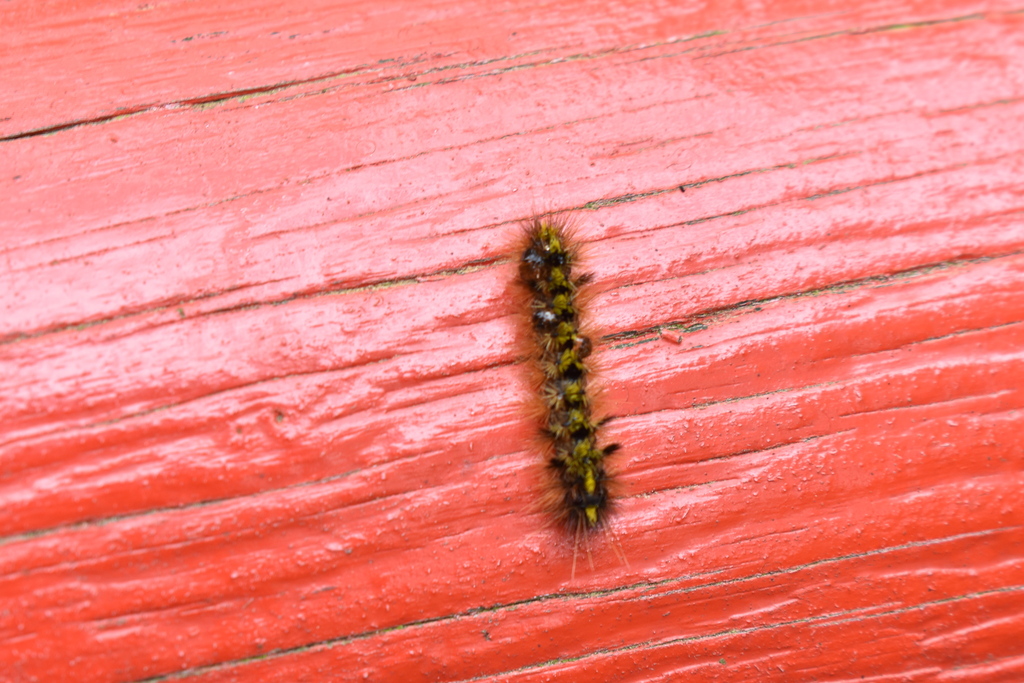
(c) returntoszender, some rights reserved (CC BY-SA) · licence
Family: Erebidae · Class: Insecta · Order: Lepidoptera
Lophocampa argentata (Silver-Spotted Tiger Moth) is a California animal in the Erebidae family.
The silver-spotted tiger moth (Lophocampa argentata) is a medium-sized moth in the family Erebidae, subfamily Arctiinae. Adults have a wingspan of approximately 35 to 45 mm (1.4 to 1.8 inches). The forewings are dark brown to black with distinctive white or silvery spots scattered across the wing surface, giving the species its common name. The hindwings are typically orange to red with black borders and spots. The thorax is covered in dense, dark setae with white markings, while the abdomen displays alternating bands of black and white or yellow. This species occurs along the Pacific Coast of North America, with its range extending from British Columbia south through California. In California, the silver-spotted tiger moth is found primarily in coastal and near-coastal areas, with documented occurrences in counties including Mendocino, Sonoma, Marin, San Francisco, San Mateo, Santa Cruz, Monterey, San Luis Obispo, Santa Barbara, and Ventura. The species appears to be most common in the northern and central portions of its California range. Silver-spotted tiger moths inhabit coastal forests, particularly areas dominated by conifers and mixed evergreen forests. The species is associated with fog-influenced coastal environments and can be found from sea level to elevations of approximately 600 meters (2,000 feet). Adults are typically encountered in forest openings, along forest edges, and in areas where host plants are abundant. Larvae, commonly known as woolly bears, feed on a variety of plants including conifers such as Douglas fir (Pseudotsuga menziesii) and various shrubs and herbaceous plants. The caterpillars are densely covered with long setae and exhibit typical arctiinae defensive behaviors, curling into a ball when disturbed. Adults are primarily nocturnal and are attracted to artificial lights. The species likely has one generation per year, with adults active during late spring and summer months, typically from May through August. Mating occurs during nighttime hours, and females deposit eggs on or near host plants. The silver-spotted tiger moth is not currently listed under federal or California state endangered species legislation. Population trends and conservation status are not well documented, as this species has received limited scientific attention compared to other lepidopteran species. Like many coastal forest-dependent insects, the species may face threats from habitat loss due to urban development, logging activities, and climate change impacts on coastal fog patterns. Coastal development pressure in California continues to reduce available habitat for forest-associated species. The species belongs to a group of tiger moths that includes several closely related taxa, and taxonomic relationships within the genus Lophocampa continue to be studied. Adult specimens can be distinguished from related species by their specific wing pattern and the arrangement of silvery spots on the forewings. Further research is needed to better understand the species' ecology, population dynamics, and conservation needs throughout its California range.
Classification
Class: Insecta · Order: Lepidoptera · Family: Erebidae
Frequently asked questions
How is Lophocampa argentata classified?
Lophocampa argentata belongs to class Insecta, order Lepidoptera, family Erebidae.
What family does Lophocampa argentata belong to?
Lophocampa argentata is in the Erebidae family.
What is Lophocampa argentata?
The silver-spotted tiger moth (Lophocampa argentata) is a medium-sized moth in the family Erebidae, subfamily Arctiinae.
Is Lophocampa argentata found in California?
Yes. Lophocampa argentata is recorded in California in The California Species Project's catalogue.
Related species
Other California species in the same genus, family, or bioregion.
Data from The California Species Project — 14,000+ California species with verified data from CNPS, CDFW, USFWS, and more.