Lophodytes cucullatus
Hooded Merganser
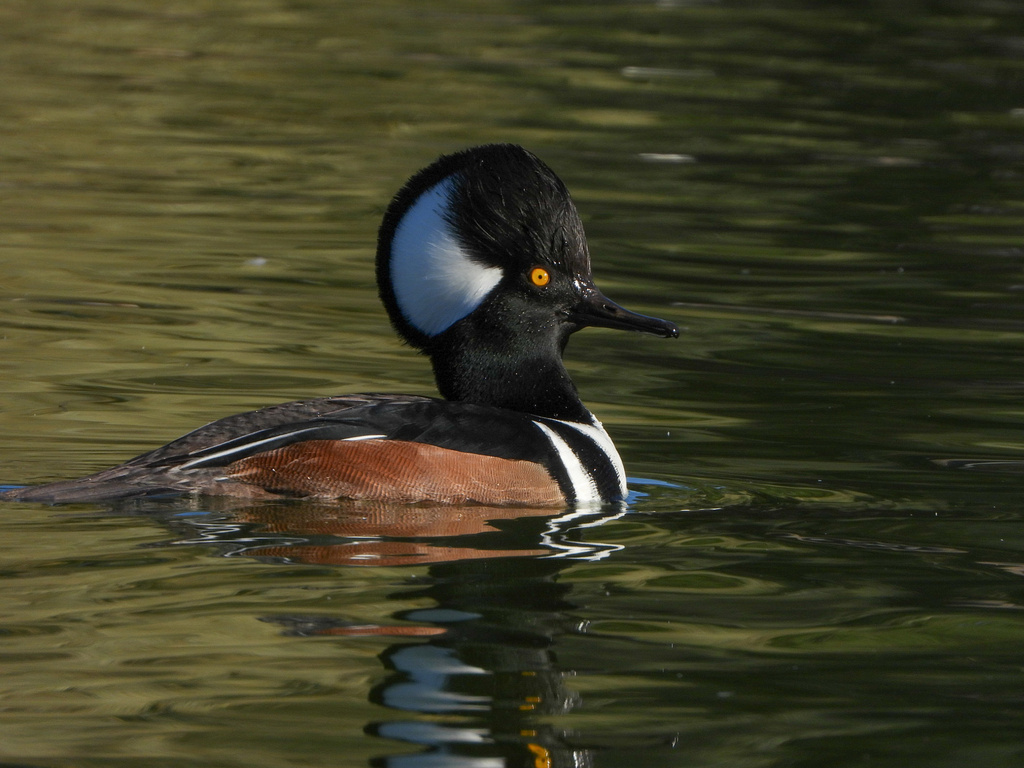
(c) Justin Flint, some rights reserved (CC BY) · licence
Family: Anatidae · Class: Aves · Order: Anseriformes
Lophodytes cucullatus (Hooded Merganser) is a California animal in the Anatidae family.
The Hooded Merganser is a small diving duck distinguished by its distinctive crest and compact size. Males measure 46 to 48 centimeters (18 to 19 inches) in length with a wingspan of 66 centimeters (26 inches), while females are slightly smaller. Breeding males display a striking black and white fan-shaped crest, black head and back, white breast with black vertical bars, and chestnut flanks. The crest can be raised or lowered depending on the bird's alertness level. Females and non-breeding males exhibit brownish-gray plumage with a smaller, reddish-brown crest. Both sexes possess thin, serrated bills adapted for grasping fish and aquatic invertebrates. The species weighs between 450 to 680 grams (1.0 to 1.5 pounds), making it the smallest of North America's three merganser species. The Hooded Merganser breeds across much of northern North America, from southeastern Alaska through central Canada to the northeastern United States. In California, the species occurs primarily as a winter visitor and migrant from October through April. Winter populations concentrate in the Central Valley, San Francisco Bay area, and coastal regions. Small numbers may remain year-round in suitable habitat, with occasional breeding records documented in northern California counties including Shasta, Modoc, and Siskiyou. The species is most commonly observed in the Sacramento Valley and San Francisco Bay during winter months. Hooded Mergansers inhabit wooded wetlands, preferring small ponds, marshes, swamps, and slow-moving streams with emergent vegetation and nearby trees. The species requires water bodies with good visibility for hunting prey underwater. During winter in California, they utilize freshwater and brackish habitats including managed wetlands, irrigation canals, golf course ponds, and urban lakes. Tree-lined waterways are preferred, as the species relies on tree cavities for nesting in breeding areas. This diving duck forages by swimming underwater, using its keen eyesight to locate prey. The diet consists primarily of small fish, aquatic insects, crustaceans, and amphibians. Hooded Mergansers are capable of diving to depths of up to 7 meters (23 feet) and can remain submerged for approximately 30 seconds. The species exhibits strong site fidelity to wintering areas. Breeding occurs from April through July in northern regions, with females laying 6 to 18 white eggs in tree cavities, typically 3 to 15 meters (10 to 50 feet) above ground. Incubation lasts 32 to 33 days, and ducklings leave the nest within 24 hours of hatching. The Hooded Merganser is not federally or state listed in California. Continental populations are considered stable, with North American breeding population estimates of approximately 390,000 individuals according to Partners in Flight. The species benefits from wetland conservation programs and wood duck nest box installations. Primary conservation concerns include habitat loss from wetland drainage and degradation of wooded wetland systems. Climate change may affect breeding range distribution and winter habitat availability. In California, the species benefits from managed wetland areas in the Central Valley and ongoing habitat restoration efforts.
Classification
Class: Aves · Order: Anseriformes · Family: Anatidae
Frequently asked questions
How is Lophodytes cucullatus classified?
Lophodytes cucullatus belongs to class Aves, order Anseriformes, family Anatidae.
What family does Lophodytes cucullatus belong to?
Lophodytes cucullatus is in the Anatidae family.
What is Lophodytes cucullatus?
The Hooded Merganser is a small diving duck distinguished by its distinctive crest and compact size.
Is Lophodytes cucullatus found in California?
Yes. Lophodytes cucullatus is recorded in California in The California Species Project's catalogue.
Related species
Other California species in the same genus, family, or bioregion.
Data from The California Species Project — 14,000+ California species with verified data from CNPS, CDFW, USFWS, and more.