Lopidea marginata
Margined Scarlet Plant Bug
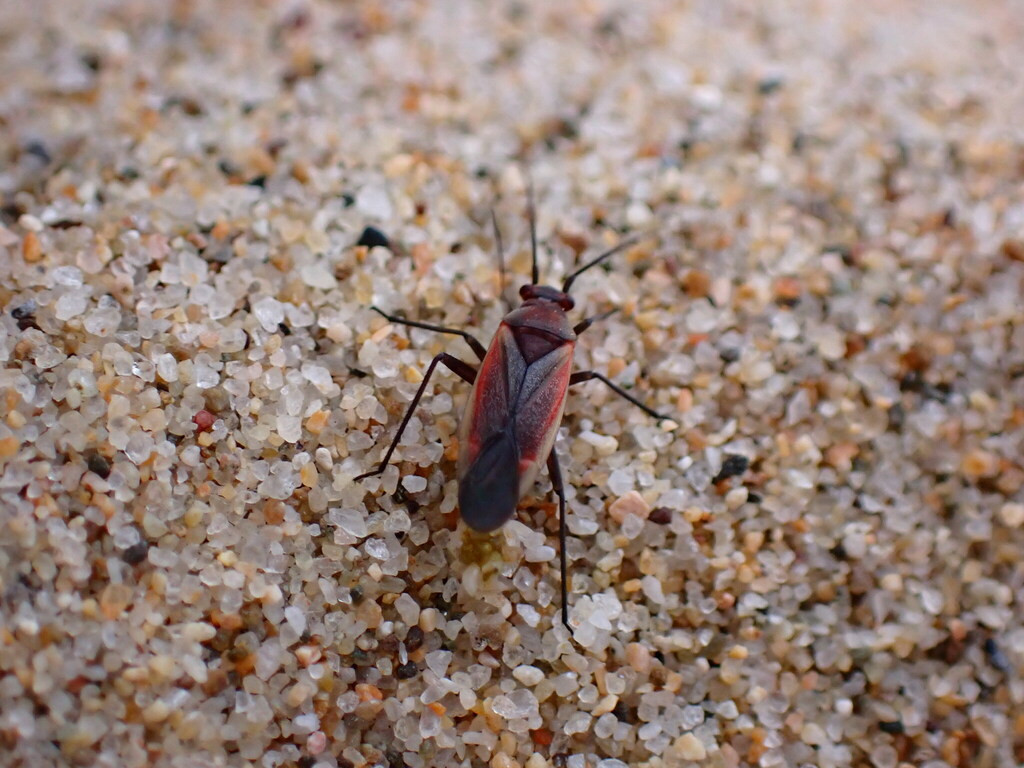
(c) Cricket Raspet, some rights reserved (CC BY) · licence
Family: Miridae · Class: Insecta · Order: Hemiptera
Lopidea marginata (Margined Scarlet Plant Bug) is a California animal in the Miridae family.
The Margined Scarlet Plant Bug (Lopidea marginata) is a small true bug in the family Miridae, characterized by its distinctive scarlet coloration with margined wing covers. Like other plant bugs in this family, adults typically measure 3-6 millimeters in length, with an elongated oval body shape and prominent antennae. The species exhibits the characteristic piercing-sucking mouthparts typical of hemipterans, used for feeding on plant fluids. According to USFWS ECOS data, the species occurs in seven California counties: Imperial, Los Angeles, Orange, Riverside, San Bernardino, San Diego, and Ventura (USFWS ECOS 2025). This distribution spans much of southern California, from the desert regions of the southeast to the coastal areas. The species is divided into two distinct population segments - Northern and Southern - both of which have been proposed for threatened status under the Endangered Species Act. Specific habitat requirements for Lopidea marginata have not been well documented in available literature. As a member of the Miridae family, the species likely inhabits areas with its specific host plants, though these associations remain poorly studied. Many mirid bugs are specialists on particular plant species or families, requiring specific vegetation communities for survival and reproduction. Like other plant bugs, Lopidea marginata presumably feeds by inserting its stylet mouthparts into plant tissues to extract fluids. Mirid bugs typically undergo incomplete metamorphosis, with five nymphal stages before reaching adulthood. Reproductive behavior, seasonal activity patterns, and specific dietary preferences have not been thoroughly documented for this species. The species likely overwinters as eggs, with adults active during warmer months, though specific timing requires further study. Both the Northern and Southern Distinct Population Segments of Lopidea marginata have been proposed for listing as threatened under the Endangered Species Act (USFWS ECOS 2025). The Pacific Southwest Region leads conservation efforts for both population segments. Primary threats to the species likely include habitat loss and fragmentation due to urban development, agricultural conversion, and other land use changes across its southern California range. The species' apparent restriction to specific areas within its historical range suggests population declines have occurred, though quantitative population data are not available. Recovery efforts will likely focus on habitat protection and restoration, as well as research to better understand the species' ecological requirements and population status. The formal listing process and development of recovery strategies are ongoing as of December 2025.
Classification
Class: Insecta · Order: Hemiptera · Family: Miridae
Frequently asked questions
How is Lopidea marginata classified?
Lopidea marginata belongs to class Insecta, order Hemiptera, family Miridae.
What family does Lopidea marginata belong to?
Lopidea marginata is in the Miridae family.
What is Lopidea marginata?
The Margined Scarlet Plant Bug (Lopidea marginata) is a small true bug in the family Miridae, characterized by its distinctive scarlet coloration with margined wing covers.
Is Lopidea marginata found in California?
Yes. Lopidea marginata is recorded in California in The California Species Project's catalogue.
Related species
Other California species in the same genus, family, or bioregion.
Data from The California Species Project — 14,000+ California species with verified data from CNPS, CDFW, USFWS, and more.