Lorita scarificata
Chrysanthemum Flower Borer Moth
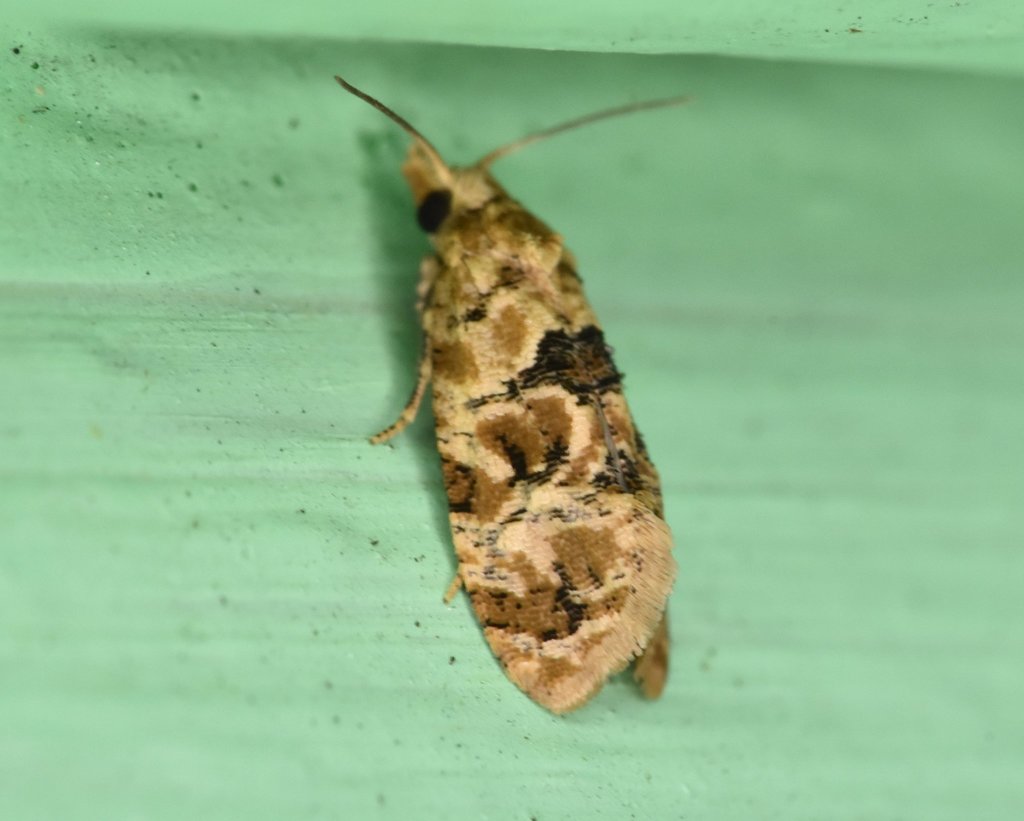
(c) Mike Ostrowski, some rights reserved (CC BY-SA) · licence
Family: Tortricidae · Class: Insecta · Order: Lepidoptera
Lorita scarificata (Chrysanthemum Flower Borer Moth) is a California animal in the Tortricidae family.
The Chrysanthemum Flower Borer Moth is a small member of the family Tortricidae native to North America. Adults are typically small moths with wingspans characteristic of the tortricid family, generally measuring 10-20 mm across. The forewings display the mottled brown and gray patterns typical of many tortricids, providing effective camouflage when resting on bark or vegetation. The species exhibits sexual dimorphism common in many lepidopteran species, though specific morphological details require further documentation. Lorita scarificata has a disjunct distribution across North America, with documented populations in Florida and California (iNaturalist). The species has also been introduced to Hawaii, where it has established breeding populations. In California, the moth occurs in areas where its host plants are cultivated or naturalized, though specific county-level distribution data remains limited. The natural range may have been historically broader but is now primarily associated with human-modified landscapes where ornamental plants are grown. The species inhabits agricultural areas, gardens, and ornamental landscapes where its preferred host plants occur. It shows a particular association with peppers (Capsicum spp.) and chrysanthemums (Chrysanthemum spp.), thriving in both commercial growing operations and residential gardens. The moth appears to prefer areas with consistent moisture and moderate temperatures that support year-round cultivation of its host plants. As its common name suggests, L. scarificata larvae bore into flower buds and developing flowers of their host plants. The species is considered a minor horticultural pest, with larvae causing deformation of flowers in peppers and chrysanthemums (Grokipedia). The boring behavior of the larvae can reduce flower quality and seed production in affected plants. Adults are presumably nocturnal like most tortricids, with peak activity likely occurring during evening hours. Specific details regarding flight periods, mating behavior, and overwintering strategies have not been well documented in the scientific literature. The species currently lacks formal conservation status designations at federal, state, or international levels. As a widespread species that has successfully colonized introduced ranges, including Hawaii, L. scarificata does not appear to face immediate conservation concerns. However, its status as an agricultural pest means that populations may be subject to control measures in commercial growing operations. The species' ability to establish in new geographic areas suggests it is adaptable to various climatic conditions within its temperature tolerance range. Scientific documentation for this species remains limited despite its economic significance as a horticultural pest. The information presented here is based on available sources including taxonomic databases and pest management literature. If you have additional verified information about this species' biology, distribution, or ecology, please contact us to help improve this species account.
Classification
Class: Insecta · Order: Lepidoptera · Family: Tortricidae
Frequently asked questions
How is Lorita scarificata classified?
Lorita scarificata belongs to class Insecta, order Lepidoptera, family Tortricidae.
What family does Lorita scarificata belong to?
Lorita scarificata is in the Tortricidae family.
What is Lorita scarificata?
The Chrysanthemum Flower Borer Moth is a small member of the family Tortricidae native to North America.
Is Lorita scarificata found in California?
Yes. Lorita scarificata is recorded in California in The California Species Project's catalogue.
Related species
Other California species in the same genus, family, or bioregion.
Data from The California Species Project — 14,000+ California species with verified data from CNPS, CDFW, USFWS, and more.