Lottia digitalis
Fingered Limpet
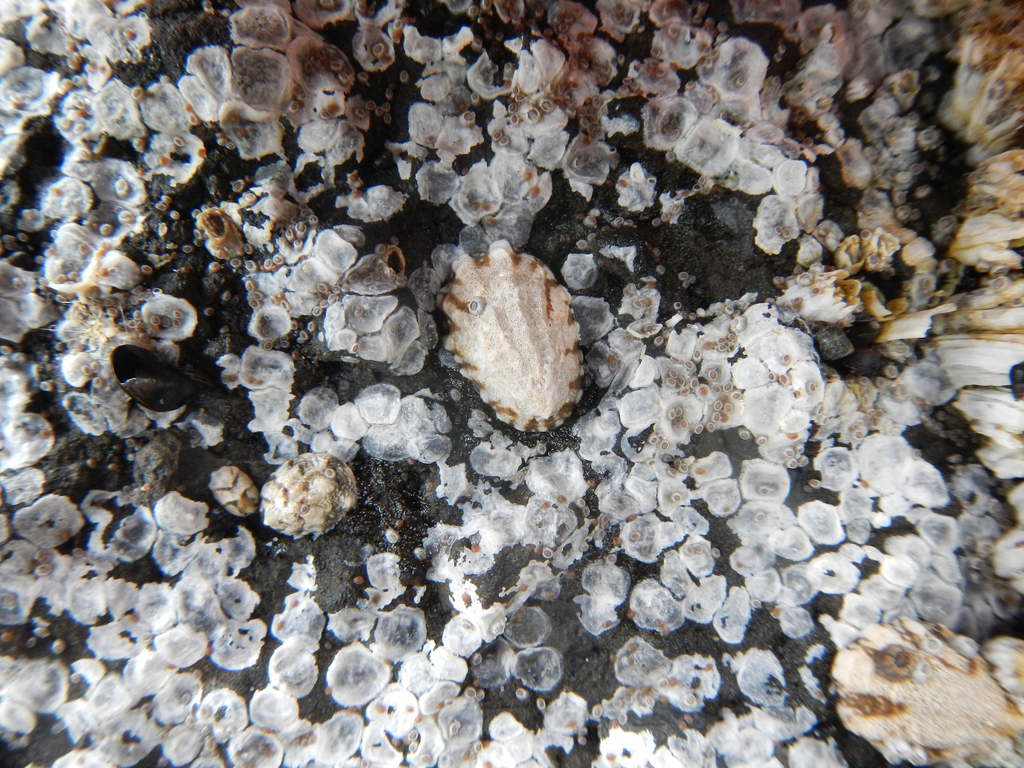
(c) Lee Cain, some rights reserved (CC BY) · licence
Family: Lottiidae · Class: Gastropoda · Order: Patellogastropoda
Lottia digitalis (Fingered Limpet) is a California animal in the Lottiidae family.
The fingered limpet (Lottia digitalis), also known as the ribbed limpet, is a marine gastropod mollusk in the family Lottiidae that inhabits rocky intertidal zones along the Pacific coast. Adults typically measure 15 to 35 mm (0.6 to 1.4 inches) in length, with a conical shell characterized by prominent radiating ribs extending from the apex to the shell margin, giving rise to both of its common names. The shell exterior is typically grayish-brown to dark brown, often with lighter radiating bands, while the interior displays a bluish-white coloration with a dark border around the margin. Lottia digitalis occurs along the Pacific coast from Alaska south to Baja California, Mexico. In California, the species is found on exposed rocky shores throughout the state's coastline, including offshore islands such as the Channel Islands and Farallon Islands. The species shows a continuous distribution along suitable rocky habitat, with populations documented from Humboldt County in the north to San Diego County in the south. This limpet inhabits the mid to high intertidal zone, typically occurring 1 to 4 meters (3 to 13 feet) above mean lower low water. It prefers exposed rocky surfaces with moderate to heavy wave action, often found on vertical rock faces, in crevices, and on large boulders. The species demonstrates strong site fidelity, with individuals returning to specific locations or 'home scars' during low tide periods. These home scars are shallow depressions in the rock surface that match the shell's margin precisely. Fingered limpets are herbivorous grazers that feed primarily on microalgae, diatoms, and bacterial films scraped from rock surfaces using their radula, a ribbon-like feeding organ equipped with numerous small teeth. They exhibit a nocturnal activity pattern, moving away from their home scars during high tide to graze on nearby surfaces before returning as waters recede. Reproduction occurs through broadcast spawning, with individuals releasing gametes into the water column during spring and summer months. Fertilized eggs develop into planktonic larvae that eventually settle and metamorphose into juvenile limpets. The species faces threats from coastal development, pollution, and climate change effects including ocean acidification, which may impact shell formation. Trampling by humans in heavily visited intertidal areas can cause direct mortality and habitat degradation. Oil spills pose a significant threat, as documented during the M/V Selendang Ayu spill in Alaska, where Lottia digitalis was among species observed with oil coating (USFWS 2008). However, the fingered limpet is not currently listed under state or federal endangered species legislation. The species' wide distribution and abundance in suitable habitat suggest relatively stable populations, though localized declines may occur in areas subject to heavy human disturbance or pollution. Long-term monitoring programs in California track intertidal communities including limpet populations to assess ecosystem health and detect population trends.
Classification
Class: Gastropoda · Order: Patellogastropoda · Family: Lottiidae
Frequently asked questions
How is Lottia digitalis classified?
Lottia digitalis belongs to class Gastropoda, order Patellogastropoda, family Lottiidae.
What family does Lottia digitalis belong to?
Lottia digitalis is in the Lottiidae family.
What is Lottia digitalis?
The fingered limpet (Lottia digitalis), also known as the ribbed limpet, is a marine gastropod mollusk in the family Lottiidae that inhabits rocky intertidal zones along the Pacific coast.
Is Lottia digitalis found in California?
Yes. Lottia digitalis is recorded in California in The California Species Project's catalogue.
Related species
Other California species in the same genus, family, or bioregion.
Data from The California Species Project — 14,000+ California species with verified data from CNPS, CDFW, USFWS, and more.