Loxorhynchus grandis
Sheep Crab
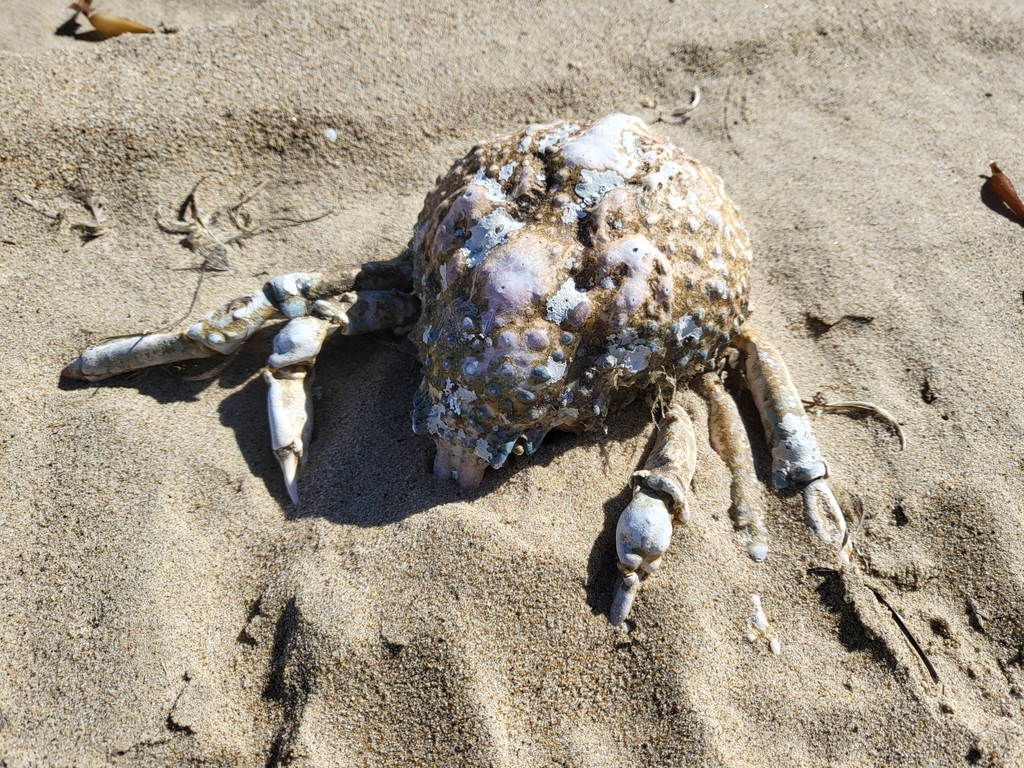
(c) Nicole, some rights reserved (CC BY) · licence
Family: Pisidae · Class: Malacostraca · Order: Decapoda
Loxorhynchus grandis (Sheep Crab) is a California animal in the Pisidae family.
The sheep crab is a large marine decapod crustacean belonging to the spider crab family Pisidae. Adults can reach significant size, with a carapace that may exceed 15 cm (6 inches) in width. The species is characterized by its elongated, triangular carapace and long, spindly legs that give it a spider-like appearance. The body and legs are typically covered with short setae (hairs) and may be adorned with algae, sponges, and other epiphytic organisms that provide camouflage on the seafloor. Sheep crabs are distributed along the Pacific coast from central California to Baja California, Mexico. They inhabit both nearshore and offshore waters throughout the California Current system. The species is commonly found in Southern California waters and is documented as occurring in various marine management areas along the coast. This species typically inhabits rocky substrates, kelp forests, and sandy bottoms from shallow subtidal zones to depths exceeding 100 meters (328 feet). Sheep crabs prefer areas with complex habitat structure that provides shelter and foraging opportunities. They are frequently associated with kelp bed ecosystems where they find abundant food sources and protection from predators. Sheep crabs are opportunistic scavengers that feed on a variety of bottom-dwelling organisms, both living and dead. According to the California Department of Fish and Wildlife, they readily consume dead fish, crushed mussels, and kelp. Their diet also includes algae, small invertebrates, and organic detritus. The species exhibits typical decapod reproductive behavior, with females carrying fertilized eggs attached to their pleopods until hatching. Juveniles undergo several molts before reaching sexual maturity. Currently, the sheep crab holds no special conservation status under federal or state endangered species legislation. However, the species faces anthropogenic pressures common to many marine invertebrates. Sheep crabs are frequently caught as bycatch in various fisheries, particularly the California spiny lobster fishery, where they comprise approximately 1.3% of animals caught according to recent fishery reports. The species may be harvested commercially under California fishing regulations, with spider crabs including Loxorhynchus grandis subject to annual state-wide quotas. Climate change impacts, including ocean acidification and warming water temperatures, may affect sheep crab populations through changes to their prey base and habitat availability. Kelp forest decline, driven by sea urchin population explosions and warming events, could reduce available habitat and food sources. Despite these potential threats, sheep crabs appear to maintain stable populations throughout their range as of December 2025, likely due to their adaptable feeding habits and broad habitat tolerance. Their role as scavengers makes them important components of benthic marine ecosystems, contributing to nutrient cycling and organic matter decomposition on the seafloor.
Classification
Class: Malacostraca · Order: Decapoda · Family: Pisidae
Frequently asked questions
How is Loxorhynchus grandis classified?
Loxorhynchus grandis belongs to class Malacostraca, order Decapoda, family Pisidae.
What family does Loxorhynchus grandis belong to?
Loxorhynchus grandis is in the Pisidae family.
What is Loxorhynchus grandis?
The sheep crab is a large marine decapod crustacean belonging to the spider crab family Pisidae.
Is Loxorhynchus grandis found in California?
Yes. Loxorhynchus grandis is recorded in California in The California Species Project's catalogue.
More California species
This species has no close relatives in our California data — here are other species to explore.
Data from The California Species Project — 14,000+ California species with verified data from CNPS, CDFW, USFWS, and more.