Loxosceles deserta
Desert Recluse
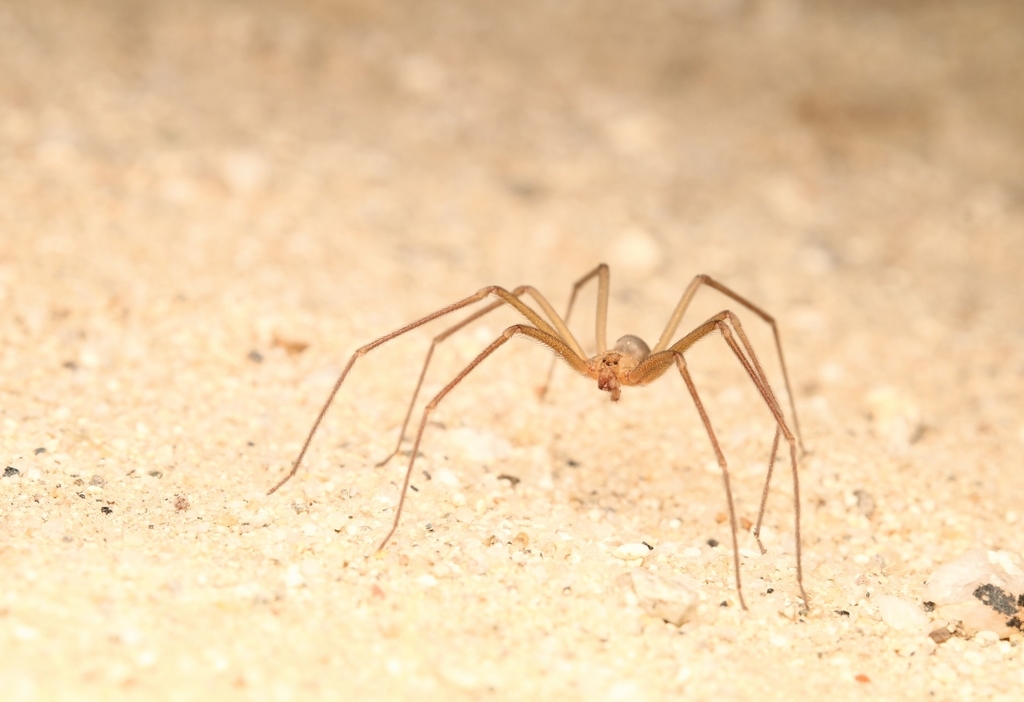
(c) Benjamin Burgunder, some rights reserved (CC BY) · licence
Family: Sicariidae · Class: Arachnida · Order: Araneae
Loxosceles deserta (Desert Recluse) is a California animal in the Sicariidae family.
The Desert Recluse is a small, venomous spider endemic to the southwestern United States, including southeastern California. Adults have a body length of 6-20 millimeters (0.24-0.79 inches) with a leg span roughly equal to the diameter of a U.S. quarter (Xerces Society 2008). The spider exhibits uniform brown coloration with the characteristic violin-shaped marking on the cephalothorax that distinguishes all Loxosceles species, earning them the alternate name of fiddleback spiders. Unlike many spider species, Desert Recluse possess only six eyes arranged in three pairs, rather than the typical eight eyes. The Desert Recluse occurs naturally in the desert regions of southeastern California, Arizona, Nevada, and northwestern Mexico. In California, the species is found primarily in the Sonoran and Mojave Desert regions. According to the California Department of Fish and Wildlife, there are no established populations of the brown recluse (Loxosceles reclusa) in the state, but the Desert Recluse does occur in appropriate desert habitat (CDFW 2025). The species' range extends through the desert Southwest, representing one of eleven closely related Loxosceles species in the United States. Desert Recluse inhabit arid environments, typically residing under rocks, in crevices, and among debris in natural desert settings. Unlike their midwestern relative L. reclusa, Desert Recluse tend to remain in outdoor natural habitats and are less inclined to colonize human structures (BugGuide 2025). They prefer dry, undisturbed areas with minimal moisture and construct irregular webs in protected locations such as rock crevices and beneath fallen logs or other natural debris. These spiders are nocturnal hunters that feed primarily on small insects and other arthropods. They are not aggressive and typically bite only when pressed against skin or trapped in clothing. Desert Recluse are solitary creatures that avoid human contact when possible. Reproduction occurs through internal fertilization, with females producing egg sacs containing multiple eggs. The species exhibits typical recluse behavior, remaining hidden during daylight hours and emerging at night to hunt for prey. The Desert Recluse is not federally listed and does not appear on California's special concern species lists. While venomous, bites from Desert Recluse are extremely rare, even in areas where they occur naturally (BugGuide 2025). The species faces no significant conservation threats and maintains stable populations throughout its desert range. Primary factors affecting local populations include habitat modification and urbanization of desert areas, though the species' secretive nature and preference for undisturbed habitat help maintain viable populations in protected desert regions. Climate change may potentially affect distribution patterns by altering desert ecosystem conditions, but current population trends remain stable across the species' range.
Classification
Class: Arachnida · Order: Araneae · Family: Sicariidae
Frequently asked questions
How is Loxosceles deserta classified?
Loxosceles deserta belongs to class Arachnida, order Araneae, family Sicariidae.
What family does Loxosceles deserta belong to?
Loxosceles deserta is in the Sicariidae family.
What is Loxosceles deserta?
The Desert Recluse is a small, venomous spider endemic to the southwestern United States, including southeastern California.
Is Loxosceles deserta found in California?
Yes. Loxosceles deserta is recorded in California in The California Species Project's catalogue.
More California species
This species has no close relatives in our California data — here are other species to explore.
Data from The California Species Project — 14,000+ California species with verified data from CNPS, CDFW, USFWS, and more.