Loxostege brunneitincta
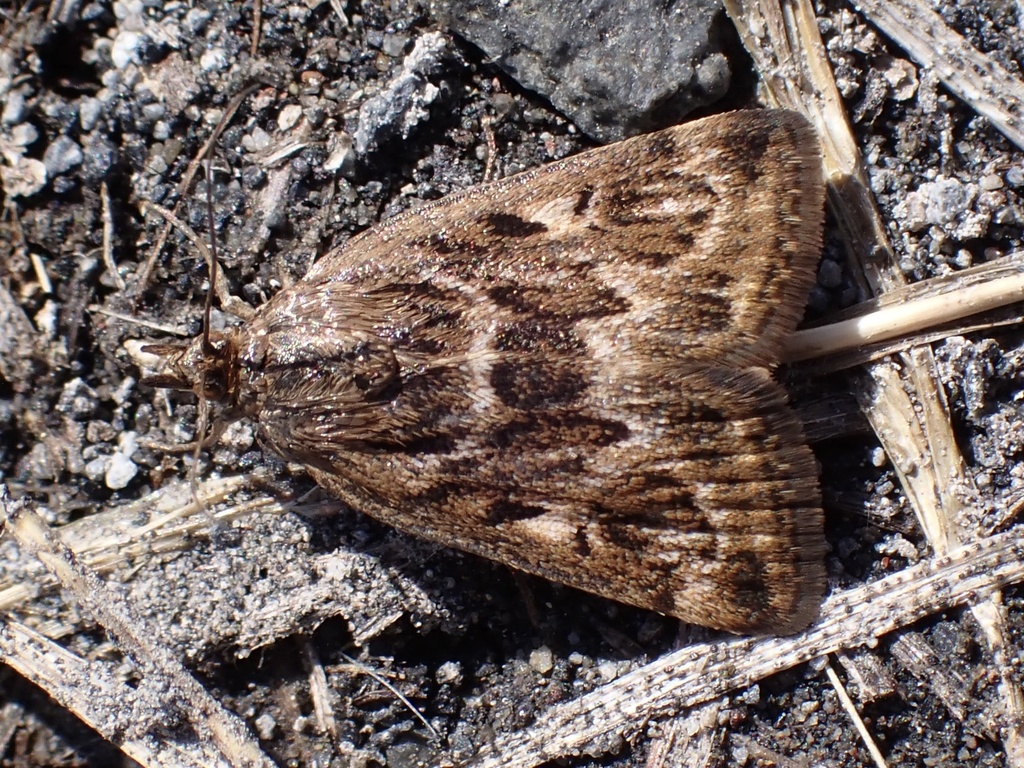
(c) Cricket Raspet, some rights reserved (CC BY) · licence
Family: Crambidae · Class: Insecta · Order: Lepidoptera
Loxostege brunneitincta is a California animal in the Crambidae family.
Loxostege brunneitincta is a small moth in the family Crambidae, described by Munroe in 1976. Adults measure approximately 20 mm in wingspan and display brown-tinged coloration, as suggested by the species name 'brunneitincta,' which translates to 'tinged with brown.' The forewings typically exhibit muted earth tones that provide effective camouflage in natural settings. This species occurs in western North America, with documented records from California extending north into Canada. In California, L. brunneitincta has been collected from montane areas including the southern Sierra Nevada. A notable collection record from Stony Creek Campground in Tulare County, just outside Sequoia National Park, was documented in July (Lepidopterists' Society 1991). The species' range extends beyond California's borders, with additional populations recorded in other western states and provinces. Loxostege brunneitincta inhabits montane environments, typically occurring at moderate to high elevations in forested regions. The Tulare County collection site at Stony Creek Campground suggests an association with mixed coniferous forest habitats characteristic of the Sierra Nevada. These environments typically feature diverse understory vegetation and varied microclimates that support pyralid moth communities. As with other members of the genus Loxostege, this species likely exhibits nocturnal activity patterns typical of crambid moths. Adults are presumably attracted to artificial lights during evening hours, which facilitates collection and observation by researchers. The July collection date from the Sierra Nevada indicates summer flight activity, though the complete phenology and seasonal occurrence patterns remain incompletely documented. Like other pyralid moths, larvae likely feed on herbaceous plants, though specific host plant relationships for L. brunneitincta have not been definitively established in the scientific literature. The conservation status of Loxostege brunneitincta has not been formally assessed by state or federal agencies. As a relatively obscure microlepidopteran species, it lacks specific conservation designation or protection under the Endangered Species Act. The species does not appear in standard conservation databases or wildlife management plans, reflecting the limited research attention given to many smaller moth species. Population trends and distribution changes remain undocumented due to insufficient survey effort and taxonomic expertise required for accurate field identification. Scientific documentation for this species remains limited, with most available information derived from taxonomic literature and scattered collection records. The original species description by Munroe (1976) provides the foundational taxonomic information, while subsequent records in lepidopterological publications contribute additional distributional data. Current knowledge gaps include detailed ecological requirements, host plant associations, population dynamics, and potential conservation concerns. Enhanced survey efforts and taxonomic research would improve understanding of this species' biology and distribution patterns throughout its range.
Classification
Class: Insecta · Order: Lepidoptera · Family: Crambidae
Frequently asked questions
How is Loxostege brunneitincta classified?
Loxostege brunneitincta belongs to class Insecta, order Lepidoptera, family Crambidae.
What family does Loxostege brunneitincta belong to?
Loxostege brunneitincta is in the Crambidae family.
What is Loxostege brunneitincta?
Loxostege brunneitincta is a small moth in the family Crambidae, described by Munroe in 1976.
Is Loxostege brunneitincta found in California?
Yes. Loxostege brunneitincta is recorded in California in The California Species Project's catalogue.
Related species
Other California species in the same genus, family, or bioregion.
Data from The California Species Project — 14,000+ California species with verified data from CNPS, CDFW, USFWS, and more.