Loxostege cereralis
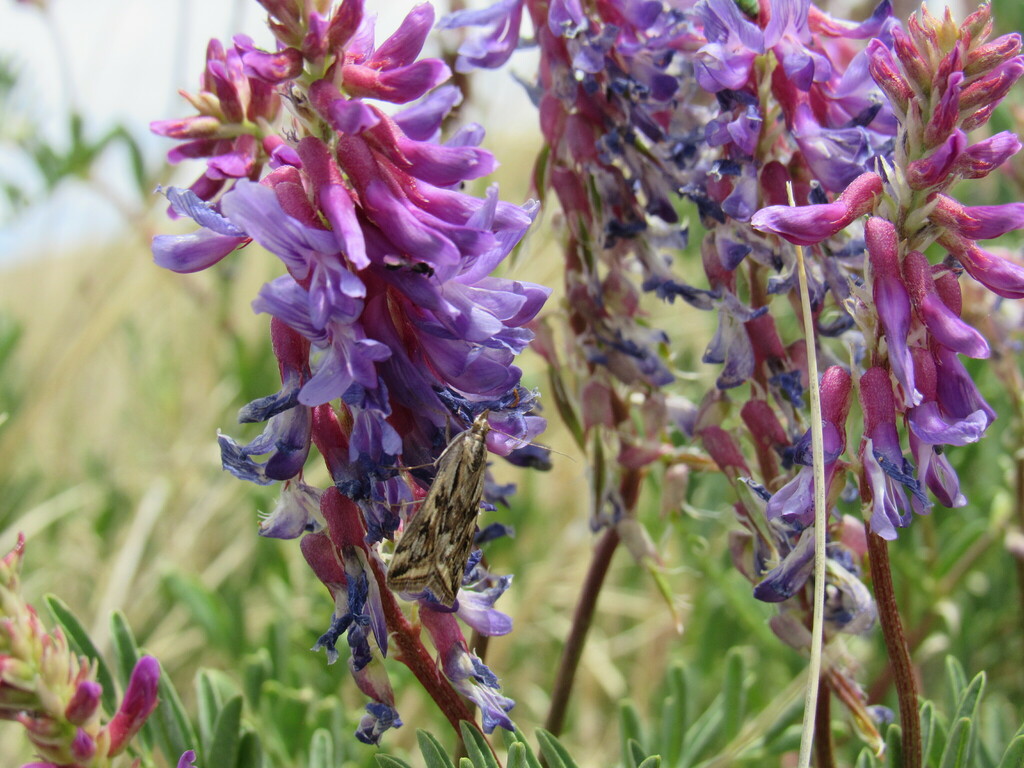
(c) Anders Hastings, some rights reserved (CC BY) · licence
Family: Crambidae · Class: Insecta · Order: Lepidoptera
Loxostege cereralis is a California animal in the Crambidae family.
Loxostege cereralis is a small moth species belonging to the family Crambidae, commonly known as grass moths or snout moths. This species represents one of numerous members within the genus Loxostege, which comprises several dozen species of pyraloid moths distributed across North America. Adult moths typically measure 12 to 18 millimeters in wingspan, displaying the characteristic narrow, elongated wing shape common to the Crambidae family. The forewings are generally pale brown to tan with subtle darker markings and cross-lines, while the hindwings are typically lighter in coloration with reduced patterning. The distribution and range of Loxostege cereralis in California requires further taxonomic verification, as limited documented records exist for this specific species within the state. The genus Loxostege is represented by multiple species across western North America, with some occurring in California's diverse habitats ranging from coastal areas to montane regions. Definitive range mapping for L. cereralis specifically remains incomplete in current lepidopteran databases. Habitat preferences for Loxostege species typically include grasslands, meadows, and areas with abundant herbaceous vegetation. These moths are generally associated with open or semi-open environments where their larval host plants occur. Many Crambidae species utilize grasses and low-growing forbs as larval food sources, though specific host plant associations for L. cereralis have not been definitively documented in the available literature. The life cycle follows the typical lepidopteran pattern of complete metamorphosis. Adults are primarily nocturnal and are attracted to artificial light sources. Mating and egg-laying behaviors occur during the species' active flight period, which varies by geographic location and local climate conditions. Larvae develop within or upon their host plants, feeding on foliage or other plant tissues before pupating. The number of generations per year likely varies with latitude and local environmental conditions, as is common among Crambidae species. Loxostege cereralis does not appear on federal or California state listing rosters for threatened or endangered species. However, the apparent rarity of documented records raises questions about the species' current population status and distribution. Many small moth species remain poorly studied, with limited data on population trends, habitat requirements, and conservation needs. The taxonomic status and valid occurrence of L. cereralis in California may require verification through additional field surveys and taxonomic review. Climate change and habitat modification could potentially impact populations of specialized herbivorous moths like those in the genus Loxostege, particularly if their host plants or preferred habitats become altered or fragmented. Further research is needed to establish baseline population data and assess any conservation concerns for this species.
Classification
Class: Insecta · Order: Lepidoptera · Family: Crambidae
Frequently asked questions
How is Loxostege cereralis classified?
Loxostege cereralis belongs to class Insecta, order Lepidoptera, family Crambidae.
What family does Loxostege cereralis belong to?
Loxostege cereralis is in the Crambidae family.
What is Loxostege cereralis?
Loxostege cereralis is a small moth species belonging to the family Crambidae, commonly known as grass moths or snout moths.
Is Loxostege cereralis found in California?
Yes. Loxostege cereralis is recorded in California in The California Species Project's catalogue.
Related species
Other California species in the same genus, family, or bioregion.
Data from The California Species Project — 14,000+ California species with verified data from CNPS, CDFW, USFWS, and more.