Luidia foliolata
Sand Star
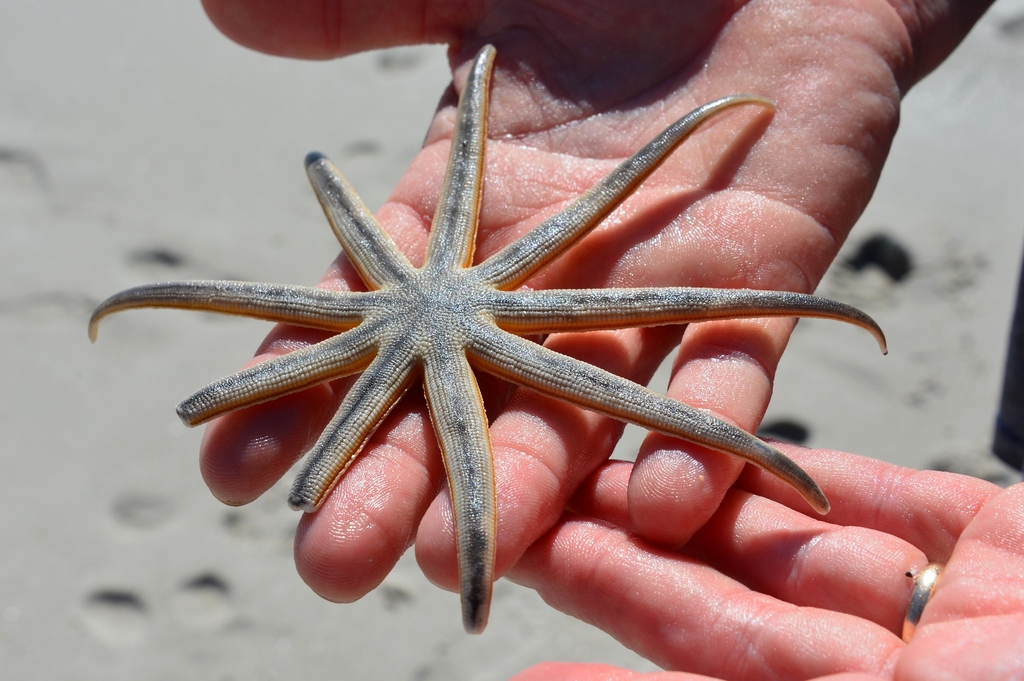
(c) Rusty, some rights reserved (CC BY) · licence
Family: Luidiidae · Class: Asteroidea · Order: Paxillosida
Luidia foliolata (Sand Star) is a California animal in the Luidiidae family.
The sand star (Luidia foliolata) is a large sea star species belonging to the family Luidiidae within the order Paxillosida. Adults typically measure 20 to 30 centimeters (8 to 12 inches) in diameter, though specimens can reach up to 60 centimeters (24 inches) across. The species is characterized by five long, slender arms that taper to pointed tips. The aboral (upper) surface displays a sandy brown to grayish coloration with small, granular spines called paxillae that give the animal a rough texture. The oral (lower) surface is pale yellow to white, with prominent tube feet arranged in distinct rows along ambulacral grooves. Luidia foliolata ranges along the Pacific Coast from the Bering Sea in Alaska to Baja California, Mexico. In California waters, the species occurs from the intertidal zone to depths of approximately 250 meters (820 feet), with populations documented throughout coastal areas including Monterey Bay and the Southern California coast. The species is commonly found in marine protected areas where sandy habitats are preserved. This sea star inhabits predominantly sandy and soft sediment environments, distinguishing it from many other asteroids that prefer rocky substrates. Sand stars are frequently encountered on sandy seafloors, muddy bottoms, and areas with mixed sediment composition. They show particular affinity for areas where sandy substrates transition to rocky reefs, allowing access to both feeding and shelter opportunities. The species tolerates a wide range of depths, from shallow intertidal pools to deep offshore waters exceeding 200 meters (Lambert 2000). Luidia foliolata is an active predator and scavenger, feeding primarily on small mollusks, crustaceans, polychaete worms, and organic detritus within sediments. Unlike many sea stars that evert their stomachs to digest prey externally, sand stars typically engulf small prey whole using their flexible arms and large oral cavity (Brusca et al. 2016). The species exhibits notable regenerative abilities, capable of regrowing lost arms when damaged by predators or environmental stress. Sand stars are highly mobile compared to other asteroids, using coordinated arm movements to burrow through sediments and pursue prey. Reproduction occurs through broadcast spawning, with separate sexes releasing gametes into the water column during spring and summer months. Fertilized eggs develop into planktonic larvae that spend several weeks in the water column before settling and metamorphosing into juvenile sea stars (Morris et al. 1980). Currently, Luidia foliolata has no federal or state conservation listing status. The species appears to maintain stable populations throughout its range, benefiting from protection within California's network of marine protected areas. Sandy seafloor habitats face ongoing pressures from bottom trawling, coastal development, and sediment pollution, though the sand star's wide distribution and habitat flexibility provide some resilience to localized disturbances. Climate change effects on ocean temperature and chemistry warrant continued monitoring of population trends.
Classification
Class: Asteroidea · Order: Paxillosida · Family: Luidiidae
Frequently asked questions
How is Luidia foliolata classified?
Luidia foliolata belongs to class Asteroidea, order Paxillosida, family Luidiidae.
What family does Luidia foliolata belong to?
Luidia foliolata is in the Luidiidae family.
What is Luidia foliolata?
The sand star (Luidia foliolata) is a large sea star species belonging to the family Luidiidae within the order Paxillosida.
Is Luidia foliolata found in California?
Yes. Luidia foliolata is recorded in California in The California Species Project's catalogue.
More California species
This species has no close relatives in our California data — here are other species to explore.
Data from The California Species Project — 14,000+ California species with verified data from CNPS, CDFW, USFWS, and more.