Lycaena cupreus
Lustrous Copper
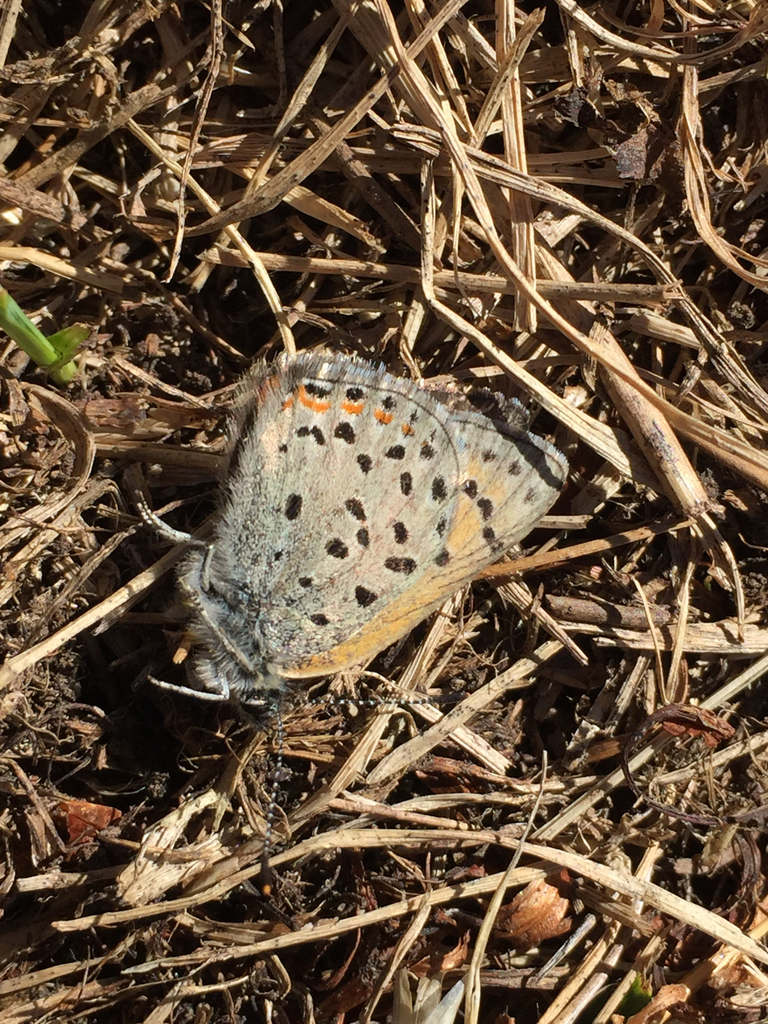
no rights reserved · CC0
Family: Lycaenidae · Class: Insecta · Order: Lepidoptera
Lycaena cupreus (Lustrous Copper) is a California animal in the Lycaenidae family.
The Lustrous Copper (Lycaena cupreus) is a small alpine butterfly in the family Lycaenidae. Males display bright copper-colored forewings with a metallic sheen and dark borders, while the hindwings are gray-brown with orange marginal spots. Females are larger and less vibrant, with brownish forewings marked by orange spots and similar gray-brown hindwings. The wingspan ranges from 25 to 32 mm (1.0 to 1.3 inches). The underside of both sexes features gray coloration with small black spots and orange submarginal bands on the hindwings. The Lustrous Copper occurs at high elevations in the Rocky Mountains from British Columbia south to New Mexico, and at moderate to high elevations on the Pacific Slope from Oregon through the Sierra Nevada of California and western Nevada. In California, populations are documented in the Sierra Nevada range, typically above 1,500 meters (4,900 feet) elevation. The species has a disjunct distribution pattern typical of montane specialists, with populations separated by lower elevation valleys unsuitable for the species. This butterfly inhabits alpine and subalpine meadows, rocky slopes, and openings in coniferous forests. The species is associated with areas containing plants of the Knotweed family (Polygonaceae), particularly alpine sorrel (Rumex pauciflorus) and other Rumex and Oxyria species. Habitat typically features well-drained soils with scattered patches of host plants growing among grasses and other alpine vegetation. The species is most commonly found in areas with morning sun exposure and some protection from strong afternoon winds. The Lustrous Copper is univoltine, producing one generation per year. Adults are active from June through August, with peak flight periods varying by elevation and local climate conditions. Males engage in territorial behavior, perching on prominent rocks or vegetation to locate potential mates. Females deposit eggs singly on or near host plants, with larvae developing through the summer months. The species overwinters as eggs, which hatch the following spring when host plants begin new growth. Larvae feed exclusively on leaves and stems of Polygonaceae species, particularly favoring young, tender growth. The conservation status of the Lustrous Copper appears stable across most of its range, though the species faces typical challenges affecting montane butterflies. Climate change poses a potential long-term threat as warming temperatures may force populations to higher elevations with reduced available habitat. Recreational activities in alpine areas, including hiking and camping, can cause localized habitat disturbance. Grazing by livestock in some areas may impact host plant availability and habitat quality. The species' dependence on specific host plants and alpine habitats makes populations vulnerable to environmental changes, though current population trends are not well documented throughout the range.
Classification
Class: Insecta · Order: Lepidoptera · Family: Lycaenidae
Frequently asked questions
How is Lycaena cupreus classified?
Lycaena cupreus belongs to class Insecta, order Lepidoptera, family Lycaenidae.
What family does Lycaena cupreus belong to?
Lycaena cupreus is in the Lycaenidae family.
What is Lycaena cupreus?
The Lustrous Copper (Lycaena cupreus) is a small alpine butterfly in the family Lycaenidae.
Is Lycaena cupreus found in California?
Yes. Lycaena cupreus is recorded in California in The California Species Project's catalogue.
Related species
Other California species in the same genus, family, or bioregion.
Data from The California Species Project — 14,000+ California species with verified data from CNPS, CDFW, USFWS, and more.