Lycaena hermes
Hermes copper butterfly
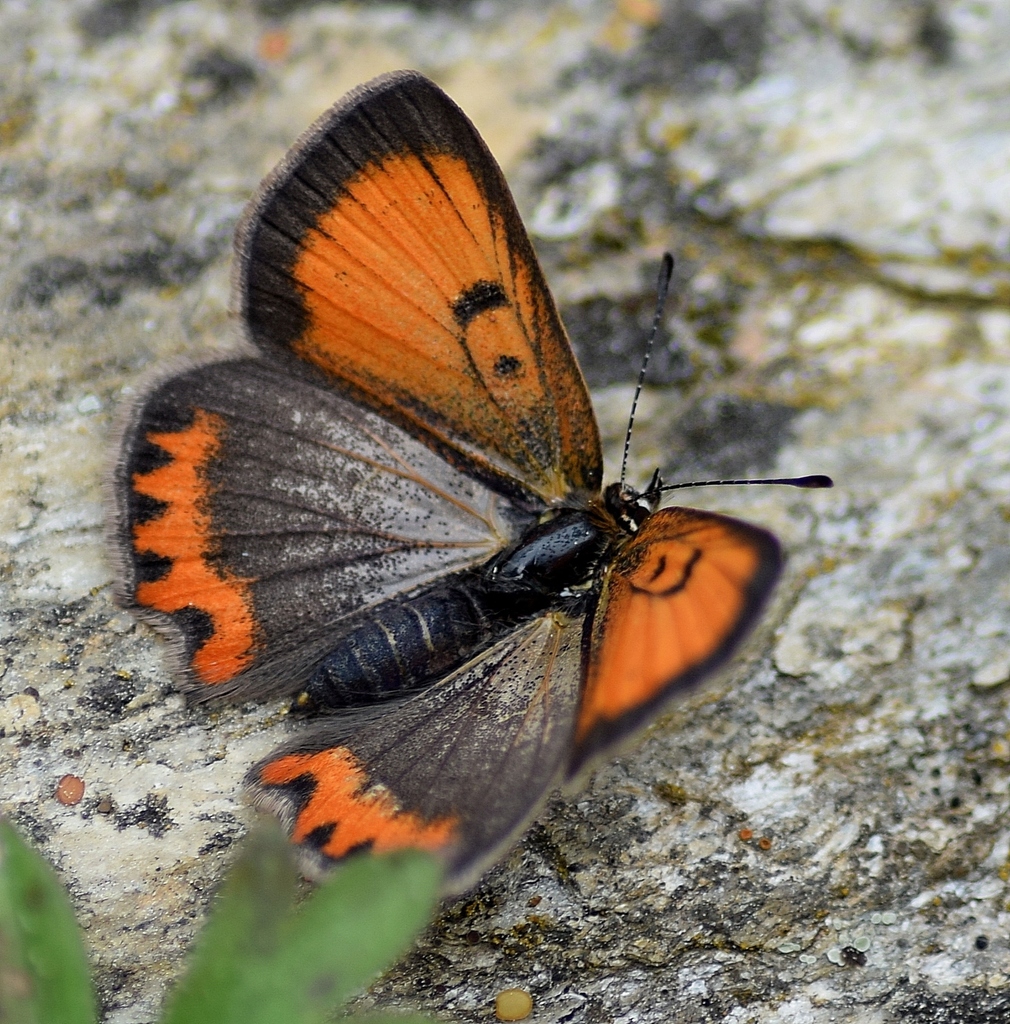
(c) Kostas Zontanos, some rights reserved (CC BY) · licence
Family: Lycaenidae · Class: Insecta · Order: Lepidoptera
Conservation status: Threatened · G1 S1
Lycaena hermes (Hermes copper butterfly) is a California animal in the Lycaenidae family.
The Hermes copper butterfly is a small lycaenid butterfly endemic to Southern California and northwestern Baja California, Mexico. Males display bright copper-orange dorsal wing surfaces with dark borders and small black spots, while females are duller brown with more extensive dark markings. The wingspan ranges from 25 to 32 mm (1.0 to 1.3 inches). The ventral wing surfaces are pale gray with white-outlined black spots and distinctive white patches near the wing margins. Males possess specialized scent patches called androconia on their forewings used in courtship behaviors. The species has a severely restricted range in San Diego County, California, and adjacent Baja California Norte, Mexico. Historically, the butterfly occurred across coastal sage scrub and chaparral habitats from approximately Escondido south to the Mexican border. Current populations are fragmented and confined to isolated habitat patches, with the largest remaining populations occurring in eastern San Diego County near the communities of Jamul, Dulzura, and Barrett Junction. The U.S. Fish and Wildlife Service listed the species as federally threatened in 2011. Hermes copper butterflies inhabit coastal sage scrub and mixed chaparral communities at elevations ranging from 400 to 1,200 meters (1,300 to 3,900 feet). The species requires areas containing its obligate host plant, redberry (Rhamnus crocea) in the buckthorn family (Rhamnaceae). Adults prefer open, sunny areas with scattered shrubs and are typically found within 100 meters of redberry bushes. The butterflies require specific microhabitat conditions including gentle slopes, southern or western exposures, and areas protected from strong winds. Adults are active from late April through early July, with peak flight occurring in May and June. Males establish territories around host plants and engage in patrolling behavior to locate females. Females lay single eggs on young redberry shoots and leaves. Larvae feed exclusively on redberry foliage, developing through five instars over approximately 10 months. The species overwinters as mature larvae in diapause, pupating in early spring. Adults are short-lived, typically surviving only 7 to 14 days. Males engage in hilltopping behavior, congregating on prominent ridges and peaks for mating opportunities. The primary threat to Hermes copper butterfly populations is habitat loss and fragmentation due to urban development, agriculture, and infrastructure projects. Fire suppression has altered natural fire cycles, leading to habitat degradation through shrub encroachment. Non-native plant invasions, particularly by Mediterranean grasses, reduce host plant availability and alter habitat structure. Climate change poses additional threats through increased temperatures and altered precipitation patterns that may affect host plant phenology. Conservation efforts include habitat restoration, invasive species management, and protection of remaining habitat patches through land acquisition and conservation easements.
Classification
Class: Insecta · Order: Lepidoptera · Family: Lycaenidae
Conservation status
Threatened · G1 S1
Frequently asked questions
How is Lycaena hermes classified?
Lycaena hermes belongs to class Insecta, order Lepidoptera, family Lycaenidae.
What family does Lycaena hermes belong to?
Lycaena hermes is in the Lycaenidae family.
Is Lycaena hermes protected or of conservation concern?
Lycaena hermes carries the following status: Threatened · G1 S1.
What is Lycaena hermes?
The Hermes copper butterfly is a small lycaenid butterfly endemic to Southern California and northwestern Baja California, Mexico.
Is Lycaena hermes found in California?
Yes. Lycaena hermes is recorded in California in The California Species Project's catalogue.
Related species
Other California species in the same genus, family, or bioregion.
Data from The California Species Project — 14,000+ California species with verified data from CNPS, CDFW, USFWS, and more.