Lycomorpha grotei
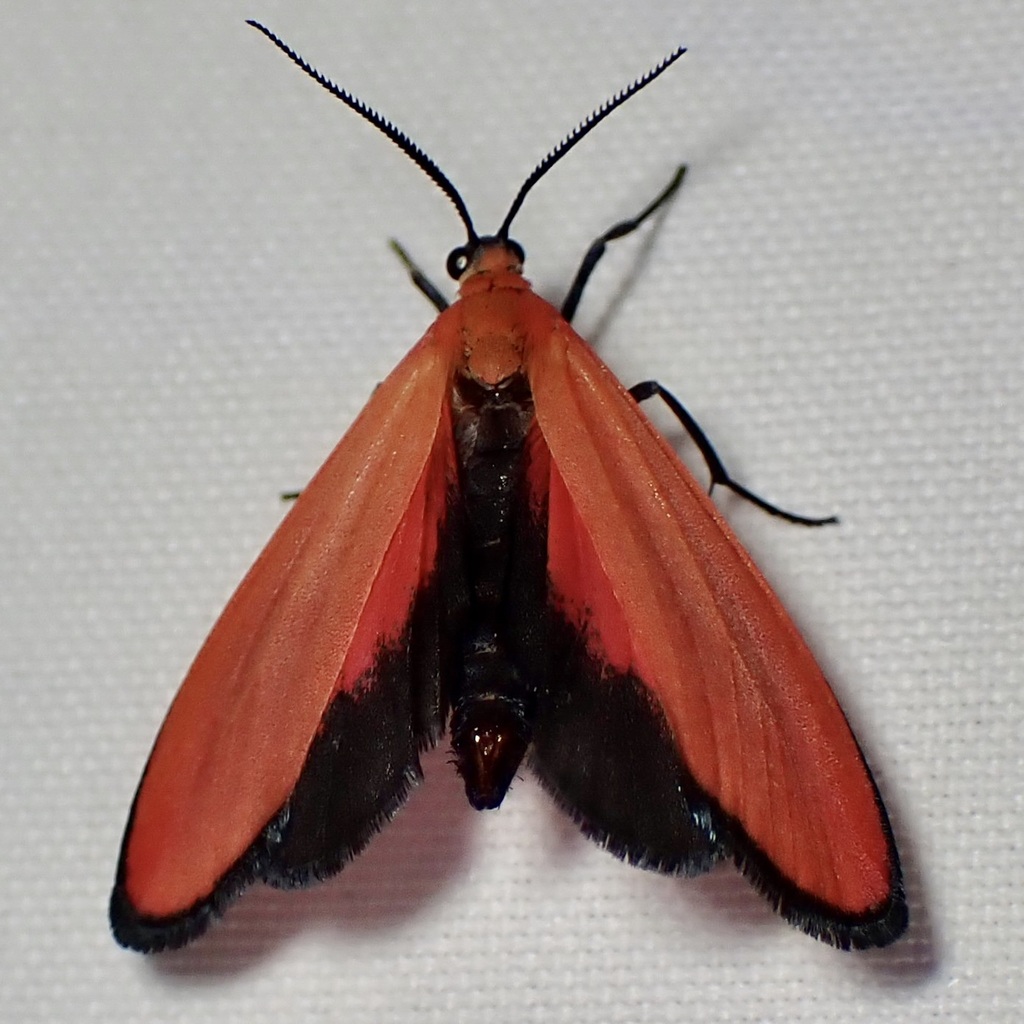
(c) Sue Carnahan, some rights reserved (CC BY) · licence
Family: Erebidae · Class: Insecta · Order: Lepidoptera
Lycomorpha grotei is a California animal in the Erebidae family.
Lycomorpha grotei is a small moth in the family Erebidae, subfamily Arctiinae. This species belongs to a group commonly known as lichen moths, characterized by their typically dark coloration and cryptic patterns that provide camouflage against tree bark and lichen-covered surfaces. Adult moths have a wingspan ranging from 20 to 25 millimeters (0.8 to 1.0 inches). The forewings are predominantly dark gray to black with subtle lighter markings, while the hindwings are typically paler with darker margins. The thorax and abdomen are covered in dark scales, and the antennae are filiform in both sexes. Lycomorpha grotei is endemic to California, with documented populations primarily in the coastal ranges and Sierra Nevada foothills. The species has been recorded from scattered localities in central and northern California counties, including areas from the San Francisco Bay region extending northward. Historical records suggest a patchy distribution pattern, likely reflecting specific habitat requirements and limited dispersal capabilities typical of many specialized moth species. This species inhabits oak woodlands, mixed evergreen forests, and chaparral communities at elevations ranging from near sea level to approximately 1,500 meters (4,900 feet). Adults are typically found in areas with abundant lichen growth on oak trees, particularly coast live oak and interior live oak. The species appears to prefer habitats with moderate canopy cover that support diverse lichen communities, which serve as both larval food sources and adult resting sites. Larval ecology of Lycomorpha grotei centers on lichen consumption, with caterpillars feeding on various crustose and foliose lichen species growing on oak bark. The larvae are cryptically colored to match their lichen substrates and construct small shelters using silk and lichen fragments. Adult flight periods occur primarily in late spring through early summer, typically from May through July. Females deposit eggs singly on lichen-covered bark, and the species likely completes one generation per year. Adults are nocturnal and are attracted to artificial lights, though they are generally considered weak fliers with limited dispersal range. Conservation status information for Lycomorpha grotei is limited, as the species lacks formal state or federal protection designations. However, like many specialized lichen-feeding moths, the species may be vulnerable to habitat degradation, air pollution impacts on lichen communities, and climate change effects on host plant distributions. Urban development and oak woodland conversion represent potential threats to suitable habitat. The species' apparent rarity in collections and limited distribution suggest it may warrant further survey work to assess population status and habitat requirements. Conservation of oak woodland ecosystems and maintenance of healthy lichen communities are likely important for the species' long-term persistence.
Classification
Class: Insecta · Order: Lepidoptera · Family: Erebidae
Frequently asked questions
How is Lycomorpha grotei classified?
Lycomorpha grotei belongs to class Insecta, order Lepidoptera, family Erebidae.
What family does Lycomorpha grotei belong to?
Lycomorpha grotei is in the Erebidae family.
What is Lycomorpha grotei?
Lycomorpha grotei is a small moth in the family Erebidae, subfamily Arctiinae.
Is Lycomorpha grotei found in California?
Yes. Lycomorpha grotei is recorded in California in The California Species Project's catalogue.
Related species
Other California species in the same genus, family, or bioregion.
Data from The California Species Project — 14,000+ California species with verified data from CNPS, CDFW, USFWS, and more.