Lycomorpha splendens
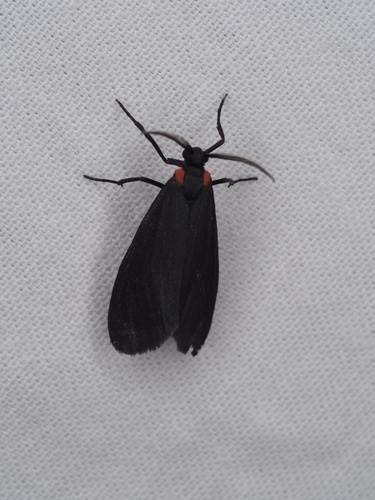
(c) Rosario Douglas, some rights reserved (CC BY) · licence
Family: Erebidae · Class: Insecta · Order: Lepidoptera
Lycomorpha splendens is a California animal in the Erebidae family.
Lycomorpha splendens is a moth in the family Erebidae, subfamily Arctiinae. This species belongs to a group commonly known as lichen moths, named for their cryptic coloration that often resembles lichens growing on tree bark and rocks. Adult moths are small, with forewings typically measuring 8-12 mm in length. The forewings display a mottled pattern of dark brown and grayish scales with lighter markings that create an effective camouflage against lichen-covered surfaces. The hindwings are typically paler, ranging from light brown to cream-colored with darker marginal borders. The distribution of Lycomorpha splendens appears to be limited within California, though comprehensive range data for this species remains incomplete. Current records suggest occurrence in specific mountainous or coastal regions where suitable habitat conditions exist. The species may have a patchy distribution pattern typical of many specialized Arctiinae moths that depend on particular microhabitat conditions for survival. This moth inhabits areas where crustose and foliose lichens grow abundantly on tree bark, rocks, and other substrates. Preferred habitat includes mature forest stands with diverse lichen communities, particularly those dominated by species in the genera Parmelia, Physcia, or Ramalina. The species likely occurs at elevations ranging from sea level to montane zones, depending on lichen availability and climatic conditions. Suitable habitat requires adequate moisture levels to support healthy lichen growth, often found in areas with fog influence or higher precipitation. Like other lichen moths, Lycomorpha splendens larvae feed exclusively on lichens, using specialized mandibles to scrape lichen thalli from substrate surfaces. The caterpillars are typically covered in dense setae that provide protection and aid in camouflage among their lichen food sources. Adult moths are primarily nocturnal, attracted to artificial lights during their flight season. Mating likely occurs during warm evening hours, with females depositing eggs on or near lichen colonies that will serve as larval food sources. The species probably produces one generation annually, though specific timing of emergence and reproduction cycles requires further study. The conservation status of Lycomorpha splendens has not been formally evaluated by state or federal agencies. Population trends remain unknown due to limited survey data and taxonomic uncertainty within the Lycomorpha genus. Potential threats include habitat degradation from air pollution, which significantly impacts lichen communities, and climate change effects on moisture regimes necessary for lichen growth. Forest management practices that reduce canopy cover or alter microclimate conditions could negatively affect lichen-dependent species. Urban development and industrial activities that increase air pollution levels pose additional risks to lichen ecosystems. Conservation of this species requires protection of mature forest stands with diverse, healthy lichen communities and maintenance of air quality standards that support lichen growth.
Classification
Class: Insecta · Order: Lepidoptera · Family: Erebidae
Frequently asked questions
How is Lycomorpha splendens classified?
Lycomorpha splendens belongs to class Insecta, order Lepidoptera, family Erebidae.
What family does Lycomorpha splendens belong to?
Lycomorpha splendens is in the Erebidae family.
What is Lycomorpha splendens?
Lycomorpha splendens is a moth in the family Erebidae, subfamily Arctiinae.
Is Lycomorpha splendens found in California?
Yes. Lycomorpha splendens is recorded in California in The California Species Project's catalogue.
Related species
Other California species in the same genus, family, or bioregion.
Data from The California Species Project — 14,000+ California species with verified data from CNPS, CDFW, USFWS, and more.