Lycomorphodes sordida
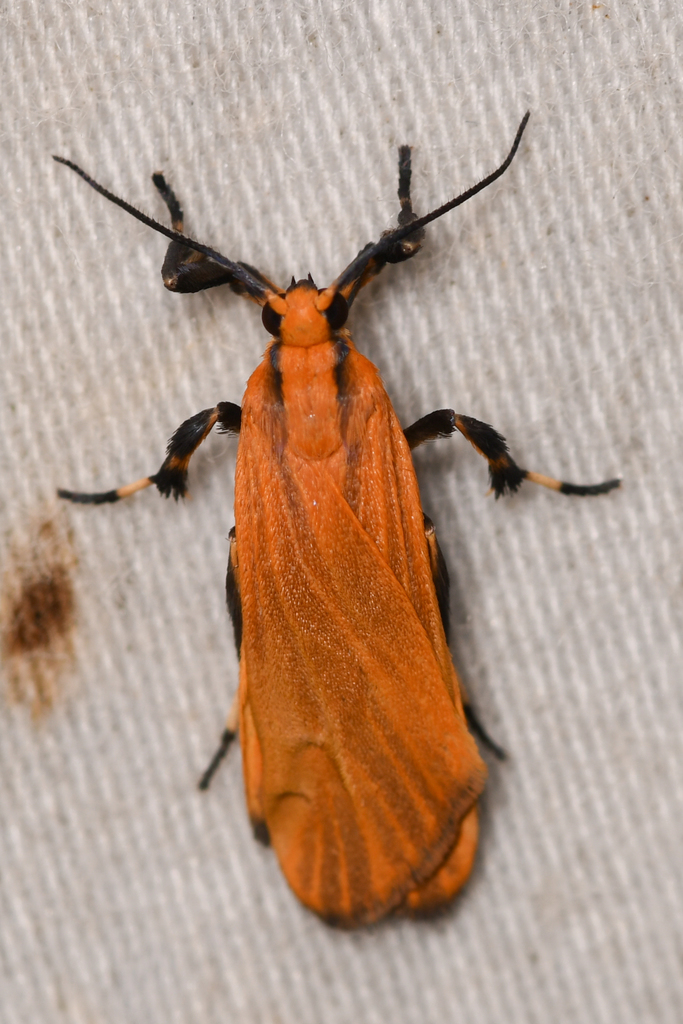
(c) Trevor Van Loon, some rights reserved (CC BY) · licence
Family: Erebidae · Class: Insecta · Order: Lepidoptera
Lycomorphodes sordida is a California animal in the Erebidae family.
Lycomorphodes sordida is a moth in the family Erebidae, belonging to the order Lepidoptera. This species represents one of the lesser-documented moths within the Lycomorphodes genus, with limited available information regarding its physical characteristics and life history. The physical description of L. sordida remains poorly documented in the scientific literature. Like other members of the Erebidae family, this species likely possesses the typical moth body plan with scaled wings, clubbed or feathered antennae, and a coiled proboscis. The specific name 'sordida' suggests dull or somber coloration, though detailed morphological descriptions are not readily available in current taxonomic resources. Adult wing span measurements and distinguishing features have not been well-documented in accessible scientific literature. The geographic range and distribution of Lycomorphodes sordida are not well-established in current databases. The species appears to have limited documentation regarding its occurrence in California or elsewhere in North America. Without verified collection records or distributional studies, the extent of its range remains uncertain. This lack of distributional data may indicate either genuine rarity, limited survey effort in appropriate habitats, or potential misidentification in historical records. Habitat requirements for L. sordida are not well-documented in available scientific literature. Members of the Erebidae family typically occupy diverse habitats ranging from forests to grasslands, with larvae often feeding on herbaceous plants or woody vegetation. However, specific microhabitat preferences, elevation ranges, and vegetation associations for this species remain undocumented. The absence of detailed habitat information limits conservation assessment and management planning. Ecological information regarding behavior, life cycle, and feeding habits of Lycomorphodes sordida is extremely limited. Most Erebidae moths are nocturnal and attracted to artificial lights during evening hours. Larval host plant associations, if any, have not been documented for this species. Reproductive biology, including breeding season, egg-laying behavior, and developmental timing, remains unknown. The number of generations per year and overwintering stage are not established. The conservation status of Lycomorphodes sordida cannot be adequately assessed due to insufficient data regarding population size, distribution, and threats. The species does not appear on federal or state endangered species lists, nor does it have established conservation rankings from NatureServe or other conservation organizations. This absence from conservation databases may reflect either stable populations, inadequate survey effort, or taxonomic uncertainty. Without baseline population data or threat assessments, conservation needs cannot be determined. The limited available information about L. sordida highlights the need for additional taxonomic research and field surveys to better understand this species' biology, distribution, and conservation requirements. Enhanced documentation through museum collections, genetic analysis, and ecological studies would provide the foundation necessary for proper species assessment and potential conservation planning.
Classification
Class: Insecta · Order: Lepidoptera · Family: Erebidae
Frequently asked questions
How is Lycomorphodes sordida classified?
Lycomorphodes sordida belongs to class Insecta, order Lepidoptera, family Erebidae.
What family does Lycomorphodes sordida belong to?
Lycomorphodes sordida is in the Erebidae family.
What is Lycomorphodes sordida?
Lycomorphodes sordida is a moth in the family Erebidae, belonging to the order Lepidoptera.
Is Lycomorphodes sordida found in California?
Yes. Lycomorphodes sordida is recorded in California in The California Species Project's catalogue.
Related species
Other California species in the same genus, family, or bioregion.
Data from The California Species Project — 14,000+ California species with verified data from CNPS, CDFW, USFWS, and more.