Lygaeus kalmii
Small Milkweed Bug
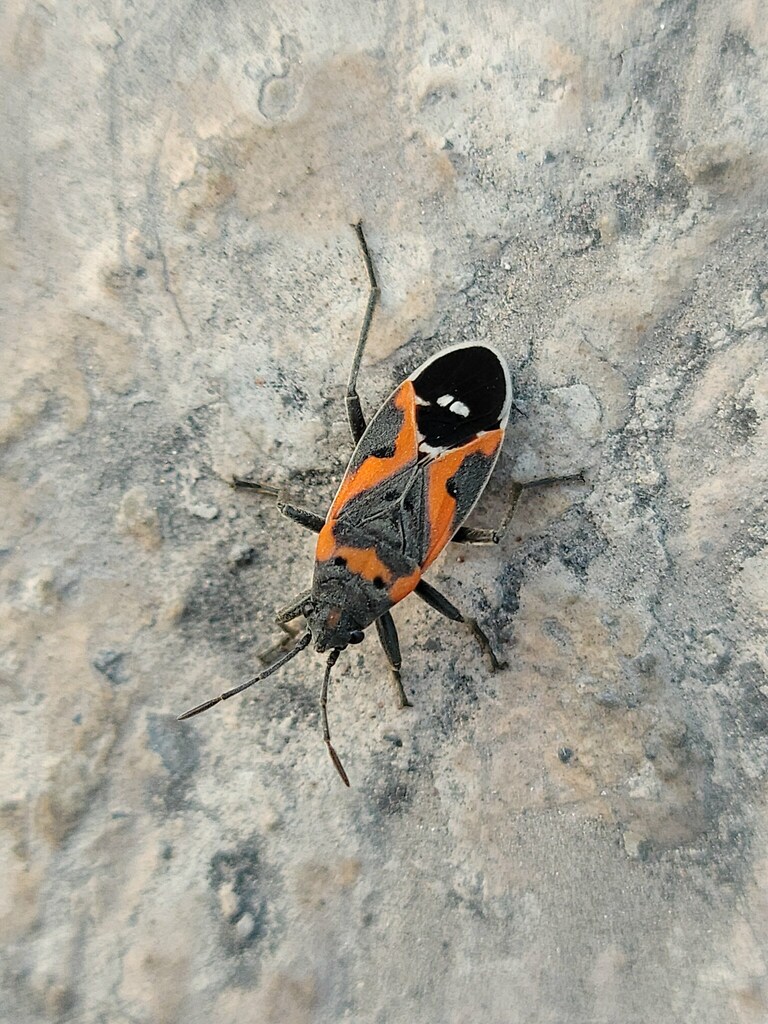
(c) Rodolfo Salinas Villarreal, some rights reserved (CC BY) · licence
Family: Lygaeidae · Class: Insecta · Order: Hemiptera
Lygaeus kalmii (Small Milkweed Bug) is a California animal in the Lygaeidae family.
The small milkweed bug (Lygaeus kalmii) is a true bug in the family Lygaeidae that measures 10 to 12 mm in length. Adults display orange-red and black coloration with a distinctive orange X-shaped pattern across the wings. The forewings feature a black base with an orange cross pattern, while the hindwings are typically black. Nymphs are red with black spots and developing wing pads, lacking the fully developed wing patterns of adults. Both adults and nymphs possess long piercing-sucking mouthparts characteristic of true bugs, used to extract plant juices. The small milkweed bug ranges across most of North America, from southern Canada through the United States and into northern Mexico. In California, the species occurs throughout much of the state where suitable host plants are present, including valley grasslands, disturbed areas, roadsides, and riparian zones. The species distribution closely follows that of its milkweed host plants. This species inhabits diverse environments where milkweeds (Asclepias spp.) grow, including valley grasslands, wetland-riparian areas, open woodlands, chaparral, sagebrush communities, and disturbed sites such as roadsides and fallow fields. Elevational range varies with host plant distribution, typically from sea level to moderate elevations. The bugs can be found on sandy to clayey soils in both dry and moist conditions, adapting to the habitat preferences of their host plants. Small milkweed bugs are specialized herbivores that feed exclusively on plants in the milkweed family (Asclepiadaceae). Adults and nymphs form colonies on stems, foliage, flowers, and seed pods of milkweed plants (Xerces Society). Their feeding activity involves piercing plant tissues and sucking fluids, particularly targeting developing seeds within pods. This seed-feeding behavior can render milkweed seeds inviable, which is why seed collectors are advised to avoid pods with active bug populations. The species overwinters as adults in protected locations such as hollow stems of dried forbs, between terminal leaves of milkweed plants, or in other sheltered microhabitats. Multiple generations occur per year, with peak abundance typically during summer months when milkweed plants are flowering and producing seeds. The small milkweed bug has no special conservation status and is not federally or state listed. Populations appear stable throughout the species' range, likely benefiting from the widespread distribution of both native and introduced milkweed species. As a specialist herbivore of milkweeds, the species plays an important ecological role in milkweed plant communities. While their seed-feeding behavior may impact individual plants' reproductive success, small milkweed bugs are considered part of the natural assemblage of milkweed-associated insects that includes monarch butterflies, longhorn beetles (Tetraopes spp.), and other specialized herbivores. Conservation efforts focused on maintaining milkweed populations for monarch butterfly habitat also benefit small milkweed bug populations.
Classification
Class: Insecta · Order: Hemiptera · Family: Lygaeidae
Frequently asked questions
How is Lygaeus kalmii classified?
Lygaeus kalmii belongs to class Insecta, order Hemiptera, family Lygaeidae.
What family does Lygaeus kalmii belong to?
Lygaeus kalmii is in the Lygaeidae family.
What is Lygaeus kalmii?
The small milkweed bug (Lygaeus kalmii) is a true bug in the family Lygaeidae that measures 10 to 12 mm in length.
Is Lygaeus kalmii found in California?
Yes. Lygaeus kalmii is recorded in California in The California Species Project's catalogue.
Related species
Other California species in the same genus, family, or bioregion.
Data from The California Species Project — 14,000+ California species with verified data from CNPS, CDFW, USFWS, and more.