Lygropia rivulalis
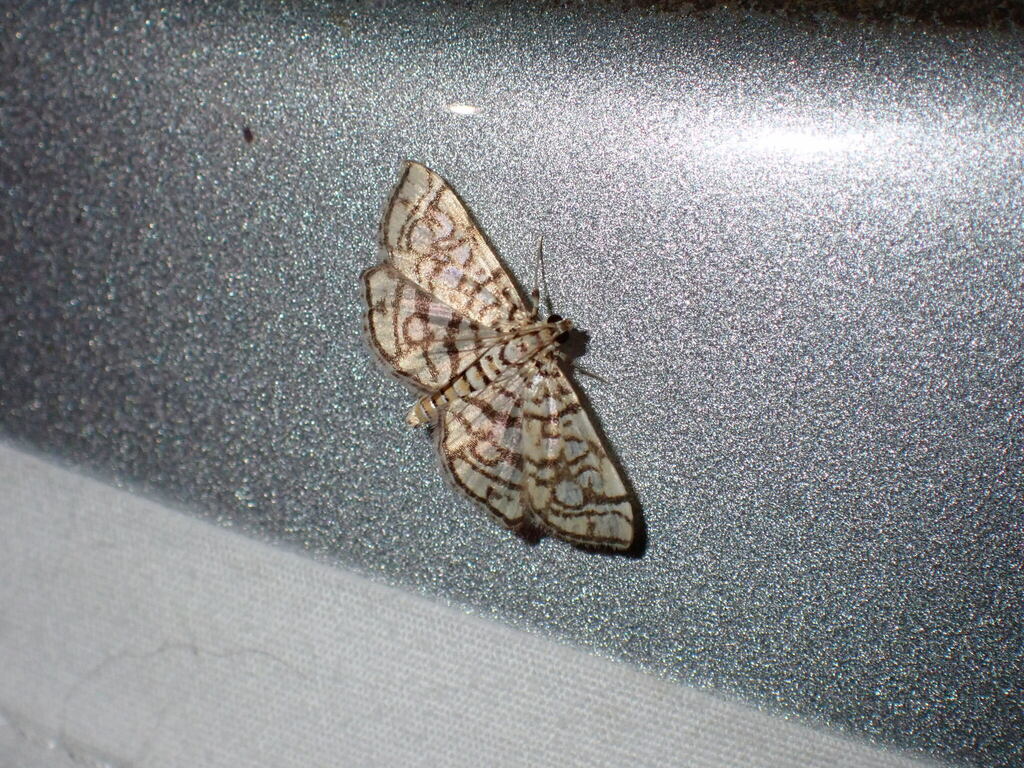
(c) Bao Pham, some rights reserved (CC BY) · licence
Family: Crambidae · Class: Insecta · Order: Lepidoptera
Lygropia rivulalis is a California animal in the Crambidae family.
Lygropia rivulalis is a moth species in the family Crambidae, a large family of grass moths and related species. This lepidopteran belongs to the subfamily Spilomelinae, which includes many small to medium-sized moths with diverse ecological roles. The species was first described scientifically, though detailed morphological descriptions in current literature are limited. Physical characteristics of Lygropia rivulalis, like many Crambidae moths, likely include a relatively small wingspan typical of the family, generally ranging from 15 to 25 millimeters. Crambidae moths typically display muted coloration patterns with browns, grays, and pale markings that provide camouflage. The forewings are usually longer and narrower than the hindwings, with wing venation patterns characteristic of the subfamily Spilomelinae. The geographic range and specific distribution of Lygropia rivulalis requires further documentation through systematic surveys. Many Crambidae species have restricted ranges, particularly those in specialized habitats. Without confirmed collection records, the presence of this species in California remains to be established through targeted lepidopteran surveys. Habitat requirements for Lygropia rivulalis are not well-documented in current literature. Crambidae moths occupy diverse habitats, from grasslands and meadows to forest understories and riparian zones. Many species in this family are associated with specific host plants during their larval stage, though the host plant relationships for L. rivulalis have not been thoroughly studied or reported. The life cycle of Lygropia rivulalis likely follows the typical lepidopteran pattern of complete metamorphosis, progressing through egg, larval, pupal, and adult stages. Crambidae larvae are often stem borers or leaf feeders, with feeding habits varying considerably among species. Flight periods and reproductive behavior patterns for this species require documentation through field observation and collection data. The conservation status of Lygropia rivulalis is not currently assessed by major conservation organizations. Many moth species, particularly those in the family Crambidae, lack comprehensive population studies and conservation evaluations. The species does not appear on federal or state endangered species lists, though this may reflect insufficient survey data rather than population stability. Taxonomic research and systematic surveys are needed to better understand the distribution, ecology, and conservation needs of Lygropia rivulalis. Moth diversity studies in California continue to reveal new distribution records and ecological associations, highlighting the importance of ongoing lepidopteran research. Habitat preservation efforts that maintain diverse plant communities may benefit this and other understudied moth species.
Classification
Class: Insecta · Order: Lepidoptera · Family: Crambidae
Frequently asked questions
How is Lygropia rivulalis classified?
Lygropia rivulalis belongs to class Insecta, order Lepidoptera, family Crambidae.
What family does Lygropia rivulalis belong to?
Lygropia rivulalis is in the Crambidae family.
What is Lygropia rivulalis?
Lygropia rivulalis is a moth species in the family Crambidae, a large family of grass moths and related species.
Is Lygropia rivulalis found in California?
Yes. Lygropia rivulalis is recorded in California in The California Species Project's catalogue.
Related species
Other California species in the same genus, family, or bioregion.
Data from The California Species Project — 14,000+ California species with verified data from CNPS, CDFW, USFWS, and more.