Lygus lineolaris
North American Tarnished Plant Bug
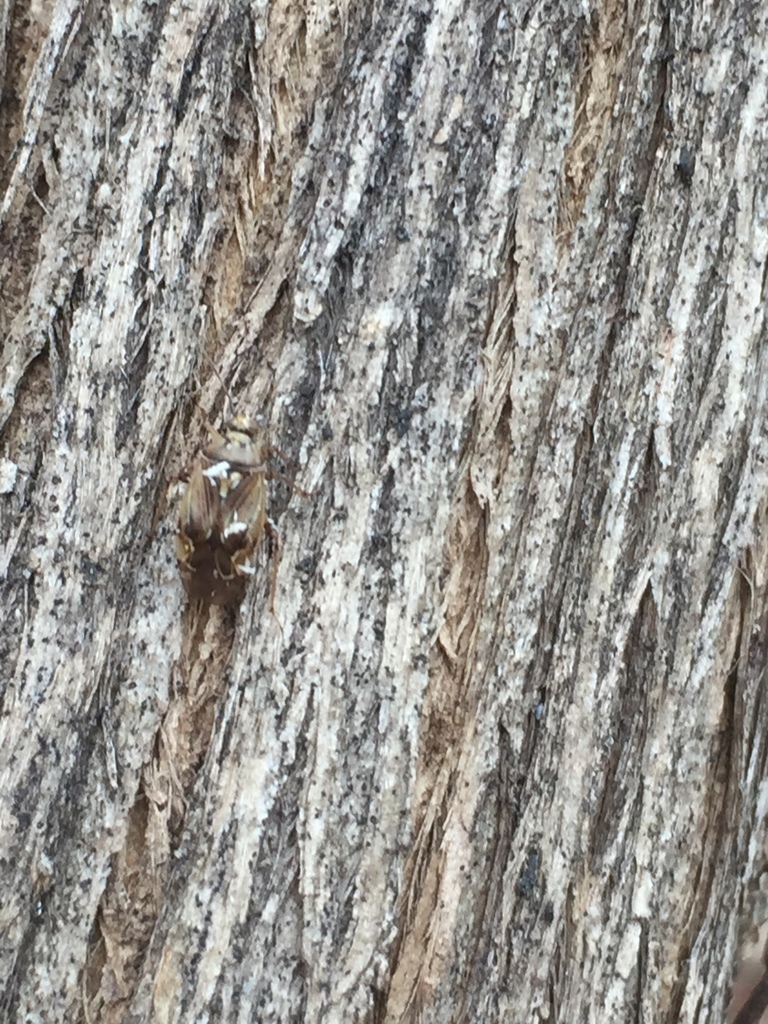
no rights reserved · CC0
Family: Miridae · Class: Insecta · Order: Hemiptera
Lygus lineolaris (North American Tarnished Plant Bug) is a California animal in the Miridae family.
The North American tarnished plant bug is a small, oval-shaped true bug measuring 4 to 6 mm (0.16 to 0.24 inches) in length. Adults display variable coloration ranging from pale green to brown or bronze, often with darker markings and a distinctive yellowish or whitish triangular spot at the tip of each forewing. The species exhibits sexual dimorphism, with males typically smaller and more slender than females. Nymphs are pale green with black spots and lack fully developed wings. Lygus lineolaris has one of the most extensive ranges among North American hemipterans, occurring throughout the continental United States and southern Canada from coast to coast. The species is present in California as part of its transcontinental distribution, though it is more abundant in agricultural regions of the eastern and central United States. Populations are found from sea level to moderate elevations across diverse climatic zones. This highly adaptable species inhabits a wide variety of environments including agricultural fields, gardens, meadows, forest edges, and disturbed areas. Tarnished plant bugs show strong associations with herbaceous vegetation and are commonly found on over 400 plant species across numerous families. They prefer areas with abundant flowering plants and are particularly attracted to crops such as alfalfa, cotton, soybeans, and various vegetable crops. The species thrives in both natural and managed ecosystems where suitable host plants are available. Tarnished plant bugs are polyphagous piercing-sucking insects that feed on plant juices, buds, flowers, and developing seeds. Adults and nymphs use their needle-like stylets to puncture plant tissues and extract fluids, often causing significant agricultural damage. The species undergoes incomplete metamorphosis with five nymphal instars. In temperate regions, tarnished plant bugs typically complete two to five generations per year depending on climate conditions. Adults overwinter in plant debris, leaf litter, or other protected sites, becoming active in spring when temperatures rise. Mating occurs after winter emergence, with females depositing eggs into plant tissues. The species serves as prey for various predators and parasitoids, and forms an important component of agricultural food webs (Xerces Society 2017). Lygus lineolaris is not federally or state listed as endangered or threatened. However, the species appears on Species of Greatest Conservation Need lists in Arkansas and New York, indicating some regional conservation concern despite its widespread distribution. These designations typically reflect knowledge gaps about population trends rather than immediate threats to the species' survival. The primary conservation considerations relate to habitat management in agricultural landscapes and understanding the species' ecological role as both agricultural pest and wildlife food source. Climate change and intensive agricultural practices may affect local population dynamics, though the species' broad host range and adaptability suggest resilience to environmental changes.
Classification
Class: Insecta · Order: Hemiptera · Family: Miridae
Frequently asked questions
How is Lygus lineolaris classified?
Lygus lineolaris belongs to class Insecta, order Hemiptera, family Miridae.
What family does Lygus lineolaris belong to?
Lygus lineolaris is in the Miridae family.
What is Lygus lineolaris?
The North American tarnished plant bug is a small, oval-shaped true bug measuring 4 to 6 mm (0.16 to 0.24 inches) in length.
Is Lygus lineolaris found in California?
Yes. Lygus lineolaris is recorded in California in The California Species Project's catalogue.
Related species
Other California species in the same genus, family, or bioregion.
Data from The California Species Project — 14,000+ California species with verified data from CNPS, CDFW, USFWS, and more.