Lytechinus pictus
White sea urchin
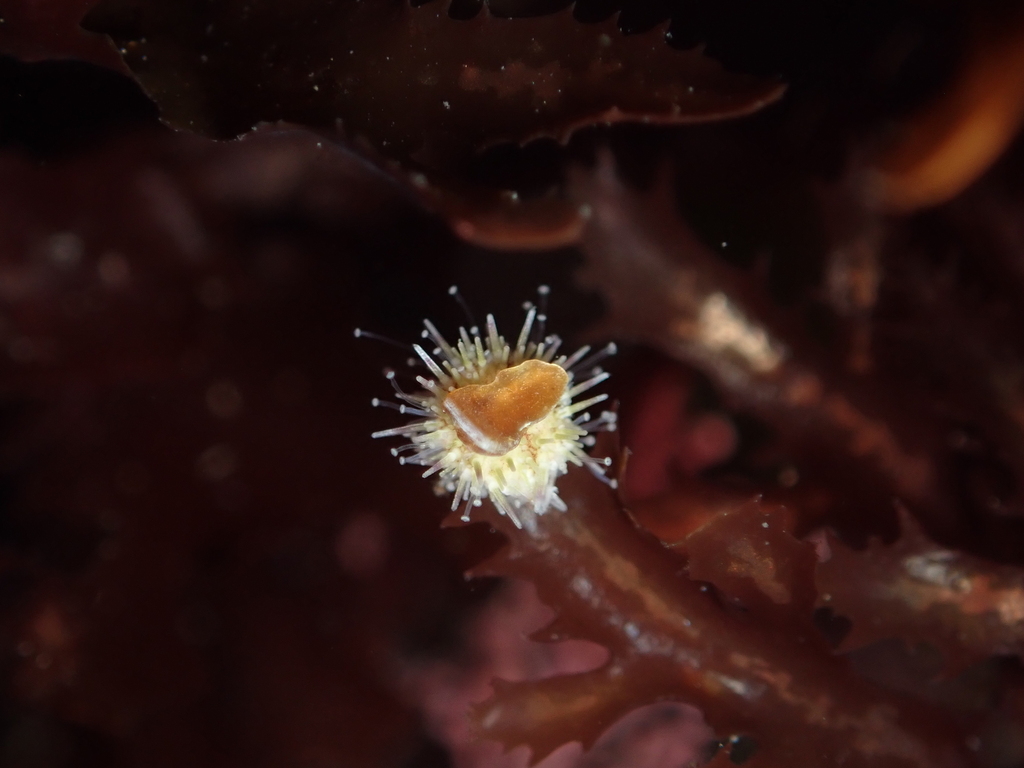
(c) Lisa Biasillo, some rights reserved (CC BY) · licence
Family: Toxopneustidae · Class: Echinoidea · Order: Camarodonta
Lytechinus pictus (White sea urchin) is a California animal in the Toxopneustidae family.
Lytechinus pictus, commonly known as the white sea urchin or painted urchin, is a marine echinoderm in the family Toxopneustidae. The species displays a characteristic globular test (shell) that ranges from white to pale coloration, with the ability to exhibit painted or mottled patterns. Like other sea urchins, L. pictus possesses moveable spines covering its test and tube feet that extend through pore pairs for locomotion and feeding. The white sea urchin occurs along the Pacific coast from southern California southward into tropical waters. According to the California Department of Fish and Wildlife, the species is found in southern California waters, including around the Channel Islands (CDFW Life History Information). The species extends beyond California waters into Baja California and further south along the eastern Pacific coast. Lytechinus pictus inhabits shallow marine environments from the intertidal zone to depths of approximately 990 feet (302 meters), though it is most commonly found in nearshore waters. The species occurs on sandy substrates and in eelgrass beds, where it can effectively navigate soft sediments (CDFW Life History Information). These habitats provide both suitable foraging areas and appropriate substrate for the urchin's feeding behavior. The species shows preference for areas with moderate water movement that facilitate feeding and waste removal. White sea urchins are extremely efficient grazers that feed primarily on smaller algae, making them important herbivores in their marine ecosystems (CDFW Life History Information). Their feeding behavior helps control algal growth and maintains ecological balance in eelgrass beds and sandy bottom communities. The species exhibits typical echinoderm reproduction, releasing gametes into the water column where fertilization occurs. Larvae are planktonic for 30 to 60 days before settling and metamorphosing into juvenile urchins (CDFW Life History Information). This extended larval period allows for wide dispersal but also makes early life stages vulnerable to oceanographic conditions and predation. The white sea urchin has been harvested by divers in California waters since the 1970s, particularly in northern California near Fort Bragg and throughout the southern California Bight (CDFW Sea Urchin Information). While not currently listed under state or federal endangered species acts, sea urchin populations face potential impacts from ocean acidification, warming waters, and habitat modification. The species' role as an efficient grazer makes it ecologically significant in maintaining healthy marine plant communities, particularly in eelgrass ecosystems that serve as critical habitat for numerous other marine species. Climate change effects on ocean chemistry and temperature may influence the species' ability to maintain its calcium carbonate test and overall population stability.
Classification
Class: Echinoidea · Order: Camarodonta · Family: Toxopneustidae
Frequently asked questions
How is Lytechinus pictus classified?
Lytechinus pictus belongs to class Echinoidea, order Camarodonta, family Toxopneustidae.
What family does Lytechinus pictus belong to?
Lytechinus pictus is in the Toxopneustidae family.
What is Lytechinus pictus?
Lytechinus pictus, commonly known as the white sea urchin or painted urchin, is a marine echinoderm in the family Toxopneustidae.
Is Lytechinus pictus found in California?
Yes. Lytechinus pictus is recorded in California in The California Species Project's catalogue.
More California species
This species has no close relatives in our California data — here are other species to explore.
Data from The California Species Project — 14,000+ California species with verified data from CNPS, CDFW, USFWS, and more.