Lytta hoppingi
Hopping's Blister Beetle
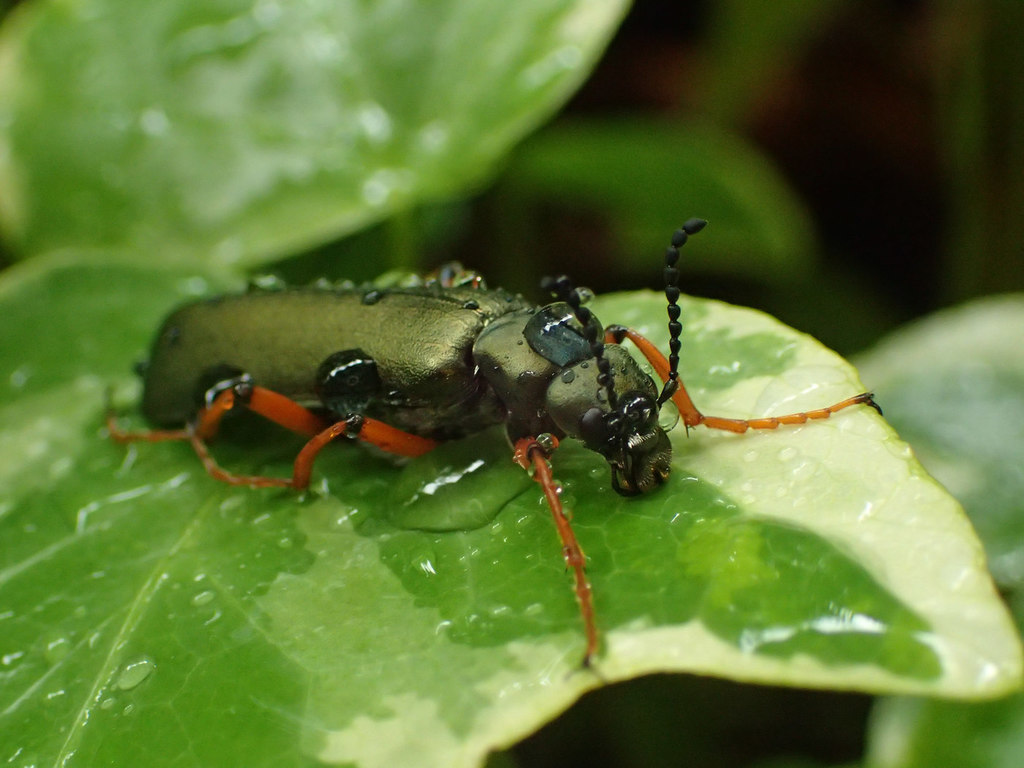
(c) Evan M. Raskin, some rights reserved (CC BY) · licence
Family: Meloidae · Class: Insecta · Order: Coleoptera
Conservation status: G1G2 S2
Lytta hoppingi (Hopping's Blister Beetle) is a California animal in the Meloidae family.
Hopping's blister beetle (Lytta hoppingi) is a member of the family Meloidae, classified within the subgenus Poreopasta of the genus Lytta. Like other blister beetles, this species produces cantharidin, a defensive chemical compound that can cause skin blistering in humans and other animals. The specific physical characteristics and size measurements of L. hoppingi have not been well documented in available scientific literature. This beetle is endemic to California, with its distribution limited to specific areas within the state. According to the U.S. Fish and Wildlife Service, the species occurs in California counties, though detailed locality information remains restricted in publicly available databases (USFWS ECOS 2025). The extremely limited range contributes to the species' conservation concern status. Habitat requirements for Hopping's blister beetle have not been comprehensively studied or documented. Like many blister beetles, the species likely requires specific host plants during its larval stage, though these associations remain undocumented for L. hoppingi. Many Lytta species inhabit arid and semi-arid environments, often associated with desert shrublands or grasslands, but the specific habitat preferences of this species require further investigation. The life cycle and behavioral ecology of L. hoppingi are poorly understood. Blister beetles typically undergo hypermetamorphosis, a complex developmental process involving multiple larval stages with different forms and feeding behaviors. Adult beetles generally emerge during specific seasons and may feed on flowers and foliage, while larvae often parasitize bee nests or grasshopper eggs. However, these general patterns have not been confirmed for Hopping's blister beetle specifically. Hopping's blister beetle faces significant conservation challenges due to its extremely restricted distribution and small population size. NatureServe assigns the species a global rank of G1G2, indicating it is critically imperiled to imperiled globally, with California rank of S2, meaning it is imperiled within the state (NatureServe 2025). This ranking reflects the species' high vulnerability to extinction due to its limited range, small population size, and potential threats to its habitat. The species appears on the Department of Defense's list of species at risk on military installations, suggesting at least part of its range may occur on federal lands (NatureServe 2003). Despite its conservation concern status, L. hoppingi is not currently listed under the federal Endangered Species Act, though it maintains a Species Profile in the U.S. Fish and Wildlife Service database (USFWS 2025). Primary threats to the species likely include habitat loss and fragmentation, though specific threat assessments have not been published. Given California's rapid development and the species' apparently small range, urban expansion, agricultural conversion, and other land use changes may pose significant risks. Climate change may also impact this species, particularly if it has narrow habitat requirements or limited dispersal ability. Detailed ecological studies of this species are lacking. Research priorities should include habitat characterization, life history documentation, population surveys, and threat assessment to support effective conservation planning for this rare California endemic.
Classification
Class: Insecta · Order: Coleoptera · Family: Meloidae
Conservation status
G1G2 S2
Frequently asked questions
How is Lytta hoppingi classified?
Lytta hoppingi belongs to class Insecta, order Coleoptera, family Meloidae.
What family does Lytta hoppingi belong to?
Lytta hoppingi is in the Meloidae family.
Is Lytta hoppingi protected or of conservation concern?
Lytta hoppingi carries the following status: G1G2 S2.
What is Lytta hoppingi?
Hopping's blister beetle (Lytta hoppingi) is a member of the family Meloidae, classified within the subgenus Poreopasta of the genus Lytta.
Is Lytta hoppingi found in California?
Yes. Lytta hoppingi is recorded in California in The California Species Project's catalogue.
Related species
Other California species in the same genus, family, or bioregion.
Data from The California Species Project — 14,000+ California species with verified data from CNPS, CDFW, USFWS, and more.