Lytta insperata
Mojave Desert Blister Beetle
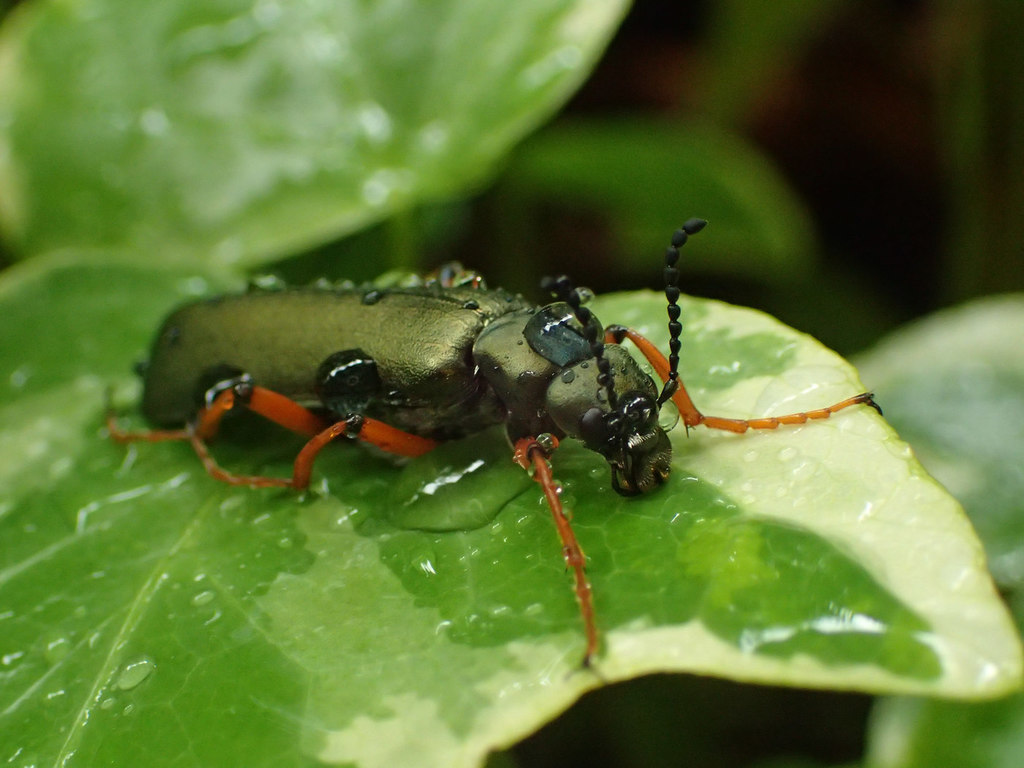
(c) Evan M. Raskin, some rights reserved (CC BY) · licence
Family: Meloidae · Class: Insecta · Order: Coleoptera
Conservation status: G1G2 S1S2
Lytta insperata (Mojave Desert Blister Beetle) is a California animal in the Meloidae family.
The Mojave Desert blister beetle is a member of the family Meloidae, characterized by the production of cantharidin, a defensive chemical compound that causes blistering of skin upon contact. Adults typically measure 10-20 millimeters (0.4-0.8 inches) in length and display the elongated, soft-bodied form characteristic of blister beetles. The species exhibits variable coloration, often with metallic or iridescent hues ranging from bronze to greenish-black, though specific morphological details for L. insperata remain poorly documented in available literature. This species is endemic to the Mojave Desert region of California, representing one of several blister beetle species adapted to extreme desert conditions. The precise distribution of L. insperata within the Mojave Desert has not been comprehensively mapped, though the species is known from scattered localities throughout the region. Historical records suggest a broader distribution than currently documented, though systematic surveys are lacking. Mojave Desert blister beetles inhabit arid shrubland and desert scrub communities typical of the Mojave Desert ecosystem. The species occurs in areas dominated by creosote bush scrub, Joshua tree woodland, and mixed desert shrub associations. Elevation ranges and specific microhabitat preferences have not been well documented, though related Mojave Desert Lytta species typically occur from desert floor elevations to lower mountain slopes. Adults are often found on flowering plants during their active season. Like other blister beetles, L. insperata likely exhibits a complex life cycle involving hypermetamorphosis, where larvae undergo multiple distinct developmental stages. Adults are presumed to be herbivorous, feeding on flowers and foliage of desert plants, while larvae are likely predatory or parasitic on other insects, particularly ground-nesting bees or grasshopper eggs. Specific host plant associations and prey species for this beetle have not been documented. Seasonal activity patterns are poorly known, though adults of related desert species typically emerge following winter or spring precipitation events. Lytta insperata holds a Global/State rank of G1G2 S1S2, indicating it is critically imperiled to imperiled both globally and within California, with populations estimated at fewer than 1,000 to 3,000 individuals. This ranking reflects the species' restricted range, specialized habitat requirements, and potential vulnerability to habitat modification. The species is not currently listed under the federal Endangered Species Act or California Endangered Species Act, though its conservation status suggests it may warrant consideration for protection. Primary threats likely include habitat loss from urban development, off-road vehicle use, renewable energy development, and climate change impacts on desert ecosystems. The extreme aridity and temperature fluctuations of the Mojave Desert may make populations particularly vulnerable to climatic shifts. Detailed ecological studies of this species are lacking. The above information synthesizes available data from NatureServe and taxonomic databases. We welcome contributions of verified scientific data, photographs, or field observations to enhance this species account.
Classification
Class: Insecta · Order: Coleoptera · Family: Meloidae
Conservation status
G1G2 S1S2
Frequently asked questions
How is Lytta insperata classified?
Lytta insperata belongs to class Insecta, order Coleoptera, family Meloidae.
What family does Lytta insperata belong to?
Lytta insperata is in the Meloidae family.
Is Lytta insperata protected or of conservation concern?
Lytta insperata carries the following status: G1G2 S1S2.
What is Lytta insperata?
The Mojave Desert blister beetle is a member of the family Meloidae, characterized by the production of cantharidin, a defensive chemical compound that causes blistering of skin upon contact.
Is Lytta insperata found in California?
Yes. Lytta insperata is recorded in California in The California Species Project's catalogue.
Related species
Other California species in the same genus, family, or bioregion.
Data from The California Species Project — 14,000+ California species with verified data from CNPS, CDFW, USFWS, and more.