Lytta moesta
Moestan Blister Beetle
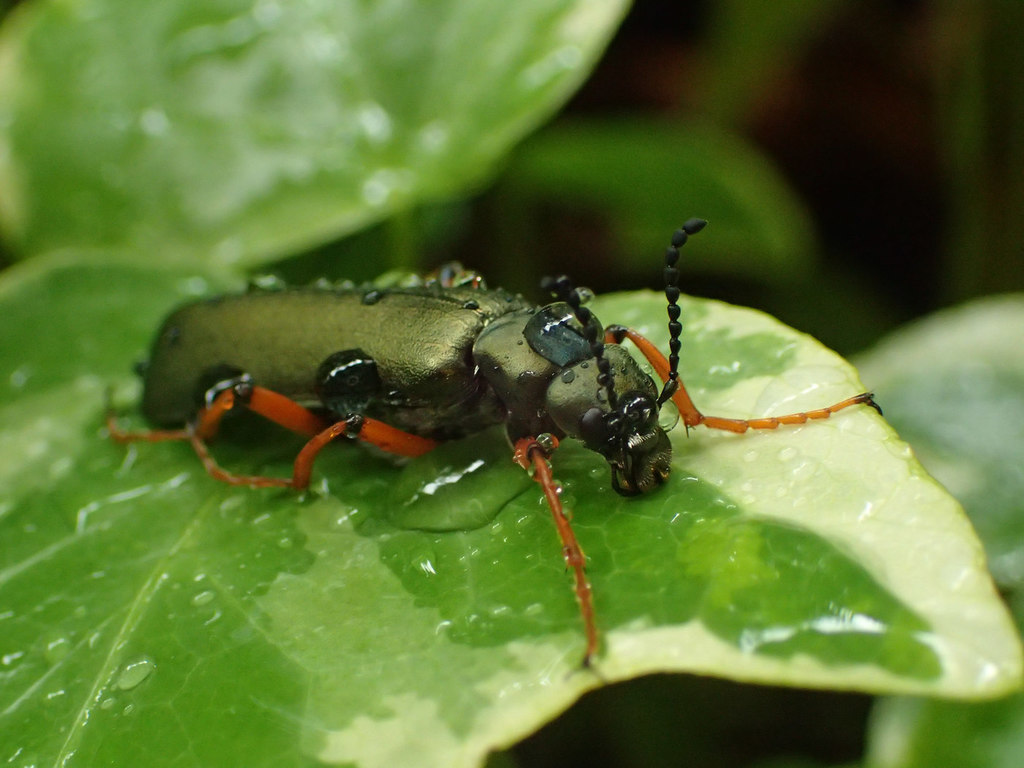
(c) Evan M. Raskin, some rights reserved (CC BY) · licence
Family: Meloidae · Class: Insecta · Order: Coleoptera
Conservation status: G2 S2
Lytta moesta (Moestan Blister Beetle) is a California animal in the Meloidae family.
The Moestan blister beetle is a medium-sized beetle in the family Meloidae, characterized by the production of cantharidin, a toxic compound that causes blistering upon contact with skin. Adults are typically dark-colored with a robust, elongated body form typical of blister beetles. Like other members of the genus Lytta, this species exhibits complete metamorphosis with a complex hypermetamorphic larval development. The Moestan blister beetle is endemic to California's Central Valley and adjacent foothills, with a highly fragmented distribution pattern. According to USFWS records, the species' geographic range includes disjunct populations in the Central Valley from Shasta County south to northern Tulare County, and in the central coast range from Solano County to Alameda County (USFWS 2002). Eight of nine known occurrences remain extant, with more than 70 percent of occupied habitat concentrated in a single area east of Mather Field in Sacramento County. Additional populations occur at Phoenix Field Ecological Reserve, near Fremont in Alameda County, and historically in Santa Barbara County, though this southern occurrence has likely been extirpated due to habitat alteration. The species inhabits grasslands of California's Central Valley and foothills of the Sierra Nevada Mountains (NatureServe). Primary habitat consists of native grasslands and areas associated with dried vernal pools, where the species maintains a close ecological relationship with ground-nesting native bees. The beetle's habitat requirements are closely tied to the presence of suitable host species rather than specific plant communities. Moestan blister beetle larvae are parasitoids that feed on the provisions and immature stages of ground-nesting native bees in or near dried vernal pools (Selander 1960, Halstead & Haines 1992). This specialized feeding behavior represents a critical ecological relationship, as the larvae depend entirely on bee hosts for development. The species exhibits hypermetamorphosis, a complex developmental pattern where early larval stages are mobile and later stages are sedentary. Adults are presumed to feed on flowers and foliage, consistent with other Lytta species, though specific dietary preferences have not been well documented. The Moestan blister beetle is globally and state ranked as G2 S2, indicating it is imperiled both globally and within California. The species faces significant conservation challenges due to habitat loss and fragmentation. Primary threats include conversion of native grasslands to agriculture, urban development, and habitat degradation that affects both the beetle and its ground-nesting bee hosts. The close ecological relationship between this beetle and native pollinators means conservation strategies must consider the habitat needs of both taxa. Protection of vernal pool ecosystems and associated native grasslands is essential for the species' persistence, as these habitats support the ground-nesting bee communities upon which the beetle depends for reproduction.
Classification
Class: Insecta · Order: Coleoptera · Family: Meloidae
Conservation status
G2 S2
Frequently asked questions
How is Lytta moesta classified?
Lytta moesta belongs to class Insecta, order Coleoptera, family Meloidae.
What family does Lytta moesta belong to?
Lytta moesta is in the Meloidae family.
Is Lytta moesta protected or of conservation concern?
Lytta moesta carries the following status: G2 S2.
What is Lytta moesta?
The Moestan blister beetle is a medium-sized beetle in the family Meloidae, characterized by the production of cantharidin, a toxic compound that causes blistering upon contact with skin.
Is Lytta moesta found in California?
Yes. Lytta moesta is recorded in California in The California Species Project's catalogue.
Related species
Other California species in the same genus, family, or bioregion.
Data from The California Species Project — 14,000+ California species with verified data from CNPS, CDFW, USFWS, and more.