Lytta morrisoni
Morrison's Blister Beetle
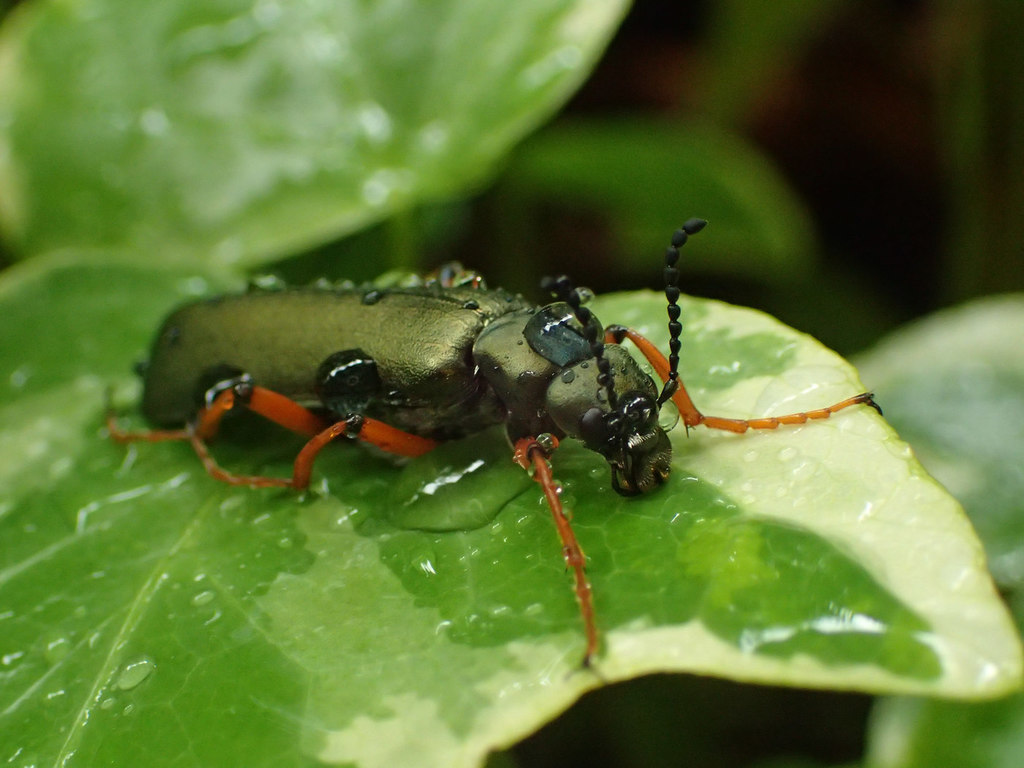
(c) Evan M. Raskin, some rights reserved (CC BY) · licence
Family: Meloidae · Class: Insecta · Order: Coleoptera
Conservation status: G1G2 S2
Lytta morrisoni (Morrison's Blister Beetle) is a California animal in the Meloidae family.
Morrison's blister beetle is a rare insect species endemic to California, belonging to the genus Lytta, subgenus Paralytta. Like other blister beetles, this species produces cantharidin, a defensive chemical compound that causes blistering when it contacts skin. Adult beetles typically measure 10-15 mm in length and exhibit the characteristic elongated body form of the Meloidae family, though specific morphological details for L. morrisoni have not been well documented in the scientific literature. Morrison's blister beetle has an extremely limited distribution, occurring only in specific locations within California. The species' range is highly restricted, contributing to its conservation concern status. Current distribution data suggests the species occupies a very small geographic area, though precise locality information requires verification from recent surveys. Habitat requirements for Morrison's blister beetle remain poorly documented in the scientific literature. Like other Lytta species, it likely occupies dry, open habitats where host plants and suitable breeding conditions occur. The species probably requires specific soil conditions and plant communities that support both adult feeding and larval development, though these associations have not been thoroughly studied or published. The life cycle of Morrison's blister beetle follows the typical hypermetamorphic development pattern characteristic of the Meloidae family. Adults likely emerge during warm months to mate and feed on flowers and foliage. Females deposit eggs in soil, and the resulting larvae undergo multiple developmental stages with dramatically different morphologies. First-instar larvae, called triungulins, are highly mobile and seek out host insects, typically ground-nesting bee larvae or grasshopper egg pods. Subsequent larval stages are less mobile grub-like forms that consume the host material. This complex life cycle makes the species dependent on both plant resources for adults and specific arthropod hosts for larval development. Morrison's blister beetle is currently classified as a Species of Concern by the U.S. Fish and Wildlife Service, indicating that the species may warrant protection under the Endangered Species Act but lacks sufficient data for listing (USFWS ECOS database, as of December 2025). The species holds a global rank of G1G2, indicating it is critically imperiled to imperiled globally, and a state rank of S2, meaning it is imperiled in California with 6 to 20 occurrences or few remaining individuals. Primary threats likely include habitat loss, fragmentation of remaining suitable habitat, and the species' extremely limited range, which makes populations vulnerable to local extinctions. The restricted distribution and apparent rarity of this species make it particularly susceptible to environmental changes and human activities. Detailed ecological studies of Morrison's blister beetle are lacking. The above information synthesizes available data from federal databases and taxonomic sources. Additional research is needed to document the species' specific habitat requirements, host plant associations, life history timing, and population status to support effective conservation planning.
Classification
Class: Insecta · Order: Coleoptera · Family: Meloidae
Conservation status
G1G2 S2
Frequently asked questions
How is Lytta morrisoni classified?
Lytta morrisoni belongs to class Insecta, order Coleoptera, family Meloidae.
What family does Lytta morrisoni belong to?
Lytta morrisoni is in the Meloidae family.
Is Lytta morrisoni protected or of conservation concern?
Lytta morrisoni carries the following status: G1G2 S2.
What is Lytta morrisoni?
Morrison's blister beetle is a rare insect species endemic to California, belonging to the genus Lytta, subgenus Paralytta.
Is Lytta morrisoni found in California?
Yes. Lytta morrisoni is recorded in California in The California Species Project's catalogue.
Related species
Other California species in the same genus, family, or bioregion.
Data from The California Species Project — 14,000+ California species with verified data from CNPS, CDFW, USFWS, and more.