Macaria adonis
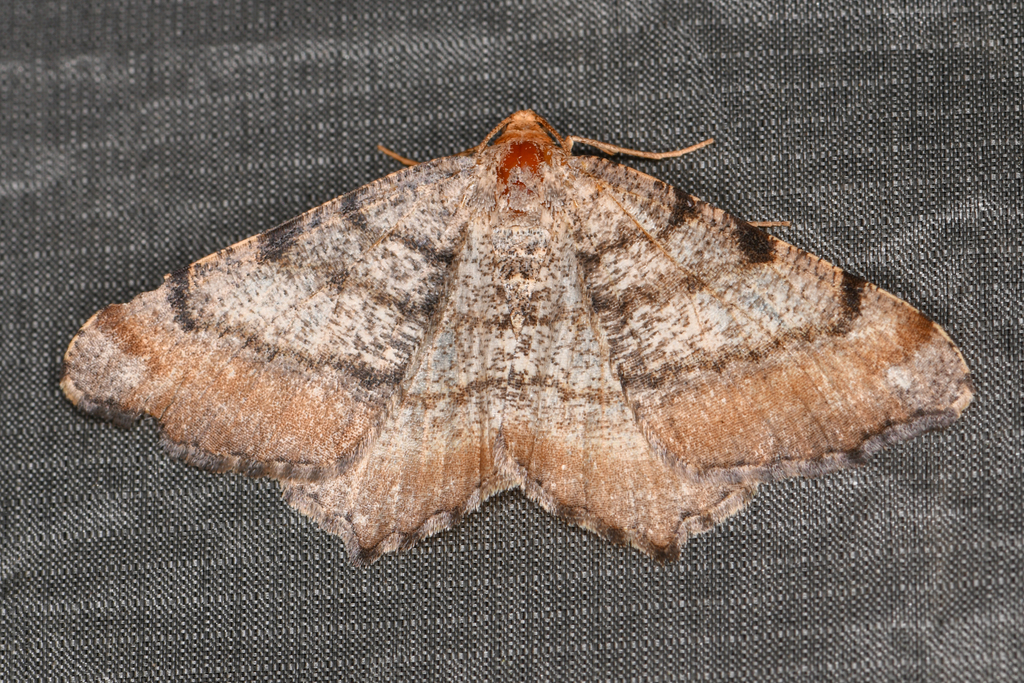
(c) Trevor Van Loon, some rights reserved (CC BY) · licence
Family: Geometridae · Class: Insecta · Order: Lepidoptera
Macaria adonis is a California animal in the Geometridae family.
Macaria adonis is a geometrid moth in the family Geometridae, subfamily Ennominae. This species belongs to a large genus of moths commonly known as angle moths or geometers, characterized by their distinctive wing patterns and flight behavior. Adult moths typically display the slender body and broad wings characteristic of the family, with forewings that often exhibit intricate patterns of lines and bands that aid in camouflage when at rest against tree bark or other surfaces. The distribution and range of Macaria adonis appear to be poorly documented in current literature, with limited information available regarding its historical or current range within California or elsewhere. This data gap reflects the broader challenge of documenting many smaller Lepidoptera species, particularly those that may be uncommon, have restricted distributions, or lack distinctive characteristics that make field identification straightforward. Habitat requirements for Macaria adonis remain largely unknown, though other members of the genus Macaria are typically associated with forested environments where their host plants occur. Many Macaria species show specificity to particular tree or shrub species during their larval stage, with caterpillars feeding on foliage of their host plants. The moths are generally nocturnal and may be attracted to artificial light sources, making them occasionally detectable during nighttime surveys. The life cycle follows the typical lepidopteran pattern of complete metamorphosis, with eggs laid on or near host plant foliage, followed by several larval instars before pupation. Larvae of geometrid moths are commonly called inchworms or loopers due to their characteristic method of locomotion, arching their bodies as they move along branches and stems. The timing of adult emergence and flight periods for this species has not been well documented, though many Macaria species have specific seasonal activity patterns that correspond with host plant phenology and local climate conditions. The conservation status of Macaria adonis is not well established, with no apparent federal or state listing status. This lack of formal conservation assessment may reflect insufficient data on population size, distribution, trends, and threats rather than indicating the species is secure. Many smaller moth species face potential threats from habitat loss, pesticide use, light pollution, and climate change, but without adequate baseline data, it is difficult to assess population trends or conservation needs. The species may benefit from targeted surveys to better understand its distribution, abundance, and ecological requirements. Further research is needed to document basic biological information for Macaria adonis, including host plant associations, habitat preferences, life history characteristics, and distribution patterns. Such information would be valuable for assessing conservation status and developing appropriate management strategies if needed.
Classification
Class: Insecta · Order: Lepidoptera · Family: Geometridae
Frequently asked questions
How is Macaria adonis classified?
Macaria adonis belongs to class Insecta, order Lepidoptera, family Geometridae.
What family does Macaria adonis belong to?
Macaria adonis is in the Geometridae family.
What is Macaria adonis?
Macaria adonis is a geometrid moth in the family Geometridae, subfamily Ennominae.
Is Macaria adonis found in California?
Yes. Macaria adonis is recorded in California in The California Species Project's catalogue.
Related species
Other California species in the same genus, family, or bioregion.
Data from The California Species Project — 14,000+ California species with verified data from CNPS, CDFW, USFWS, and more.