Macaria aemulataria
Common Angle
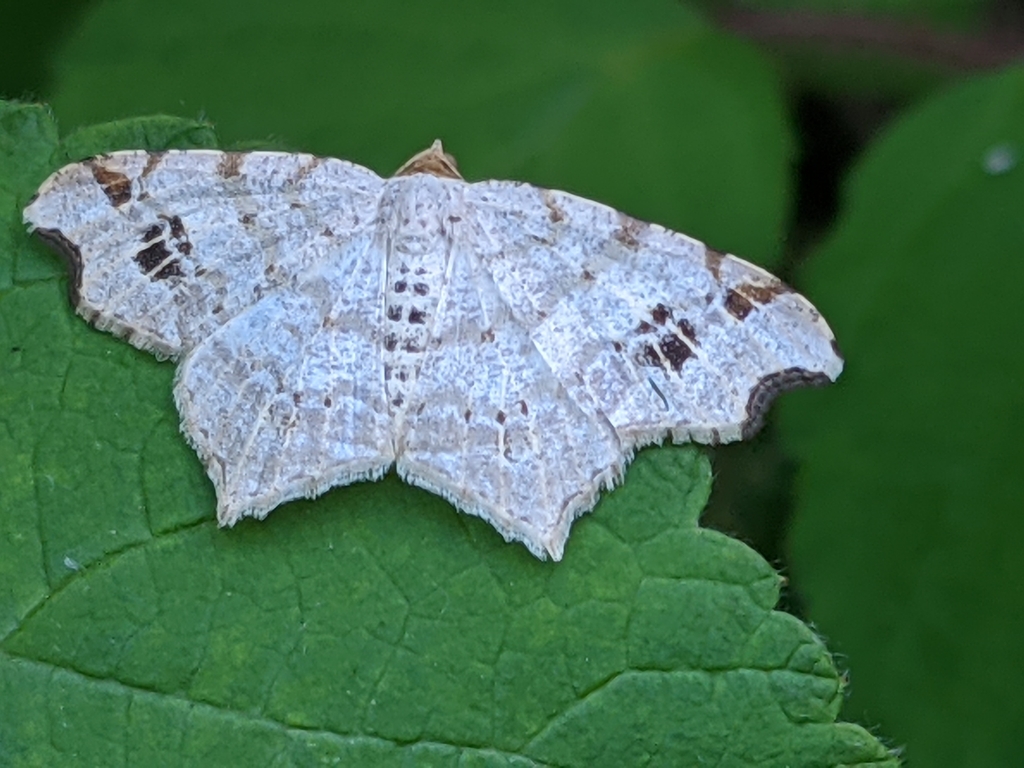
(c) Matthew Gerke, some rights reserved (CC BY) · licence
Family: Geometridae · Class: Insecta · Order: Lepidoptera
Macaria aemulataria (Common Angle) is a California animal in the Geometridae family.
The Common Angle (Macaria aemulataria) is a small geometrid moth in the family Geometridae, subfamily Ennominae. Adults typically measure 18 to 25 mm (0.7 to 1.0 inches) in wingspan. The forewings display a muted brown to gray-brown ground color with distinctive angular lines that give the species its common name. Two prominent transverse lines cross each forewing: an inner antemedial line and an outer postmedial line, both forming sharp angles near the costa. A discal spot is usually present at the end of the cell. The hindwings are paler, typically whitish to light brown, with a faint postmedial line. Males possess feathery antennae, while females have simple, thread-like antennae. Macaria aemulataria occurs across much of North America, with a range extending from southern Canada through the United States to northern Mexico. In California, the species is distributed throughout much of the state, from coastal regions to interior valleys and foothills. The moth has been documented in counties including Los Angeles, Riverside, San Bernardino, Kern, Fresno, and Tulare, with records extending north into the Central Valley and Sierra Nevada foothills. Elevational range typically spans from sea level to approximately 1,500 meters (4,900 feet). This species inhabits diverse habitats including chaparral, oak woodlands, riparian areas, and suburban environments with suitable host plants. Adults are attracted to areas with mixed vegetation and are commonly found in gardens, parks, and natural areas where native and non-native shrubs occur. The larvae feed on various plants in the rose family (Rosaceae), including wild cherry (Prunus species), serviceberry (Amelanchier species), and cultivated fruit trees. Some populations also utilize plants in other families, demonstrating the species' adaptability to different host plants. Common Angle moths are nocturnal and exhibit typical geometrid behavior, with adults attracted to artificial lights during evening and nighttime hours. The species is multivoltine in warmer climates, producing two to three generations annually. Peak flight periods occur from March through October, with activity varying by elevation and local climate conditions. Larvae are typical geometrid caterpillars, commonly called inchworms or loopers, that move by extending the front of the body forward and then drawing the rear segments up to meet it. Pupation occurs in the soil or leaf litter in a simple chamber. Macaria aemulataria is not currently listed under federal or California state endangered species acts and appears to maintain stable populations across its range. The species benefits from its broad host plant range and tolerance for disturbed habitats, including urban and suburban environments. No specific conservation concerns have been identified for this moth, and it remains a relatively common member of California's geometrid moth fauna. The species' adaptability to various environments and host plants suggests resilience to moderate habitat modifications, though large-scale habitat loss could potentially affect local populations.
Classification
Class: Insecta · Order: Lepidoptera · Family: Geometridae
Frequently asked questions
How is Macaria aemulataria classified?
Macaria aemulataria belongs to class Insecta, order Lepidoptera, family Geometridae.
What family does Macaria aemulataria belong to?
Macaria aemulataria is in the Geometridae family.
What is Macaria aemulataria?
The Common Angle (Macaria aemulataria) is a small geometrid moth in the family Geometridae, subfamily Ennominae.
Is Macaria aemulataria found in California?
Yes. Macaria aemulataria is recorded in California in The California Species Project's catalogue.
Related species
Other California species in the same genus, family, or bioregion.
Data from The California Species Project — 14,000+ California species with verified data from CNPS, CDFW, USFWS, and more.