Macaria colata
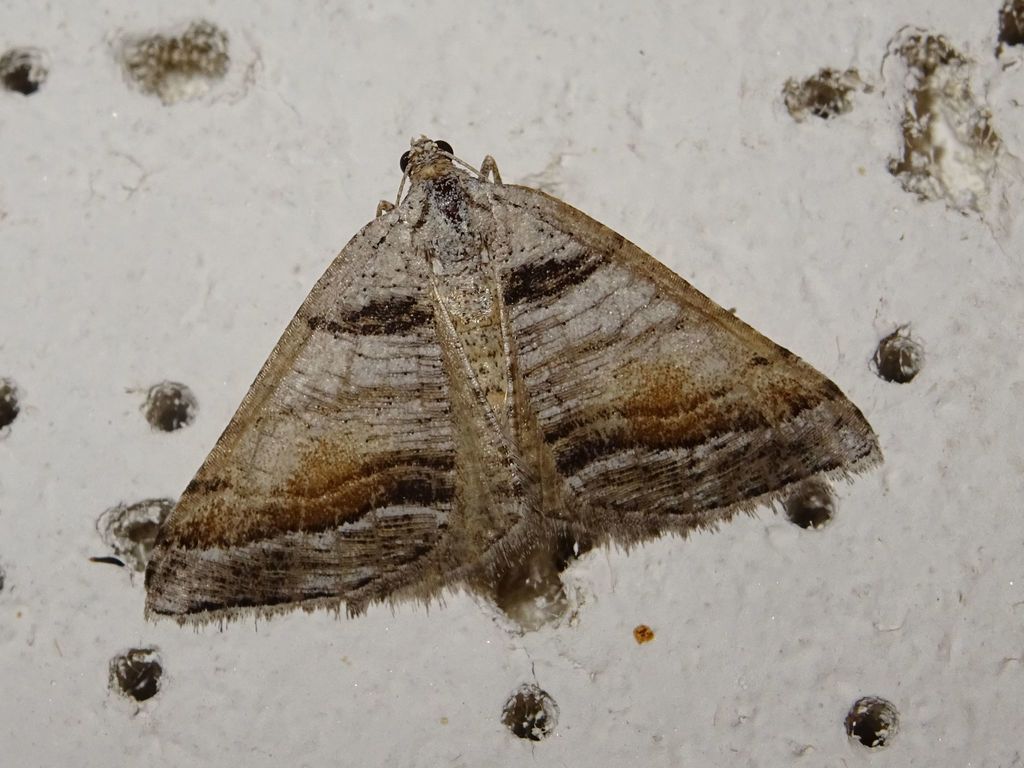
(c) Joey Bom, some rights reserved (CC BY) · licence
Family: Geometridae · Class: Insecta · Order: Lepidoptera
Macaria colata is a California animal in the Geometridae family.
Macaria colata is a moth in the family Geometridae, commonly known as geometrids or inchworm moths. This species belongs to the genus Macaria, which contains numerous North American species that can be challenging to distinguish morphologically. Adult moths of this genus typically display subtle wing patterns with fine lines and subdued earth-tone coloration that provides effective camouflage when resting on tree bark or other substrates. Macaria colata occurs across western North America, with documented records from California north through Oregon and extending into interior regions. In California, the species has been recorded in Klamath County during lepidopterist surveys (Lepidopterists' Society News 2011). The species also occurs in Arizona, where it has been documented in Apache County at elevations around 6,140 to 6,161 feet near Houck along Interstate 40 (Lepidopterists' Society News 2011). NatureServe has assigned this species a global conservation status of G5, indicating it is demonstrably secure globally (NatureServe 2025). Habitat preferences for Macaria colata are not extensively documented in the scientific literature, though records suggest the species occurs in diverse environments from marshy wetland areas to drier upland sites. Collection records from Klamath Marsh National Wildlife Refuge indicate the species can utilize wetland-adjacent habitats, while records from Arizona suggest tolerance for more arid conditions at moderate elevations. Like other Geometridae, adults are likely attracted to artificial light sources and can be collected using ultraviolet and mercury vapor light traps during nighttime surveys. As with most geometrid moths, the larvae of Macaria colata are presumed to be leaf-feeding caterpillars, though specific host plant associations have not been well documented for this species. Geometridae larvae typically exhibit the characteristic "looping" locomotion that gives the family its common name of inchworms or loopers. Adults are active during summer months, with collection records spanning from July through September based on reported observations. Flight period data suggests peak activity occurs during midsummer, though specific phenology may vary with latitude and local climate conditions. The conservation status of Macaria colata appears stable based on its G5 global ranking from NatureServe. The species is not listed under federal or state endangered species legislation. While specific population trend data are not available, the widespread distribution across multiple western states suggests the species is not currently at risk. However, like many moth species, Macaria colata may face localized pressures from habitat loss, light pollution, and climate change effects on host plant distributions. Continued monitoring through lepidopterist surveys and citizen science programs helps track the status of this and other geometrid species across their ranges.
Classification
Class: Insecta · Order: Lepidoptera · Family: Geometridae
Frequently asked questions
How is Macaria colata classified?
Macaria colata belongs to class Insecta, order Lepidoptera, family Geometridae.
What family does Macaria colata belong to?
Macaria colata is in the Geometridae family.
What is Macaria colata?
Macaria colata is a moth in the family Geometridae, commonly known as geometrids or inchworm moths.
Is Macaria colata found in California?
Yes. Macaria colata is recorded in California in The California Species Project's catalogue.
Related species
Other California species in the same genus, family, or bioregion.
Data from The California Species Project — 14,000+ California species with verified data from CNPS, CDFW, USFWS, and more.