Macaria quadrilinearia
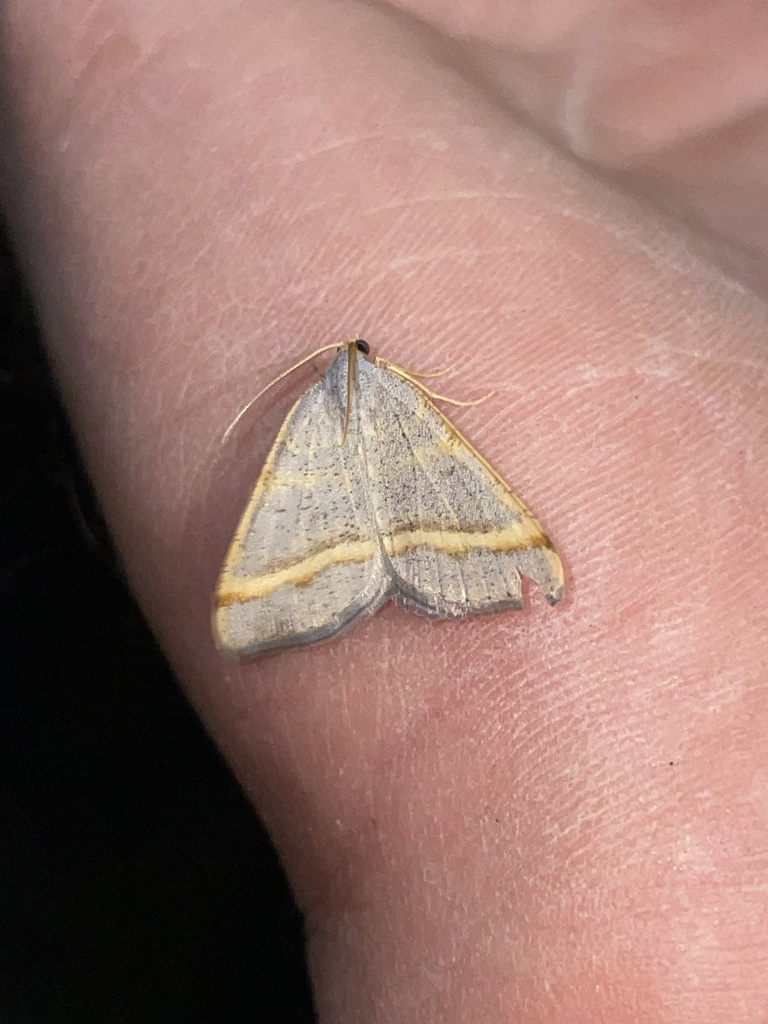
(c) colinpena, some rights reserved (CC BY) · licence
Family: Geometridae · Class: Insecta · Order: Lepidoptera
Macaria quadrilinearia is a California animal in the Geometridae family.
Macaria quadrilinearia is a geometrid moth in the family Geometridae, commonly known as inchworms or measuring worms. This species belongs to a large group of moths characterized by their distinctive looping locomotion in the larval stage and their typically slender build as adults. Adult moths display the characteristic geometrid wing patterns with delicate scaling and cryptic coloration that provides effective camouflage against tree bark and lichen-covered surfaces. This western North American species ranges from British Columbia south to southern California, with documented populations in Idaho, South Dakota, Wyoming, Nevada, Colorado, and New Mexico. According to Ferguson's taxonomic work, the species is notably absent from Arizona and Montana, despite occurring in surrounding states. Recent lepidopterist records document the species from various locations including Montana's Lewis & Clark County near Helena, Colorado's Saguache County at Poso Campground, and Idaho's Bonneville County at Palisades Reservoir (News of the Lepidopterists' Society 2012, 2019). Macaria quadrilinearia occupies diverse habitats across its western range, from lower elevation valleys to montane environments. Collection records indicate the species occurs at elevations ranging from valley floors to at least 6,250 feet, as documented in Montana collections. The moth appears to favor areas with mixed vegetation including both deciduous and coniferous forest edges, as suggested by collection localities near campgrounds, reservoir edges, and canyon environments. Adult flight records span from late spring through late summer, with documented captures from May through August. Peak activity appears to occur during June and July based on collection data from multiple states. Like other geometrid moths, adults are primarily nocturnal and are attracted to artificial light sources, as evidenced by numerous records from mercury vapor and UV light traps used by researchers. The species likely follows a univoltine life cycle typical of many western geometrids, with a single generation per year. Larval host plants for Macaria quadrilinearia have not been definitively documented in the scientific literature, though other members of the genus Macaria typically feed on woody plants including various deciduous trees and shrubs. The caterpillars would exhibit the characteristic looping movement of geometrid larvae, extending their body forward and bringing their rear prolegs up to meet their front legs. Macaria quadrilinearia does not appear on any federal or state endangered species lists and lacks formal conservation status designations. The species' wide distribution across multiple western states suggests relatively stable populations, though specific population trends have not been systematically studied. Like many moth species, potential threats may include habitat loss from development, forest management practices, and climate change effects on montane ecosystems. The species benefits from its broad geographic range and apparent habitat flexibility, which likely provide some resilience against localized environmental changes.
Classification
Class: Insecta · Order: Lepidoptera · Family: Geometridae
Frequently asked questions
How is Macaria quadrilinearia classified?
Macaria quadrilinearia belongs to class Insecta, order Lepidoptera, family Geometridae.
What family does Macaria quadrilinearia belong to?
Macaria quadrilinearia is in the Geometridae family.
What is Macaria quadrilinearia?
Macaria quadrilinearia is a geometrid moth in the family Geometridae, commonly known as inchworms or measuring worms.
Is Macaria quadrilinearia found in California?
Yes. Macaria quadrilinearia is recorded in California in The California Species Project's catalogue.
Related species
Other California species in the same genus, family, or bioregion.
Data from The California Species Project — 14,000+ California species with verified data from CNPS, CDFW, USFWS, and more.