Macrobaenetes algodonensis
Algodones Sand Treader Cricket
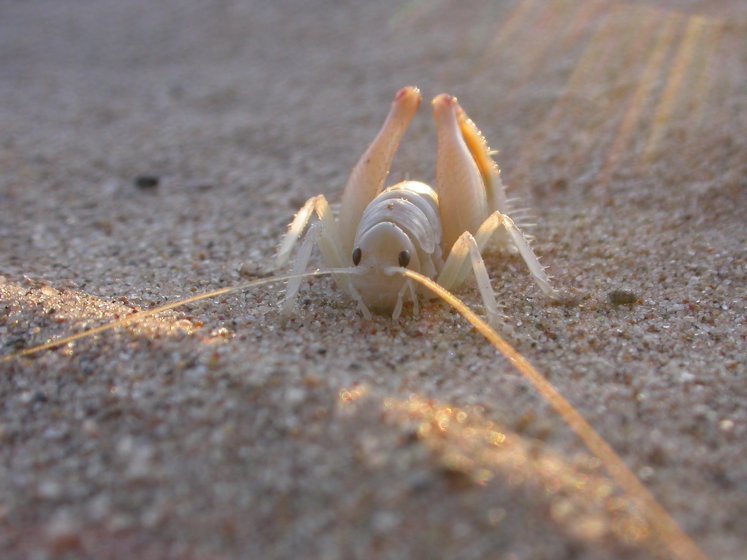
(c) Bob Miller, some rights reserved (CC BY) · licence
Family: Rhaphidophoridae · Class: Insecta · Order: Orthoptera
Conservation status: G1G2 S2
Macrobaenetes algodonensis (Algodones Sand Treader Cricket) is a California animal in the Rhaphidophoridae family.
The Algodones Sand Treader Cricket is a specialized orthopteran insect endemic to the Algodones Dunes of southeastern California. Adults measure approximately 2 centimeters (0.8 inches) in length, with males displaying the typical elongated antennae and robust hind legs characteristic of camel crickets in the family Rhaphidophoridae. The species exhibits cryptic coloration adapted to sandy environments, with pale brown to tan body coloring that provides camouflage against desert sand substrates (BugGuide). This species is restricted to the Algodones Dunes system in Imperial County, California, making it one of the most geographically limited crickets in North America. The Algodones Dunes, also known as the Imperial Sand Dunes, represent the largest mass of sand dunes in California, extending approximately 45 miles in length. The species' distribution appears to coincide with the active dune areas where wind-blown sand creates the specific microhabitat conditions required for survival. Algodones Sand Treader Crickets inhabit active sand dune environments characterized by loose, shifting sands and sparse vegetation. The species demonstrates specialized adaptations to this extreme desert habitat, including specialized leg structures that facilitate movement across sand surfaces. Like other sand-treader crickets in the genus Macrobaenetes, this species likely burrows into sand during daylight hours to avoid temperature extremes and desiccation. The dune ecosystem experiences significant temperature fluctuations, with surface temperatures exceeding 60°C (140°F) during summer days. Behavioral observations indicate the species is primarily nocturnal, emerging at night to forage and engage in reproductive activities. Field observations document individuals attracted to food sources such as oatmeal baits placed by researchers, suggesting an omnivorous diet typical of camel crickets (BugGuide). The species likely feeds on organic matter including plant detritus, small arthropods, and carrion when available. Reproductive biology remains poorly documented, though the species presumably follows the typical rhaphidophorid pattern of direct development without a complete metamorphosis. According to NatureServe, the Algodones Sand Treader Cricket receives a global conservation rank of G5, indicating it is secure globally. However, this ranking may not fully reflect the species' highly restricted geographic range within the Algodones Dunes ecosystem. The species faces potential conservation challenges due to its extremely limited distribution and specialized habitat requirements. The Algodones Dunes ecosystem experiences pressure from recreational vehicle use, military training activities, and potential climate change impacts that could alter dune dynamics. The Bureau of Land Management manages portions of the dunes as both recreational and conservation areas, creating complex management scenarios for this endemic species while accommodating human activities. Continued monitoring and habitat assessment would help clarify the species' actual conservation needs given its narrow geographic distribution.
Classification
Class: Insecta · Order: Orthoptera · Family: Rhaphidophoridae
Conservation status
G1G2 S2
Frequently asked questions
How is Macrobaenetes algodonensis classified?
Macrobaenetes algodonensis belongs to class Insecta, order Orthoptera, family Rhaphidophoridae.
What family does Macrobaenetes algodonensis belong to?
Macrobaenetes algodonensis is in the Rhaphidophoridae family.
Is Macrobaenetes algodonensis protected or of conservation concern?
Macrobaenetes algodonensis carries the following status: G1G2 S2.
What is Macrobaenetes algodonensis?
The Algodones Sand Treader Cricket is a specialized orthopteran insect endemic to the Algodones Dunes of southeastern California.
Is Macrobaenetes algodonensis found in California?
Yes. Macrobaenetes algodonensis is recorded in California in The California Species Project's catalogue.
Related species
Other California species in the same genus, family, or bioregion.
Data from The California Species Project — 14,000+ California species with verified data from CNPS, CDFW, USFWS, and more.