Macrobaenetes kelsoensis
Kelso Giant Sand Treader Cricket
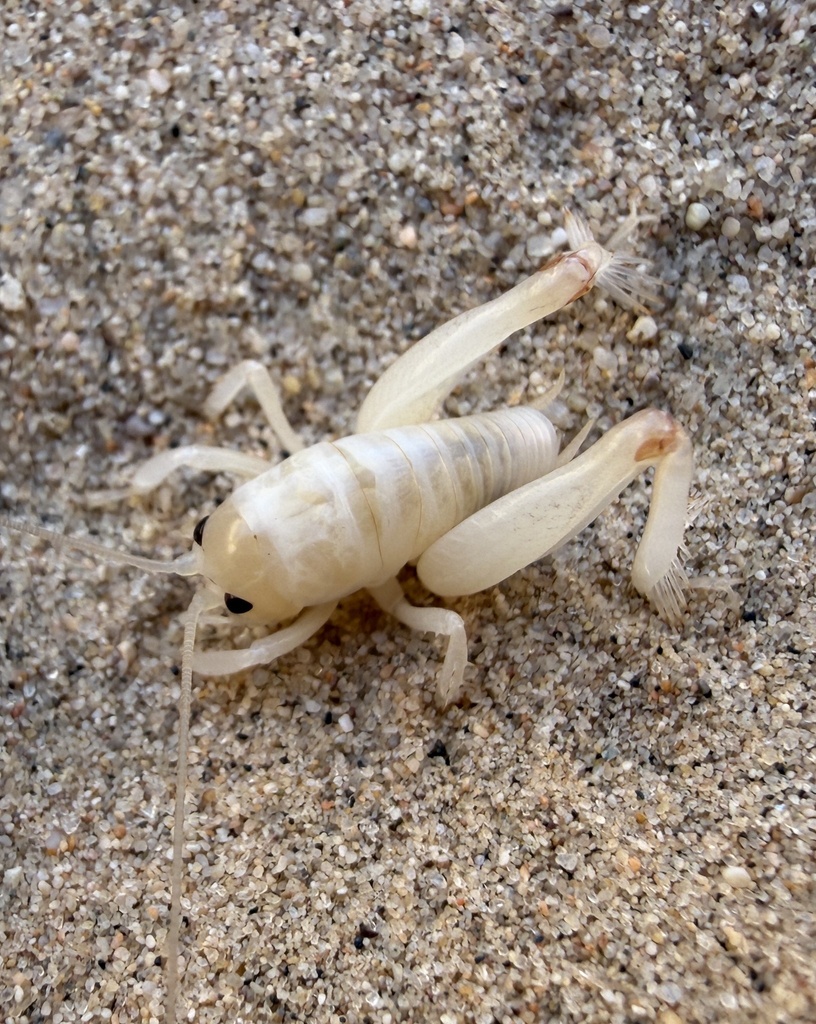
(c) Matt Berger, some rights reserved (CC BY) · licence
Family: Rhaphidophoridae · Class: Insecta · Order: Orthoptera
Conservation status: G2 S2
Macrobaenetes kelsoensis (Kelso Giant Sand Treader Cricket) is a California animal in the Rhaphidophoridae family.
The Kelso Giant Sand Treader Cricket is a specialized orthopteran species endemic to the Mojave Desert of California. As a member of the family Rhaphidophoridae, these crickets are characterized by their enlarged hind legs adapted for jumping and their elongated antennae, though specific morphological measurements for this species have not been well documented in available literature. Like other sand treader crickets in the genus Macrobaenetes, this species likely exhibits pale coloration that provides camouflage against desert sand substrates. This species is known exclusively from the Kelso Dunes area of the Mojave Desert in San Bernardino County, California. The Kelso Dunes represent one of the largest dune systems in the Mojave Desert, located within the Mojave National Preserve. The species' highly restricted range makes it particularly vulnerable to habitat disturbance and environmental changes. The Kelso Giant Sand Treader Cricket inhabits the specialized sand dune ecosystem of the Kelso Dunes. Sand treader crickets are typically adapted to loose, sandy substrates where they can burrow and move through sand with their modified appendages. The Kelso Dunes environment is characterized by shifting sands, sparse vegetation, and extreme temperature fluctuations typical of desert environments. Specific microhabitat preferences and elevation ranges for this species have not been thoroughly documented. Like other members of the Rhaphidophoridae family, this species likely exhibits nocturnal activity patterns to avoid extreme daytime temperatures. Sand treader crickets typically feed on organic matter found in sand, including decomposing plant material and small invertebrates. Reproductive behavior, seasonal activity patterns, and life cycle details for M. kelsoensis remain poorly studied. The species' specialized adaptations for sand dune environments suggest limited dispersal capabilities, which constrains population connectivity. Macrobaenetes kelsoensis holds a global conservation rank of G2 (imperiled) and a state rank of S2 in California, indicating significant conservation concern due to its extremely limited range and small population size. The species faces threats common to desert endemics, including habitat disturbance from recreational vehicle use, potential development pressures, and climate change impacts that could alter the delicate sand dune ecosystem dynamics. The U.S. Fish and Wildlife Service maintains a species profile for this cricket, indicating federal recognition of its conservation importance, though it is not currently federally listed as threatened or endangered. Detailed ecological studies of this species are lacking. The information presented here synthesizes available data from taxonomic databases and conservation assessments. Enhanced research is needed to understand population size, specific habitat requirements, life history characteristics, and conservation needs. Such studies would be critical for developing effective management strategies for this highly endemic desert specialist.
Classification
Class: Insecta · Order: Orthoptera · Family: Rhaphidophoridae
Conservation status
G2 S2
Frequently asked questions
How is Macrobaenetes kelsoensis classified?
Macrobaenetes kelsoensis belongs to class Insecta, order Orthoptera, family Rhaphidophoridae.
What family does Macrobaenetes kelsoensis belong to?
Macrobaenetes kelsoensis is in the Rhaphidophoridae family.
Is Macrobaenetes kelsoensis protected or of conservation concern?
Macrobaenetes kelsoensis carries the following status: G2 S2.
What is Macrobaenetes kelsoensis?
The Kelso Giant Sand Treader Cricket is a specialized orthopteran species endemic to the Mojave Desert of California.
Is Macrobaenetes kelsoensis found in California?
Yes. Macrobaenetes kelsoensis is recorded in California in The California Species Project's catalogue.
Related species
Other California species in the same genus, family, or bioregion.
Data from The California Species Project — 14,000+ California species with verified data from CNPS, CDFW, USFWS, and more.