Macrobaenetes valgum
Coachella Giant Sand Treader Cricket
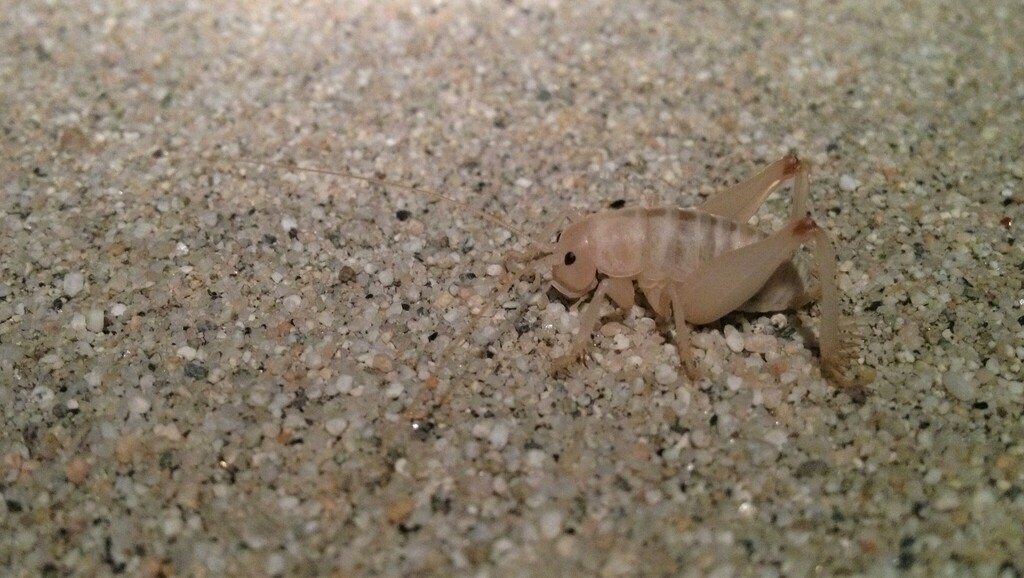
(c) nmoorhatch, some rights reserved (CC BY) · licence
Family: Rhaphidophoridae · Class: Insecta · Order: Orthoptera
Conservation status: G1G2 S2
Macrobaenetes valgum (Coachella Giant Sand Treader Cricket) is a California animal in the Rhaphidophoridae family.
The Coachella giant sand treader cricket is a large orthopteran insect endemic to the specialized sand dune ecosystems of the Coachella Valley in southern California. As a member of the family Rhaphidophoridae, this species belongs to a group of wingless crickets commonly known as camel crickets or cave crickets. The Coachella giant sand treader cricket represents one of several endemic arthropod species that have evolved to occupy the unique "blowsand" habitat of the Coachella Valley. This species is restricted to the Coachella Valley in Riverside County, California, where it inhabits the fine sand dune systems that characterize this desert region. The sand dunes, referred to as "blowsand" habitat, consist of fine sand particles that accumulate at the bottom of drainages across the valley through the action of persistent high winds (USFWS Coachella Valley NWR). These dynamic sand systems create a specialized microhabitat that supports a distinctive community of endemic species. The Coachella giant sand treader cricket occupies active sand dune areas where loose, fine-grained sand provides the substrate necessary for its fossorial lifestyle. This blowsand habitat is maintained by ongoing wind processes that continuously move and redistribute sand throughout the valley floor. The species shares this specialized ecosystem with other endemic taxa including the Coachella Valley fringe-toed lizard, Coachella Valley Jerusalem cricket, and various specialized plants adapted to shifting sand substrates. Like other members of the Rhaphidophoridae, this species is likely nocturnal and adapted for life in and around loose sand substrates. Sand treader crickets typically possess morphological adaptations for moving through granular substrates, though specific behavioral and ecological details for this species remain poorly documented in the scientific literature. The species' large size, reflected in its common name, distinguishes it from other orthopterans in the region. The Coachella giant sand treader cricket currently holds a global rank of G1G2 and state rank of S2, indicating it is critically imperiled to imperiled both globally and within California. This conservation status reflects the species' extremely restricted range and the ongoing threats to its specialized habitat. The blowsand ecosystems of the Coachella Valley have experienced significant reduction due to urban and agricultural development, water diversions that alter natural sand transport processes, and recreational activities that disturb sand dune dynamics. Historically, sand dune habitat in the Coachella Valley covered approximately 270 square miles, but development has reduced this to roughly 50 square miles, with only about 19 square miles continuing to receive active sand deposition (USFWS Coachella Valley NWR). The species was included in Federal Register notices as early as 2005 regarding habitat conservation planning efforts in the region. Conservation of this species depends on maintaining the natural wind and water processes that sustain the dynamic sand dune systems of the Coachella Valley, along with protecting remaining intact blowsand habitat from further development and disturbance.
Classification
Class: Insecta · Order: Orthoptera · Family: Rhaphidophoridae
Conservation status
G1G2 S2
Frequently asked questions
How is Macrobaenetes valgum classified?
Macrobaenetes valgum belongs to class Insecta, order Orthoptera, family Rhaphidophoridae.
What family does Macrobaenetes valgum belong to?
Macrobaenetes valgum is in the Rhaphidophoridae family.
Is Macrobaenetes valgum protected or of conservation concern?
Macrobaenetes valgum carries the following status: G1G2 S2.
What is Macrobaenetes valgum?
The Coachella giant sand treader cricket is a large orthopteran insect endemic to the specialized sand dune ecosystems of the Coachella Valley in southern California.
Is Macrobaenetes valgum found in California?
Yes. Macrobaenetes valgum is recorded in California in The California Species Project's catalogue.
Related species
Other California species in the same genus, family, or bioregion.
Data from The California Species Project — 14,000+ California species with verified data from CNPS, CDFW, USFWS, and more.