Macrosiphum euphorbiae
Potato Aphid
no rights reserved · CC0
Family: Aphididae · Class: Insecta · Order: Hemiptera
Macrosiphum euphorbiae (Potato Aphid) is a California animal in the Aphididae family.
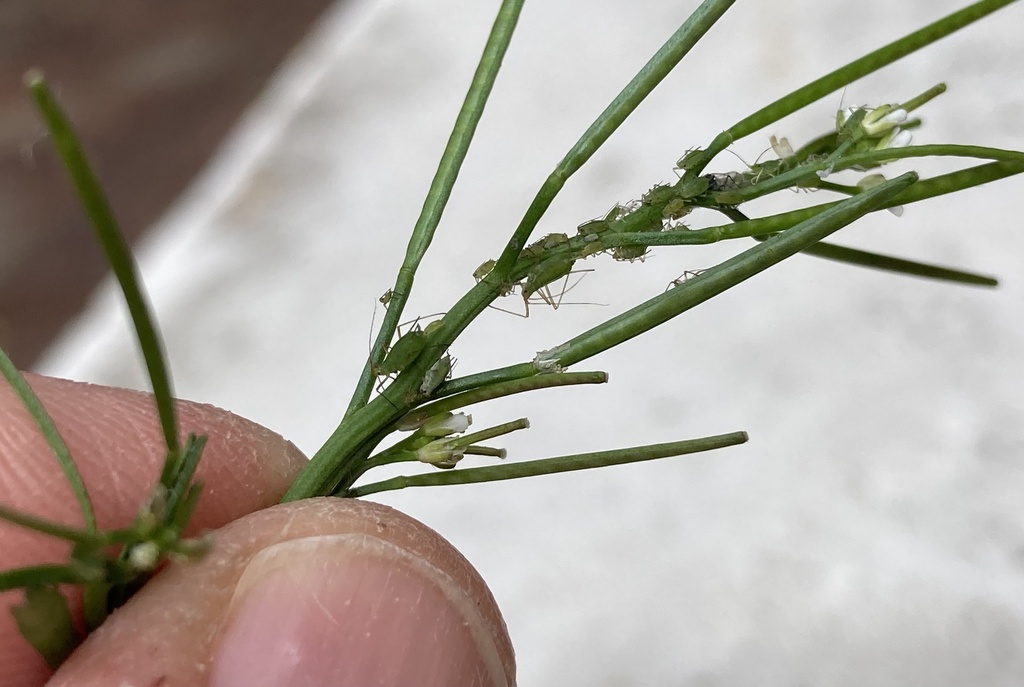
The potato aphid (Macrosiphum euphorbiae) is a soft-bodied insect in the family Aphididae that feeds on plant sap through piercing-sucking mouthparts. Adults are typically green to pinkish in coloration and measure 1.8 to 4.1 mm (0.07 to 0.16 inches) in length. The species exhibits the typical aphid body plan with a pear-shaped abdomen, long antennae, and prominent cornicles (waxy projections) on the posterior abdomen. Both winged and wingless forms occur, with winged morphs developing when populations become crowded or environmental conditions deteriorate. Macrosiphum euphorbiae has a cosmopolitan distribution and occurs throughout North America, including California. The species is found from sea level to moderate elevations across diverse climatic zones. In California, populations are present in agricultural areas, gardens, and natural habitats where suitable host plants occur. This polyphagous species infests over 200 plant species across multiple families, including Solanaceae (potatoes, tomatoes, peppers), Asteraceae (sunflowers, lettuce), and Rosaceae (roses, strawberries). According to research documented by the Xerces Society, the potato aphid also feeds on milkweeds (Asclepias species), where it can impact monarch butterfly populations by competing for plant resources. The species thrives in agricultural environments, gardens, greenhouses, and disturbed habitats where host plants are abundant. Potato aphids reproduce primarily through parthenogenesis during the growing season, with females giving birth to live young without mating. A single female can produce 50 to 100 offspring over her 20 to 40 day lifespan. The species completes multiple generations per year, with population peaks typically occurring in late spring and early summer. During winter in temperate regions, the species overwinters as eggs on primary hosts, though in milder climates like parts of California, asexual reproduction may continue year-round on suitable hosts. As an agricultural pest species, Macrosiphum euphorbiae has no conservation protection and is not listed under federal or state endangered species legislation. The species is economically significant as a crop pest, causing damage through direct feeding and by transmitting plant viruses including potato virus Y, potato leafroll virus, and cucumber mosaic virus. Integrated pest management strategies target this species using biological control agents such as lady beetles, lacewings, and parasitic wasps, along with selective insecticide applications when necessary. The species' widespread distribution and adaptability to diverse host plants ensure stable populations with no conservation concerns.
Classification
Class: Insecta · Order: Hemiptera · Family: Aphididae
Frequently asked questions
How is Macrosiphum euphorbiae classified?
Macrosiphum euphorbiae belongs to class Insecta, order Hemiptera, family Aphididae.
What family does Macrosiphum euphorbiae belong to?
Macrosiphum euphorbiae is in the Aphididae family.
What is Macrosiphum euphorbiae?
The potato aphid (Macrosiphum euphorbiae) is a soft-bodied insect in the family Aphididae that feeds on plant sap through piercing-sucking mouthparts.
Is Macrosiphum euphorbiae found in California?
Yes. Macrosiphum euphorbiae is recorded in California in The California Species Project's catalogue.
Related species
Other California species in the same genus, family, or bioregion.
Data from The California Species Project — 14,000+ California species with verified data from CNPS, CDFW, USFWS, and more.