Macrotus californicus
California Leaf-nosed Bat
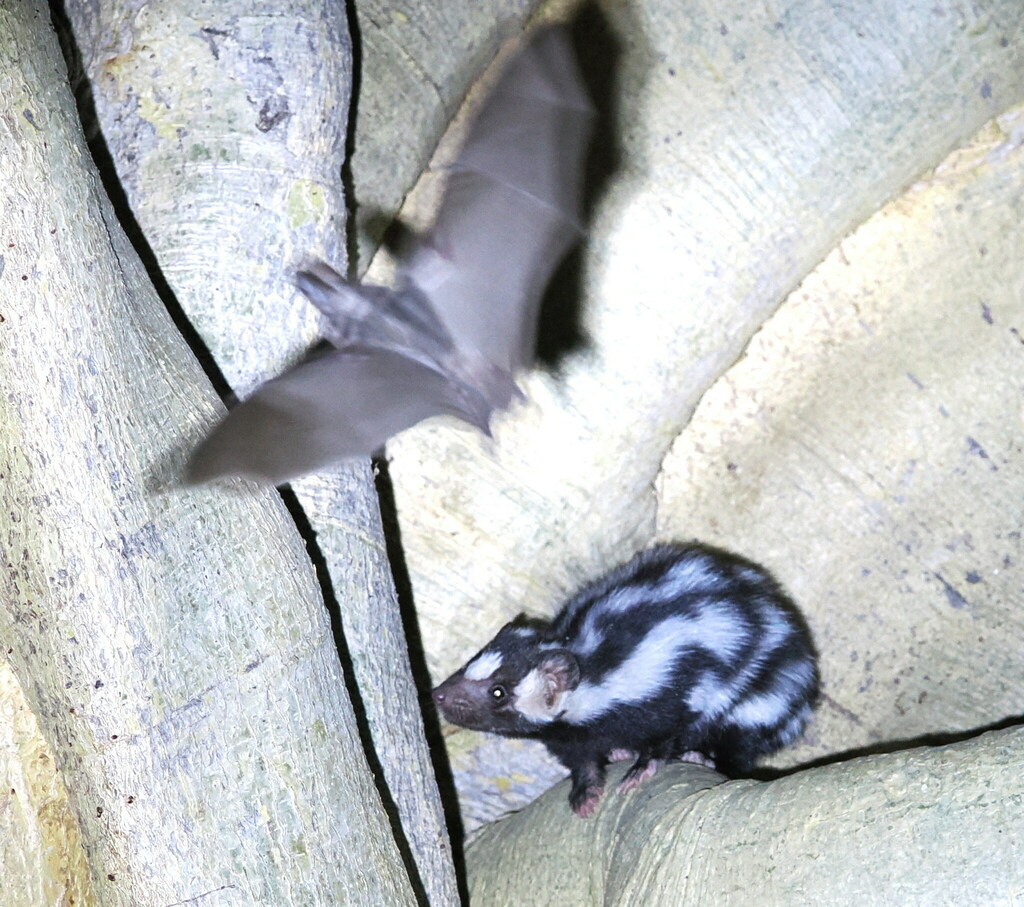
no rights reserved · CC0
Family: Phyllostomidae · Class: Mammalia · Order: Chiroptera
Conservation status: G3G4 S3
Macrotus californicus (California Leaf-nosed Bat) is a California animal in the Phyllostomidae family.
The California leaf-nosed bat is a medium-sized bat distinguished by its prominent nose leaf, a fleshy projection extending from the tip of the snout that enhances echolocation capabilities. Adults measure 90 to 110 mm (3.5 to 4.3 inches) in total length with a wingspan of approximately 350 mm (13.8 inches). The ears are exceptionally large and pointed, measuring up to 25 mm in length. The fur is grayish-brown dorsally with paler underparts, and the species lacks a visible tail, though the tail membrane (uropatagium) is well-developed. Historically, the California leaf-nosed bat ranged throughout the Sonoran Desert regions of southern California, southern Arizona, southern Nevada, and northwestern Mexico. In California, the species occurs primarily in Imperial, Riverside, and San Bernardino counties, with historical records from the Colorado Desert and lower Colorado River valley. Current populations are concentrated in desert areas near the California-Arizona border, representing a significant range reduction from historical distributions. This species inhabits hot desert environments, particularly areas with rocky outcrops, cliffs, and desert washes. Roosting sites include caves, mine shafts, rock crevices, and occasionally buildings. The species shows strong fidelity to roost sites and requires structures that maintain stable temperatures and humidity. Foraging occurs in open desert areas, desert washes, and around desert vegetation including palo verde, ironwood, and mesquite trees. The species is typically found at elevations below 600 meters (1,970 feet). California leaf-nosed bats are opportunistic insectivores, feeding primarily on beetles, moths, crickets, and other large insects captured through gleaning from surfaces rather than aerial pursuit. Their large ears and nose leaf enable detection of prey rustling sounds on vegetation or ground surfaces. The species exhibits a unique foraging strategy, hovering briefly while gleaning insects from plants or substrate. Reproduction occurs in spring, with females forming maternity colonies of 100 to 2,000 individuals in warm roost sites. Gestation lasts approximately 8 to 9 months, and single offspring are born in late May to early June. Young reach adult size by late summer. According to NatureServe, the California leaf-nosed bat maintains a global conservation rank of G3G4, indicating moderate vulnerability. In California, the species holds a state rank of S3, reflecting concern about population trends. While not federally listed, the species faces significant threats from habitat destruction, human disturbance at roost sites, and climate change effects on desert ecosystems. Mining activities and recreational cave exploration pose particular risks to roosting colonies. Water source degradation and urban development in desert regions further impact foraging habitat. Conservation efforts focus on protecting known roost sites and maintaining corridor habitats between fragmented populations. The species' limited distribution and specific habitat requirements make it particularly vulnerable to environmental changes in the southwestern deserts.
Classification
Class: Mammalia · Order: Chiroptera · Family: Phyllostomidae
Conservation status
G3G4 S3
Frequently asked questions
How is Macrotus californicus classified?
Macrotus californicus belongs to class Mammalia, order Chiroptera, family Phyllostomidae.
What family does Macrotus californicus belong to?
Macrotus californicus is in the Phyllostomidae family.
Is Macrotus californicus protected or of conservation concern?
Macrotus californicus carries the following status: G3G4 S3.
What is Macrotus californicus?
The California leaf-nosed bat is a medium-sized bat distinguished by its prominent nose leaf, a fleshy projection extending from the tip of the snout that enhances echolocation capabilities.
Is Macrotus californicus found in California?
Yes. Macrotus californicus is recorded in California in The California Species Project's catalogue.
Related species
Other California species in the same genus, family, or bioregion.
Data from The California Species Project — 14,000+ California species with verified data from CNPS, CDFW, USFWS, and more.