Manduca quinquemaculata
Five-spotted hawkmoth
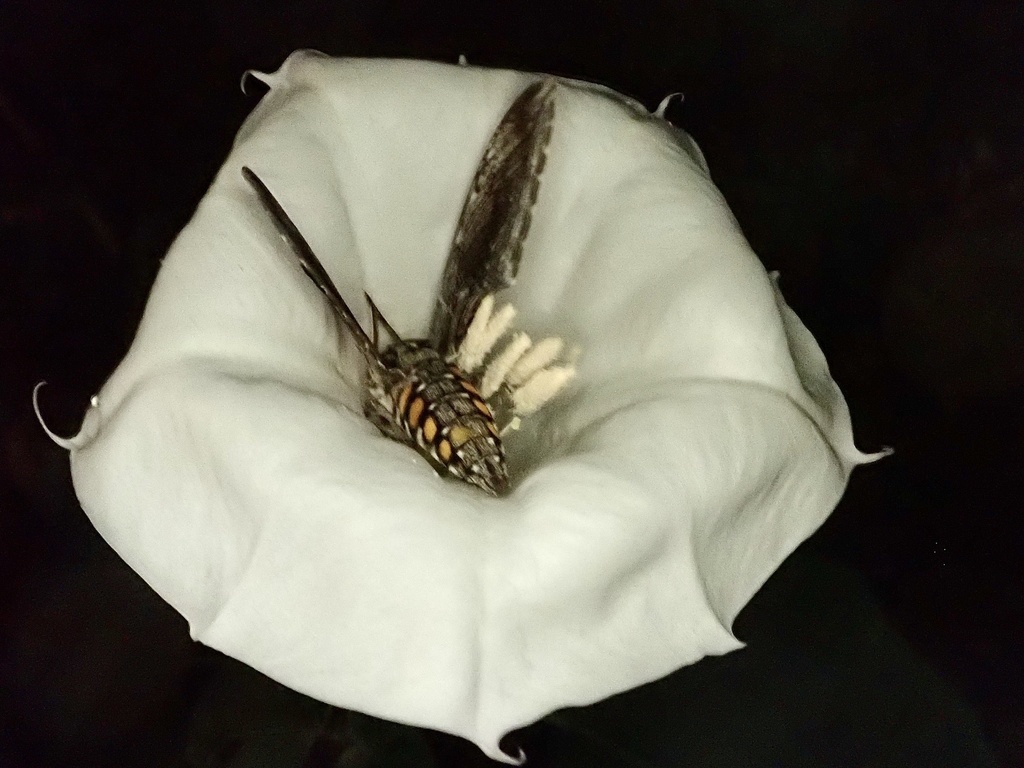
(c) Clifton Ladd, C.W.B., some rights reserved (CC BY) · licence
Family: Sphingidae · Class: Insecta · Order: Lepidoptera
Manduca quinquemaculata (Five-spotted hawkmoth) is a California animal in the Sphingidae family.
The five-spotted hawkmoth is a large sphinx moth with a wingspan ranging from 95 to 120 mm (3.7 to 4.7 inches). The forewings are gray-brown with irregular dark and light banding, while the hindwings display five prominent yellow-orange spots with black borders on each wing, giving the species its common name. The robust body is gray with white and black lateral stripes. At rest, the moth holds its wings in a triangular configuration typical of sphinx moths. The proboscis extends 100 to 125 mm when unfurled, allowing access to deep-throated flowers. The species ranges from Mexico north throughout most of the United States and occasionally into southern Canada, though it remains uncommon in the Southeast and Great Plains regions. In California, the five-spotted hawkmoth occurs in both urban and rural areas from sea level to moderate elevations, with populations documented in the Central Valley, coastal regions, and foothill areas where host plants are present. Five-spotted hawkmoths inhabit diverse environments including agricultural areas, gardens, suburban landscapes, and riparian zones. The species thrives in areas with abundant nightshade family plants and requires open spaces for flight corridors. Adults are active from dusk through early morning hours and are attracted to artificial lights. The moths favor nectar sources with long corollas, including moonflowers, four o'clocks, and tobacco flowers. Larvae, commonly known as tomato hornworms, feed exclusively on plants in the nightshade family (Solanaceae), including potato, tobacco, tomato, and related species. The distinctive caterpillars reach 100 mm in length and display bright green coloration with white diagonal stripes and a prominent horn-like projection on the eighth abdominal segment. Adults emerge after pupating in underground chambers, with multiple generations occurring annually in warmer regions. Mating occurs at night, with females depositing single eggs on host plant leaves. The species overwinters as pupae in soil chambers at depths of 10 to 15 cm. Five-spotted hawkmoths serve important ecological roles as both herbivores and pollinators. While larvae can cause economic damage to tomato and tobacco crops, adults pollinate various night-blooming plants, including some rare native species. The moths are preyed upon by bats, spiders, and mantids, while larvae face predation from birds, parasitoid wasps, and ground beetles. The species maintains stable populations across most of its range and lacks formal conservation status listings. Population densities fluctuate with host plant availability and agricultural practices. Urban development and intensive agriculture may affect local populations through habitat modification and pesticide use, though the species' adaptability to disturbed environments and diverse host plants contributes to its overall resilience. Climate change may influence the northern extent of the species' range as temperature patterns shift.
Classification
Class: Insecta · Order: Lepidoptera · Family: Sphingidae
Frequently asked questions
How is Manduca quinquemaculata classified?
Manduca quinquemaculata belongs to class Insecta, order Lepidoptera, family Sphingidae.
What family does Manduca quinquemaculata belong to?
Manduca quinquemaculata is in the Sphingidae family.
What is Manduca quinquemaculata?
The five-spotted hawkmoth is a large sphinx moth with a wingspan ranging from 95 to 120 mm (3.7 to 4.7 inches).
Is Manduca quinquemaculata found in California?
Yes. Manduca quinquemaculata is recorded in California in The California Species Project's catalogue.
Related species
Other California species in the same genus, family, or bioregion.
Data from The California Species Project — 14,000+ California species with verified data from CNPS, CDFW, USFWS, and more.