Mantis religiosa
European Mantis
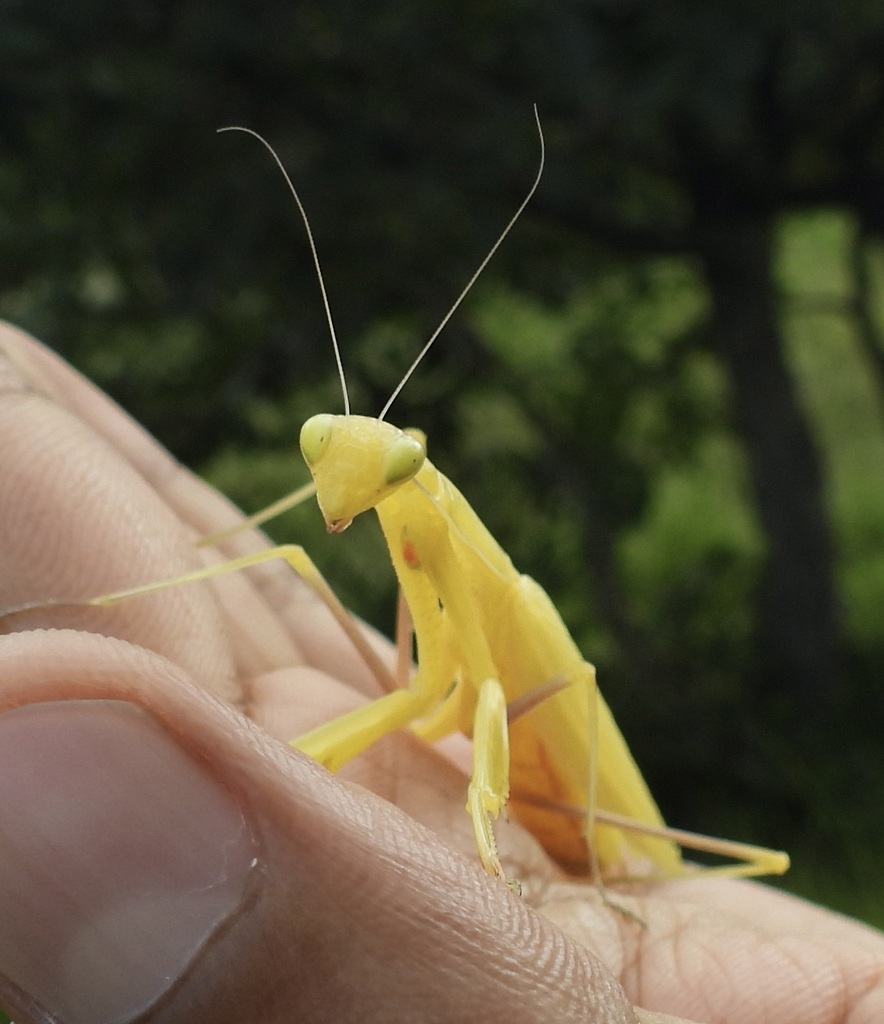
(c) Ram Dayal Vaishnav, some rights reserved (CC BY) · licence
Family: Mantidae · Class: Insecta · Order: Mantodea
Mantis religiosa (European Mantis) is a California animal in the Mantidae family.
The European mantis is a large predatory insect measuring 50 to 75 mm (2.0 to 3.0 inches) in length. Adults display sexual dimorphism, with females typically larger and more robust than males. The body coloration ranges from bright green to brown or yellowish-brown, providing effective camouflage among vegetation. The species is characterized by its triangular head with large compound eyes, elongated prothorax, and distinctive raptorial forelegs equipped with sharp spines for grasping prey. The forewings are narrow and leathery, while the hindwings are broad and membranous, often displaying pale or transparent areas. Originally native to southern Europe, North Africa, and parts of Asia, Mantis religiosa was accidentally introduced to North America in the early 1900s. The species has established populations across much of the United States, including California, where it occurs from sea level to approximately 2,000 meters elevation. In California, European mantis populations are documented throughout the Central Valley, coastal regions, and foothill areas, though distribution patterns remain incompletely mapped. The European mantis occupies diverse habitats including gardens, agricultural areas, grasslands, chaparral, and forest edges. The species demonstrates considerable habitat flexibility, thriving in both natural and human-modified environments. Adults and nymphs are typically found on vegetation ranging from herbaceous plants to shrubs and small trees, where they remain motionless while hunting. This species is an ambush predator that feeds on a wide variety of arthropods including flies, bees, wasps, butterflies, moths, and other insects. Adults are capable of capturing prey as large as small vertebrates. European mantis exhibits opportunistic feeding behavior and has been observed preying on beneficial insects including pollinators (Xerces Society 2018). Mating occurs in late summer and early fall, with females depositing 100 to 300 eggs in distinctive foam ootheca on plant stems or other surfaces. Eggs overwinter and hatch the following spring. The species completes one generation per year in most regions. As an introduced species in California, the European mantis is not subject to conservation protection and may pose ecological concerns. The species' indiscriminate predatory behavior can impact native arthropod communities, particularly beneficial insects that provide pollination and biological pest control services (Xerces Society 2018). Unlike native mantis species, Mantis religiosa shows little prey selectivity and may compete with native predators for food resources. The species' establishment in California demonstrates the ongoing challenges posed by non-native arthropods in Mediterranean-climate ecosystems. While European mantis can provide some agricultural pest control benefits, its broader ecological impacts on native insect communities warrant monitoring and research to better understand long-term effects on California's biodiversity.
Classification
Class: Insecta · Order: Mantodea · Family: Mantidae
Frequently asked questions
How is Mantis religiosa classified?
Mantis religiosa belongs to class Insecta, order Mantodea, family Mantidae.
What family does Mantis religiosa belong to?
Mantis religiosa is in the Mantidae family.
What is Mantis religiosa?
The European mantis is a large predatory insect measuring 50 to 75 mm (2.0 to 3.0 inches) in length.
Is Mantis religiosa found in California?
Yes. Mantis religiosa is recorded in California in The California Species Project's catalogue.
Related species
Other California species in the same genus, family, or bioregion.
Data from The California Species Project — 14,000+ California species with verified data from CNPS, CDFW, USFWS, and more.