Mareca strepera
Gadwall
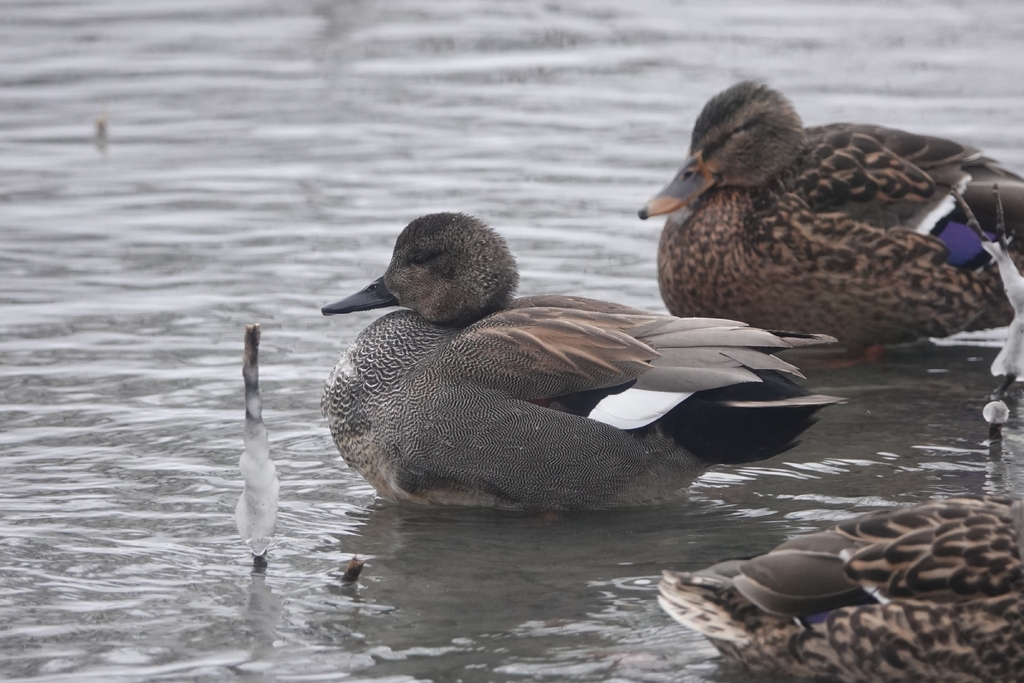
(c) Валерия Ковалева, some rights reserved (CC BY) · licence
Family: Anatidae · Class: Aves · Order: Anseriformes
Mareca strepera (Gadwall) is a California animal in the Anatidae family.
The Gadwall is a medium-sized dabbling duck with subtle but distinctive plumage patterns. Adult males measure 46-56 cm (18-22 inches) in length with a wingspan of 78-90 cm (31-35 inches), weighing 990-1,100 grams (2.2-2.4 pounds). Breeding males display gray-brown plumage with fine black barring, a distinctive black rump, and a prominent white speculum (wing patch) visible in flight. The head is brown with a darker crown, and the bill is dark gray to black. Females are mottled brown overall with a lighter belly and share the characteristic white speculum. Both sexes have orange-yellow legs and feet. In eclipse plumage, males resemble females but retain their distinctive white wing patches. Gadwall breed across much of northern North America, from Alaska through the Prairie Pothole Region to the Great Lakes. In California, they are primarily winter residents and passage migrants, occurring throughout the Central Valley, coastal regions, and suitable wetland habitats. Small breeding populations exist in the northeastern counties including Modoc, Lassen, and Siskiyou. According to eBird data, wintering populations in California peak from November through February, with highest concentrations in the Sacramento Valley and San Francisco Bay Area. This species inhabits shallow freshwater wetlands, including marshes, ponds, lakes, and flooded agricultural fields. During breeding season, Gadwall prefer prairie potholes and shallow lakes with emergent vegetation. In California, they utilize managed wetlands, rice fields, seasonal pools, and coastal lagoons. They typically forage in water depths of 25-40 cm (10-16 inches) and require areas with submerged aquatic vegetation. Gadwall are primarily herbivorous, feeding on submerged aquatic plants, seeds, and algae. They employ a dabbling feeding strategy, tipping forward to reach underwater vegetation while keeping their tails above the surface. During breeding season, females increase protein intake by consuming invertebrates including chironomid larvae and amphipods. Gadwall form monogamous pair bonds during spring migration, with breeding occurring from April through July. Females construct nests on dry ground near water, typically concealed in dense vegetation. Clutch size ranges from 8-12 cream-colored eggs, with an incubation period of 24-26 days. Ducklings fledge at approximately 7-8 weeks. The Gadwall is not federally or state listed and maintains stable populations across most of its range. According to the North American Breeding Bird Survey, continental populations have remained relatively stable since 1966, with some regional increases. Christmas Bird Count data indicates stable to slightly increasing winter populations in California. Waterfowl harvest data suggests sustainable hunting pressure. Primary conservation concerns include wetland habitat loss, particularly in breeding areas, and climate change impacts on prairie pothole ecosystems. The North American Waterfowl Management Plan identifies Gadwall as a species of moderate priority, with habitat conservation efforts focused on protecting and restoring wetland complexes.
Classification
Class: Aves · Order: Anseriformes · Family: Anatidae
Frequently asked questions
How is Mareca strepera classified?
Mareca strepera belongs to class Aves, order Anseriformes, family Anatidae.
What family does Mareca strepera belong to?
Mareca strepera is in the Anatidae family.
What is Mareca strepera?
The Gadwall is a medium-sized dabbling duck with subtle but distinctive plumage patterns.
Is Mareca strepera found in California?
Yes. Mareca strepera is recorded in California in The California Species Project's catalogue.
Related species
Other California species in the same genus, family, or bioregion.
Data from The California Species Project — 14,000+ California species with verified data from CNPS, CDFW, USFWS, and more.